
CHIMNEY SWIFT NESTING OUTCOMES IN ST ADOLPHE, MB, 2026
~The 20th Anniversary Edition~
20TH ANNIVERSARY YEAR FOR MCSI. The 20th consecutive year of MCSI monitoring took place in 2026. It was notable, but not always for good reasons. The St Adolphe season had a wobbly start as Barb broke her leg the day after sighting the first swift in town on May 11th. Thankfully, MCSI program assistants and steering committee members stepped up to help watch the St Adolphe chimney rims through to late June.
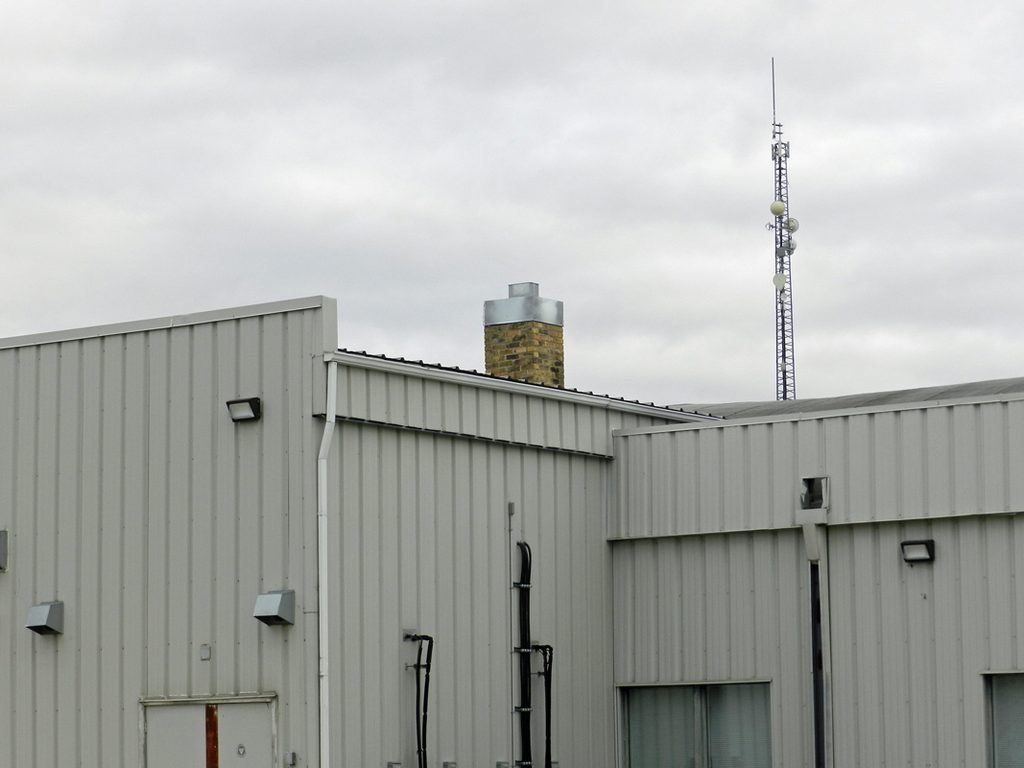
RAIN SHIELD: With federal species at risk approval, MCSI sponsored the addition of a rain shield to the Brodeur Bros./Daycare chimney. Thanks to Chris Audette (Reno Plus) who built the rain shield and George Humeniuk (RM of Ritchot Facilities Director) who helped coordinate the installation before the swifts arrived in the spring. The habitat modification was accepted by a pair of breeding swifts in June and no nest slippage occurred during the breeding season. Mission accomplished.
BREEDING SEASON: Serious weather challenges took hold – a weather alert was issued on May 14 for a rare dirt storm then many warnings followed for air quality, thunderstorms, heat, and humidity. Wild swings in temperatures and heavy rains also punctuated the season. Overall, Chimney Swifts were later than usual arriving in town and nest building appeared less active than expected, or delayed in some instances. As a proxy for food availability, biting insects appeared abundant throughout the season (there was a lot of mosquito swatting and scratching). Intense heat and heavy prolonged rains reduced the concentration of aerial plankton – those bugs that swifts feed on – as indicated by feeding rates which were lower than expected during those conditions. Despite the challenges, three successful breeding attempts took place on typical timelines, with fledglings making an appearance in late July to early August (see the Summary below). One atypical late hatching was noted at NE Club Amical on Aug. 8; the nest failed within 4 days unfortunately. All the successful sites had a helper associated with the breeding pair. “You get by with a little help from your friends” seems to ring true!
PRE-MIGRATORY GROUPING. Once more, the Church hosted a pre-migratory roost. Starting around the time when the Church fledglings took flight, the formation of the avian congregation made it very difficult to distinguish juveniles/adults from the Church vs. relocated swifts from other St Adolphe sites vs. swifts which arrived from other locales in preparation for migration. A peak of 17 swifts was seen August 12; numbers dwindled to 9 on August 20, and by August 23, Chimney Swifts had departed from town.
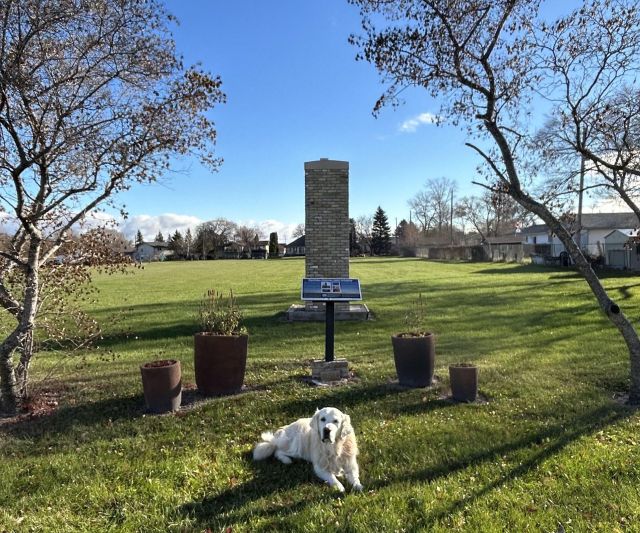
CHECK IT OUT: MCSI also sponsored new outreach signage at the Tower to reflect the successful colonization, after 17 years of hopeful waiting, of that purpose-built habitat!
Chimney Swifts are remarkable birds which continue to educate us on their ability to manage shifting conditions…we’re already looking forward to new experiences in 2027!

Merci et thank you to our swift-friendly landlords and tenants: Alexia and Darien Krasnesky; Paroisse St Adolphe Parish; the RM of Ritchot; and the St Adolphe Child Care Centre. Your ongoing support of this Manitoba Chimney Swift Initiative research program and St Adolphe’s Chimney Swifts is appreciated! Many thanks also to the St Adolphe ground crew for assisting in the all-important monitoring, daycare cleanout duties, and Tower inspection/upkeep: Ron Bazin, Brooke Bell, Lewis Cocks, Mackenzie Glover, Tim Poole, Gibson Rieger, and Rob Stewart.
Summary of Chimney Swift nesting outcomes, for six St Adolphe nest sites in 2026. These results are based on 87 hours of observations.
| SITE | NESTING ATTEMPT? | OUTCOME OF NESTING ATTEMPT |
| SE CLUB AMICAL | YES | SUCCESSFUL; behaviour observations estimate 3 fledglings on August 4-5; possible helper. |
| NE CLUB AMICAL | YES | UNSUCCESSFUL; failed at feeding brooded juvenile stage, August 11; no helper. |
| BRODEUR BROS./ DAYCARE | YES | UNSUCCESSFUL; failed at feeding brooded juvenile stage, mid-July; no helper. |
| CHURCH | YES | SUCCESSFUL; behaviour observations estimate 1+ fledglings on July 27; helper present. |
| MAIN ST | YES | UNSUCCESSFUL; failed at feeding brooded juvenile stage, date unknown; helper status unknown. |
| ST ADOLPHE TOWER (LOCATED IN THE CHURCH FIELD; MCSI ORIGINAL STYLE – T3) | YES | SUCCESSFUL; behaviour observations estimate 2 fledglings on July 28-29; physical evidence = 2 fledglings; helper present. Started season with 2025 nest on south wall; 2025 nest dropped during the summer; 2026 nest remained attached to the south wall through to Sept. 24, 2026 (fall cleanout inspection date). |
Behaviour observations plus the physical evidence seen in cleanout traps were used to assess nesting success at the Brodeur Bros./Daycare, Main St., and Tower sites. Only behaviour observations were available to assess nesting success at the SE Club Amical, NE Club Amical, and the Church sites as there are no accessible cleanout traps associated with those chimneys.
— Prepared by Barb Stewart, Sila Consultants, September 30, 2026. sila.stewart@gmail.com
