It’s hard to believe that it’s already October! The leaves are golden and the birds are heading south in huge numbers. I was able to attend one of the Sunset Goose Flights at FortWhyte Alive last week and it was quite magical to watch thousands of geese fly in to spend the night on the lakes.
Even though it’s now been over a month since the Chimney Swifts have left Manitoba, we’ve still been busy wrapping up this monitoring season. In September, we joined various MCSI volunteers and Steering Committee members for chimney clean-outs at Lower Fort Garry, the Selkirk Mental Health Centre, and St Adolphe.
Usually when I tell my non-Swifty friends that I’m doing a chimney cleanout, they picture a chimney sweep. Specifically, they picture Dick Van Dyke in Mary Poppins and start singing “Chim Chim Cher-ee”. What we do at MCSI is a little different.
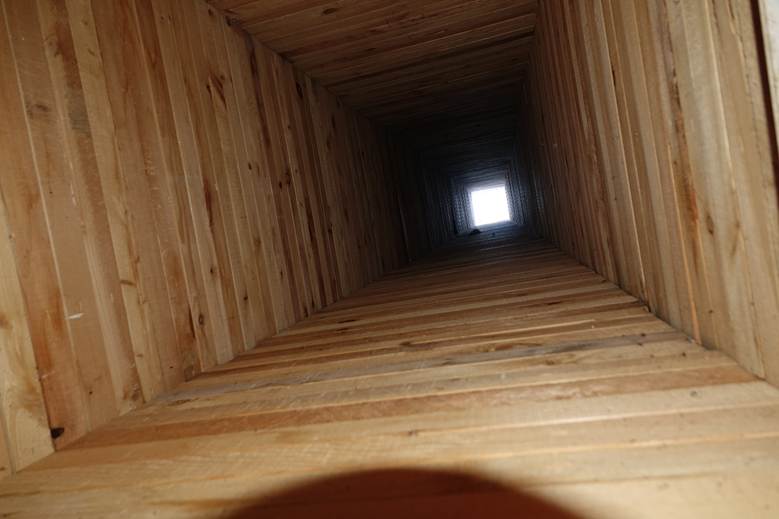
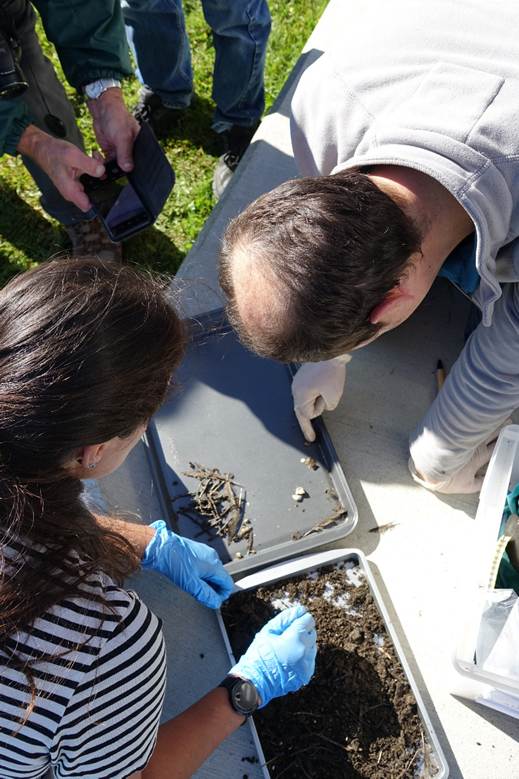
When we conduct a chimney cleanout, we’re accessing the chimney from the bottom, usually through a cleanout door. We’re looking for materials like fallen nests, eggshells, and bird carcasses to help us collect more pieces of the puzzle of what went on inside the chimney during the breeding season. We combine this information with our volunteer monitoring data and camera trap images to try to get a full picture of nesting success inside the chimney.
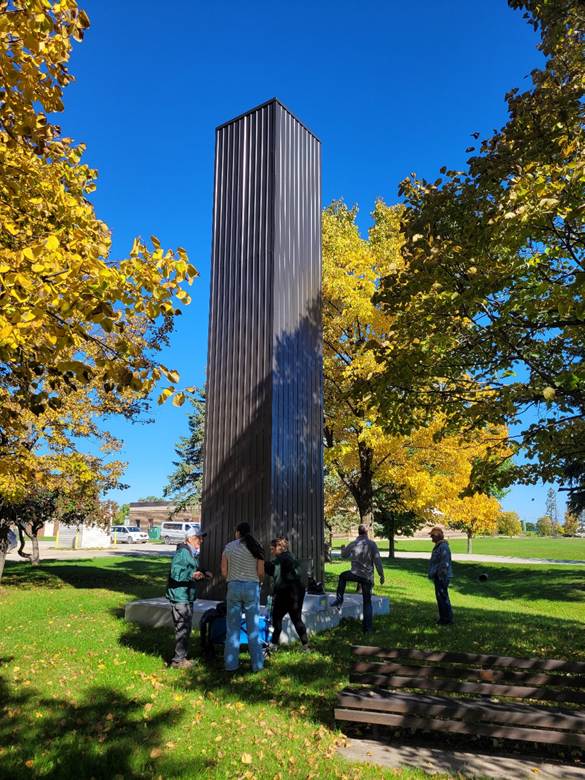
Over the last couple weeks, the MCSI team completed cleanouts at 10 different chimneys or Towers surrounding Winnipeg, starting at Lower Fort Garry.
Lower Fort Garry
Men’s House
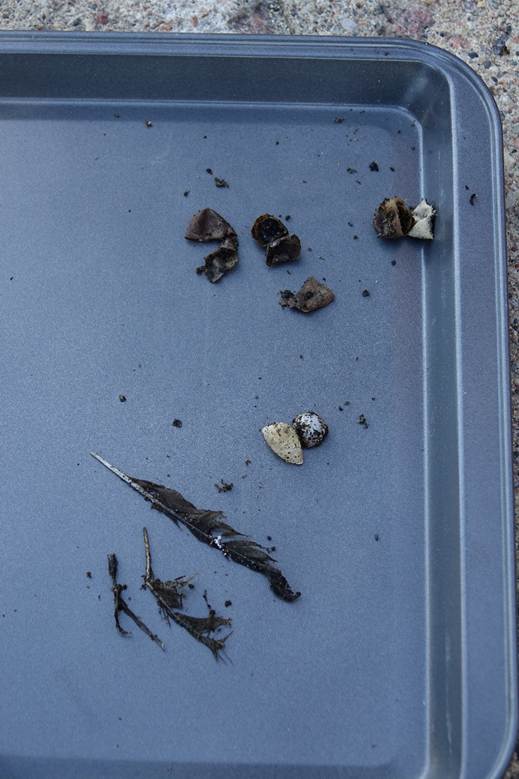
The MCSI team was joined by Steering Committee Member Joanne, and volunteers Gerald and Brittany on Sept 14 to clean out two Lower Fort Garry chimneys. Starting with the Men’s House, we removed the insulation at the bottom of the chimney and found fragments of at least four hatched eggs. There were a few twigs, but the nest hadn’t fallen to the bottom of the chimney, meaning it’s still stuck on the inside wall. With the hatched eggs, no carcases, and observations of fledglings from monitors, we can confirm that this nesting attempt was a success.
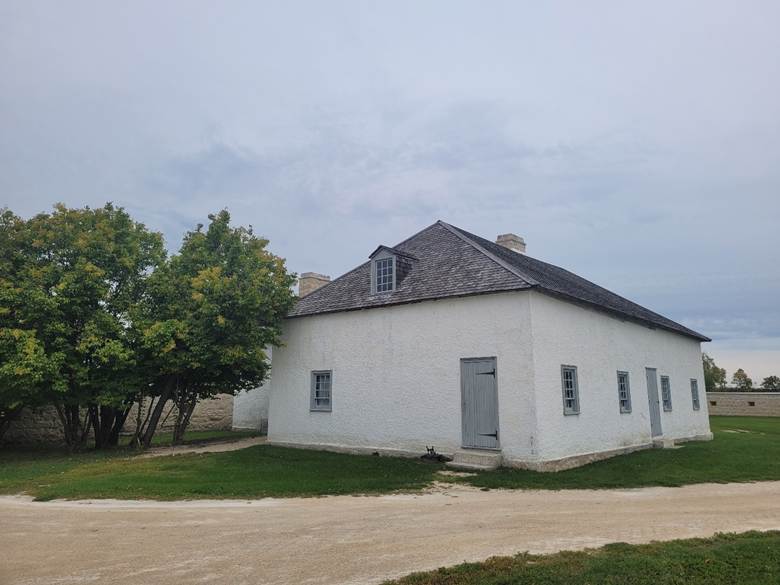
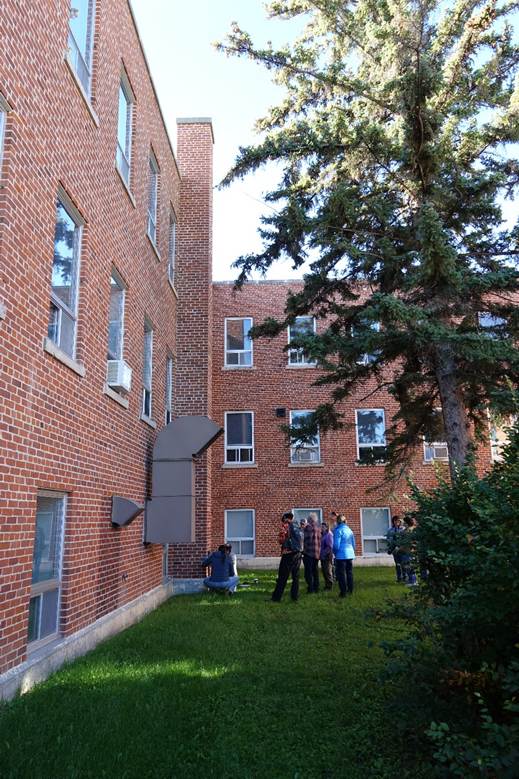
Figure 1. Men’s House from the outside. Photo courtesy of Gibson Rieger.
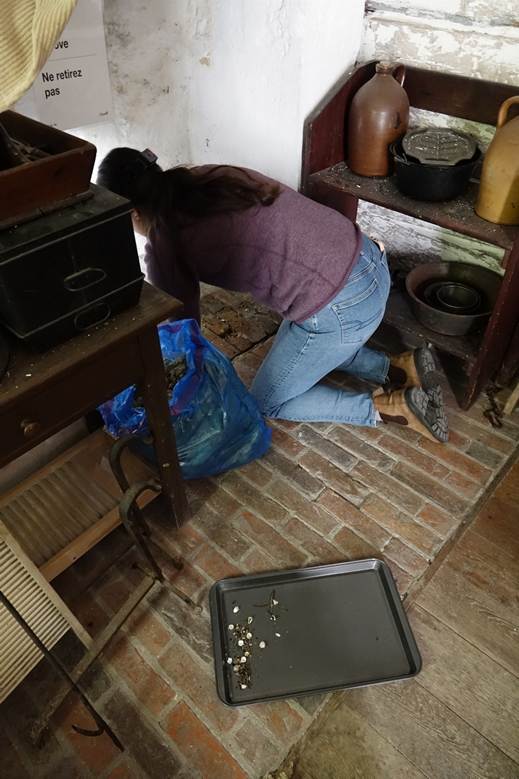
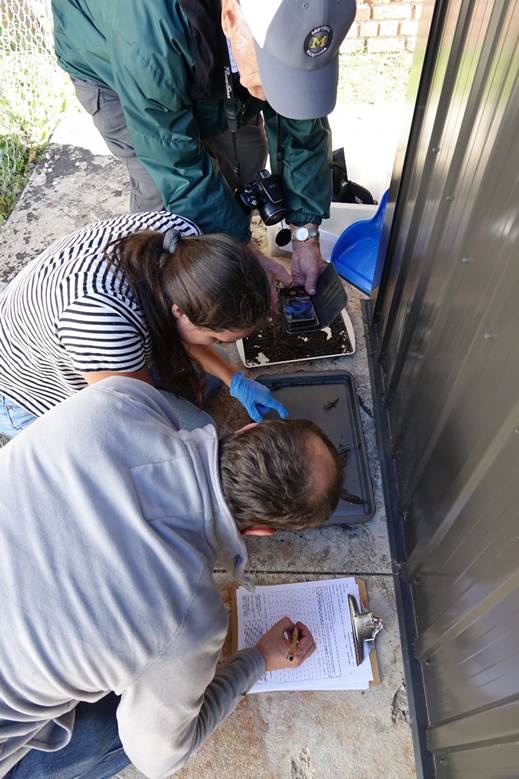
Figure 2. Program Coordinator Mackenzie cleaning out the Men’s House chimney, with eggshell fragments on the baking sheet. Photo courtesy of Brooke Bell.
Furloft
The Furloft chimney has a history of nest slippage, and if you’ve been following along with the blogs this summer, you’ll remember that Tim and Joanne had to carry out a rescue mission back in August when this year’s nest fell from the wall. At the time, Tim managed to stuff three young swifts into one of Rob’s artificial nests placed at the bottom of the chimney. During a monitoring session the next day, Gerald confirmed that the parents were still feeding, and things seemed to progress as they should. By the end of August, feeding was still ongoing, and fledglings hadn’t yet been spotted outside the chimney. Then, during monitoring sessions on the 1st and 2nd of September, there were no swifts seen interacting with the chimney at all. We assumed that we had missing the fledging, and that the swifts had left to start migration pretty much as soon as the young could fly, but it wasn’t confirmed that the nest had been a success yet.
When we opened up the chimney, we found one dead chick, which likely died shortly after the rescue mission. But with only one dead bird at the bottom, that meant that the other two chicks survived and were on their way south with their parents. We also found not one, but two nests, and the eggshell fragments from four hatched eggs. Overall, it was a success story at this chimney despite the fallen nest.
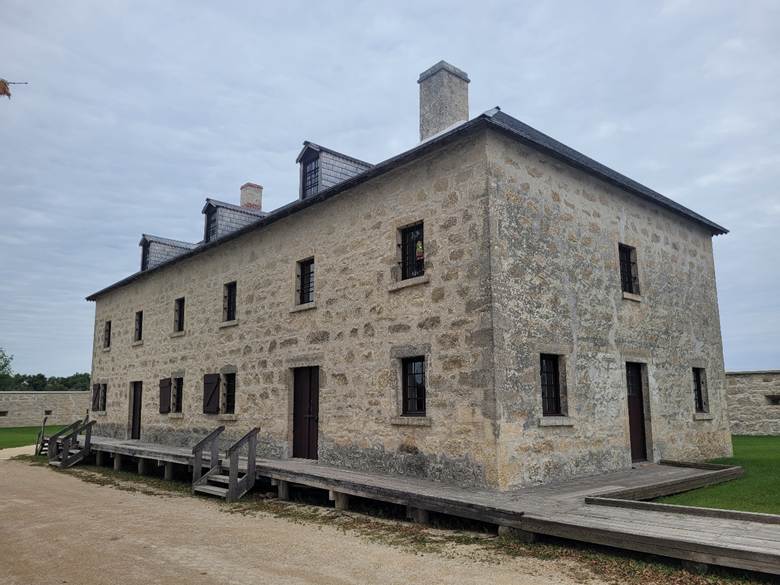
Figure 3. Lower Fort Garry Furloft. Photo courtesy of Gibson Rieger.
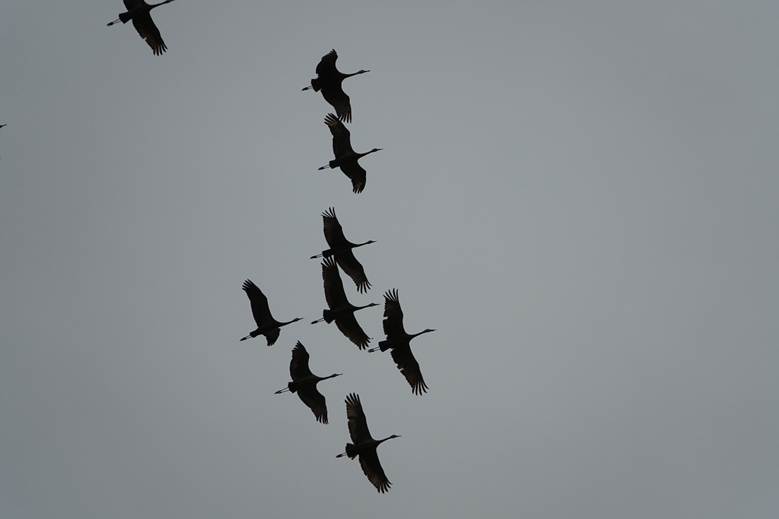
Once we finished our job with the cleanouts, we spent a few minutes watching some other birds around the Fort. We saw an adult Barn Swallow swoop in under the eaves of the Big House to feed young who were still in the nest, then watched as a large group of Sandhill Cranes flew overhead. Despite the young Barn Swallows still feeding, it certainly was feeling like fall at the Fort.
A huge thank you to Gerald and Brittany for monitoring at the Fort all season long and for joining us at the cleanouts!
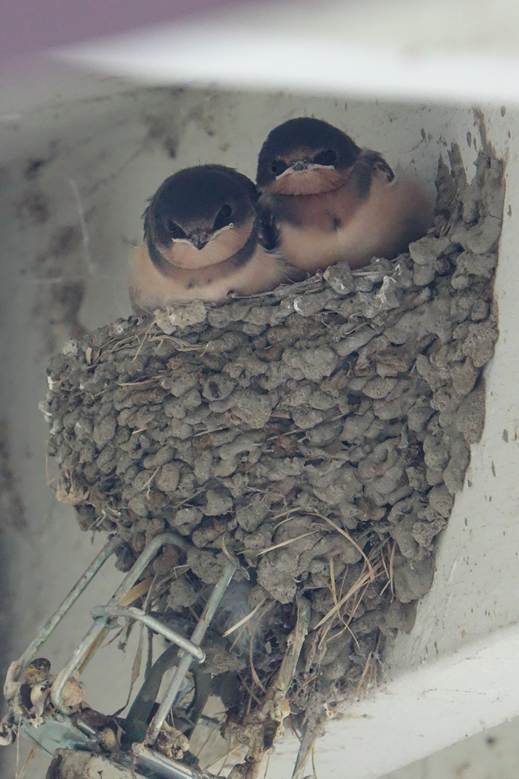
Figure 4. Young Barn Swallows in their nest at the Big House. Photo courtesy of Brooke Bell.
SMHC was another stronghold for the swifts this season, with successful nesting attempts in all four towers and the Infirmary chimney. The MCSI team met with Steering Committee Chair Tim and a large showing from the Selkirk Birdwatchers on Sept 22 to clean out the towers and chimney.
T1
At T1, the nest was still up on the wall of the tower, while the fragments from 4-5 hatched eggs were in the base. Based on the trail cameras Tim placed inside the tower at the start of the season, it seems like 3 chicks successfully fledged at this tower. This also lines up with Fred and Nettie’s observations at their second-to-last monitoring session on August 26, when they saw three fluttering entries into the tower.
Figure 6. Nest still on the wall at T1. Photo courtesy of Brooke Bell.
Figure 7. Mackenzie and Tim determining the egg count at T1. Photo courtesy of Brooke Bell.
T2
At T2, the swifts reused the nest from 2025 and successfully hatched 4 eggs. There was one dead chick found in the base of the tower, but the other three seemed to have fledged successfully.
Figure 8. The group gathered around T2. Photo courtesy of Gibson Rieger.
T3
At the Infirmary-attached tower, there was no fallen nest at the base, and the trail camera images show that the nest from last year was rebuilt in late May and early June. We found four hatched eggs in the base of the tower, which lines up with monitoring observations from Dennis and Patti. The first time that fledglings were observed at this tower was on August 16, when Dennis and Patti saw three fluttering entries into the tower. On their next monitoring session on August 23, they added one more to that tally with four fluttering entries. Based on those observations, we can assume that all four chicks successfully fledged from T3.
Figure 9. Broken eggshells and feathers found inside T3. Photo courtesy of Brooke Bell.
T4
From this season’s monitoring, we knew that there was a breeding attempt at this tower as there was evidence of feeding in late July though early August. Despite this, our monitors never identified any fledglings entering or leaving this tower, so we weren’t sure if the attempt had been successful. During this cleanout, we found fragments from 4-5 eggs, one of which was unhatched. After reviewing the camera images, we determined that 3 chicks fledged from this tower. Another confirmed success!
Figure 10. Mackenzie, Tim, and Gerald looking at the materials found in T4. Photo courtesy of Brooke Bell.
Infirmary
The last chimney we cleaned out at SMHC was the Infirmary chimney. The nest was fallen to the bottom of the chimney in several pieces. We found 2 hatched eggs and 1 dead chick, and concluding that there was one successful fledgling at this chimney.
Figure 11. MCSI Staff and volunteers gathered around the Infirmary chimney. Photo courtesy of Brooke Bell.
Overall, it was another successful season at SMHC, with five out of six sites supporting a successful nesting attempt. A huge thank you to our regular SMHC monitors – Dennis and Patti, Fred and Nettie, Lisa and Monty, and Linda and Nia – your dedication to weekly monitoring at this site is truly unmatched. Thank you also to Brooke, Tanner, Tim, Linnea, Brittany and Lauren for doing daytime watches at SMHC throughout the season.
St Adolphe
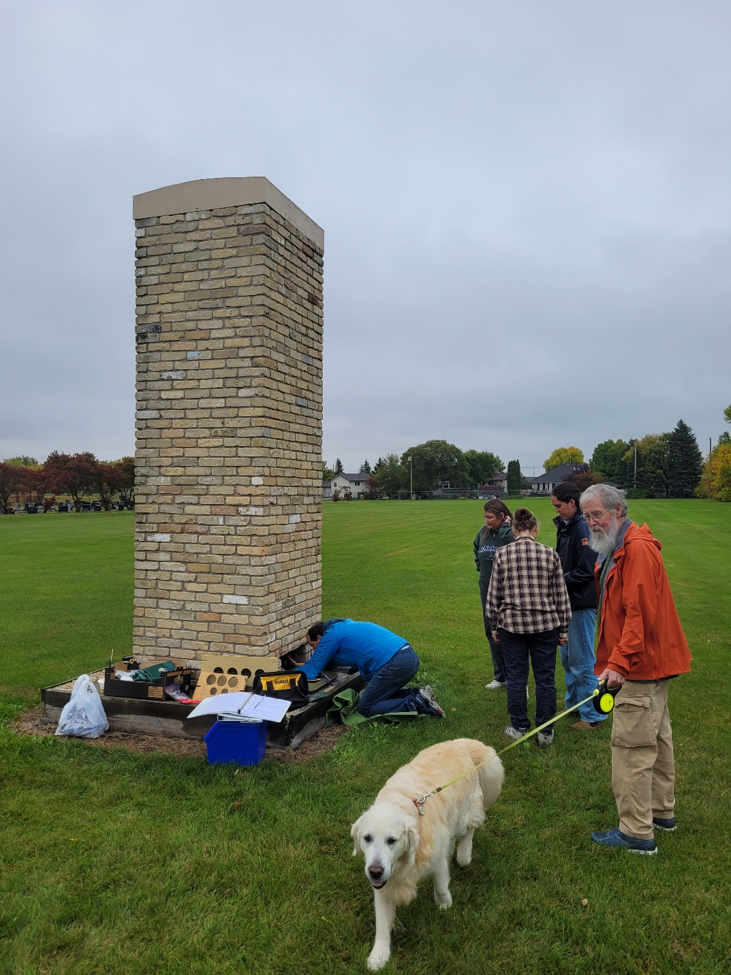
Our last set of clean-outs for the season took place in St Adolphe. On Sept 24, Mackenzie, Brooke and Gibson were joined by Tim, Barb, Rob and Qilliaq the golden retriever to collect more pieces of the breeding puzzle in St A.
Brodeur Bros/Daycare
This site continues to be a mystery for us. Due to frequent nest slippage events in this chimney, we added a rain shield to the top in the spring. The logic was that the rain washing down the sides of the chimney was causing the nests to fall. We had high hopes at the start of the season, when Gibson confirmed the swifts entering the newly renovated chimney, but those hopes died shortly after, when all activity seemed to stop inside the chimney.
When we opened up the cleanout trap inside the daycare, we found four hatched eggs, and no carcasses, but the lack of activity during monitoring sessions and the lack of guano (poop) at the bottom of the chimney suggested that the young died very shortly after hatching.
When chicks die that young, their bodies decompose very quickly, so they are almost never found during cleanouts.
Encouragingly, the nest hadn’t fallen to the bottom of the chimney, but that just raised further questions about the reasons for the continued pattern of nest failure at this site. Could it be the noise of the daycare through the walls of the chimneys, causing the adult swifts to abandon the site? The walls of this chimney are also coated with an oily residue – a relic from the days when this building was a car dealership and they burned diesel in this chimney. Could it be an air quality issue inside the chimney itself? The wheels in our heads are turning with these questions and potential solutions.
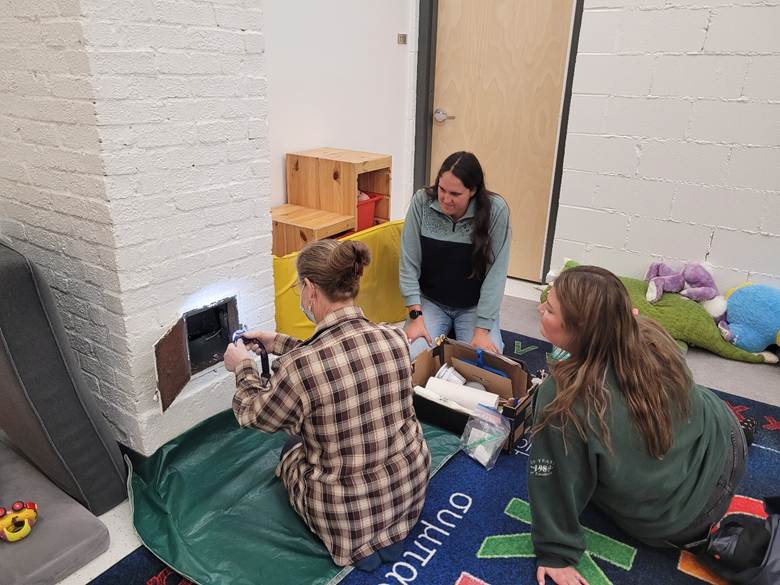
Figure 12. Mackenzie and Brooke watch as Barb opens the Brodeur Bros/Daycare chimney. Photo courtesy of Gibson Rieger.
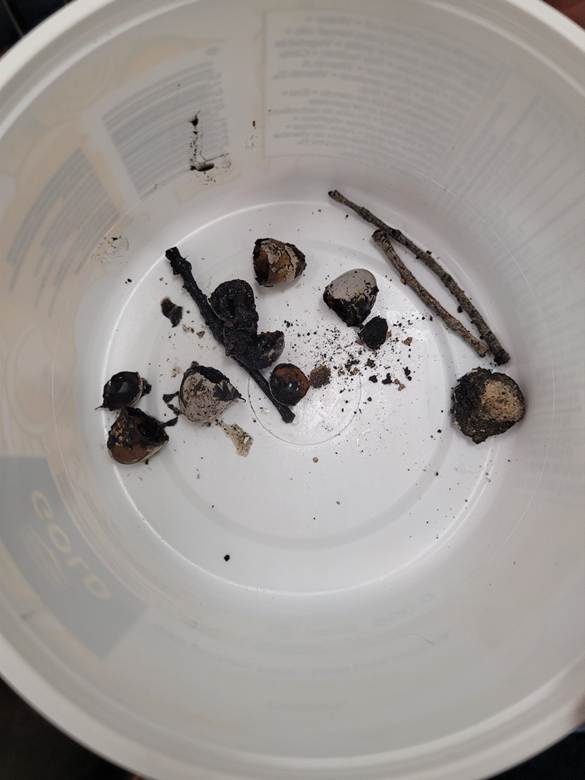
Figure 13. Egg fragments and sticks found inside the Brodeur Bros/Daycare chimney. Photo courtesy of Gibson Rieger.
Tower
For the third year in a row at the Tower, we had a successful breeding attempt! We opened up the bottom of the Tower and the first thing we noticed was last year’s nest absolutely covered in guano. The nest that was used this year was still up on the wall of the Tower. In addition to the old nest, we found fragments from two hatched eggs, and a third unhatched egg. This lines up with Barb’s monitoring observations, when she saw two fledglings around the Tower at the end of July.
Figure 14. Brooke, Mackenzie, Barb, Rob and Qilliaq watch as Tim opens up the Tower. Photo courtesy of Gibson Rieger.
After we dug out the eggshells, Brooke and Gibson took the lead on cleaning out the rest of the Tower, ensuring we didn’t miss anything, then followed Rob and Tim’s directions to fit the specially made panels back onto the opening. The rest of us just stood back and watched!
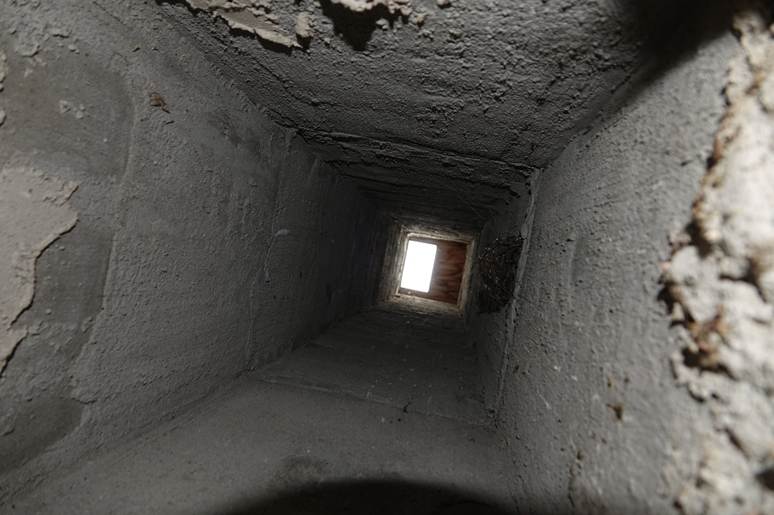
Figure 15. The 2026 nest still stuck to the inside of the Tower (the bulge on the right side wall). Photo courtesy of Brooke Bell.
Main St
Barb tackled the cleanout for the Main Street house solo on Sept 14. She found the remnants of 3 hatched eggs and one unhatched egg, as well as the nest down in pieces. The lack of guano at the bottom of the chimney suggests that the nest failed shortly after hatching, possibly due to a nest slippage event. This home wasn’t watched as closely during monitoring sessions, so the exact date of nest failure is hard to pin down.
Overall
Well, there you have it folks, our last Chimney Swift update of the 2026 monitoring season! While we have the cleanout data to confirm nesting success in these 10 chimneys/towers, for the rest of the sites we’ll have to rely solely on the monitoring data to determine whether it was a roosting or nesting chimney, and whether there was a successful breeding attempt. I’ll be spending the next little while summarizing the data from all 196 (!) sites that were monitored this year. THANK YOU to all of our volunteers who participated in chimney monitoring this summer, and a special shoutout to those who joined us for the cleanouts.
I’d also like to sincerely thank our two MCSI Program Assistants, Brooke and Gibson, who had their last day with the program two weeks ago. If you’ve been reading our blogs this summer, then you know that Brooke and Gibson did a marathon of monitoring, checking out almost every Priority Site in Winnipeg, and even some outside the city. They spent many, many hours watching chimneys with absolutely zero action, but there were plenty of exciting moments too, and they always returned to the office with a story to tell.
Besides monitoring, they wrote weekly summaries, helped update the database when we received new datasheets, managed our social media pages, and helped keep our interactive map up to date with Priority Sites. Thanks to Brooke and Gibson for all your hard work this summer, we wish you all the best and hope to see you chimney-side again next season 😊
While this was our last monitoring update, keep your eyes out for our season summary stats coming soon, and make sure to follow us on Instagram and Facebook for more updates.
Welcome to another Chimney Swift monitoring recap! We are squarely in September and fall is upon us. The sun is setting earlier and earlier (across much of the province, sunset is now before 8:00 PM!), leaves are drifting along the ground, and temperatures are beginning to dip overnight (though average starting temperatures during monitoring over the last ~2 weeks were a mild 20°C during daytime and 23.7°C during evening sessions).
Of course, with the changing of seasons comes fall migration. Maybe you’ve heard the early flocks of Canada Geese passing overhead or, as I observed on the western shore of Lake Winnipeg’s southern basin over the past weekend, seen gulls gather in the hundreds over lakes and in fields, preparing to make their way slowly south. Maybe you’ve made a trip to Oak Hammock Marsh to volunteer in the Delta Marsh Bird Observatory’s fall banding activities and seen the change in songbird species moving through the marsh. Or, if you’ve been monitoring for Chimney Swifts, maybe you’ve noticed the decrease in activity at sites that it seems just yesterday were busy with parents provisioning young or non-breeding adults piling in to roost. Either way, paying attention to the birds is sure to draw your attention to the passage of time!
With swift season sadly coming to a close in Manitoba, this may be our final monitoring recap of the year with activity to relay! Reports of Chimney Swift activity across Manitoba have been sparse of late, with mostly watches at our regular sites, but we’ll catch you up on monitoring efforts across the province from Saturday, August 29th to Thursday, September 10th.
August 29th–September 10th
Selkirk
Brittany watched the east smaller tower (T02) at the Selkirk Mental Health Centre (SMHC) during roosting hour on Sunday, August 30th. Seven Chimney Swifts were seen flying over the infirmary and near the infirmary-attached tower (T03), but no entries or exits were recorded. Brittany noted that the flight pattern of three of these swifts seemed to fit that of juveniles. While previously, on August 19th, four juveniles roosted in T02, this group evidently chose to spend the night elsewhere.
On Tuesday, September 1st, Patti observed two Chimney Swifts entering the east infirmary chimney at SMHC to roost. These swifts entered the chimney together, the latter of the pair circling the chimney before entering within a minute of the former. Numbers of swifts roosting in this chimney have been tapering down since this season’s high of ten Chimney Swifts on July 30th, and this may represent the final reported sighting of Chimney Swifts in Selkirk this year, as Patti returned to the chimney on Friday, September 4th, and recorded a complete absence of swifts at or near the site.
St. Andrews
Brittany and Program Assistant Brooke watched the Furloft and Men’s House chimneys at Lower Fort Garry twice this past week. The pair first visited the sites during the drizzly morning of September 1st, spotting a Turkey Vulture and juvenile Bald Eagle near the sites but recording no daytime swift activity at either site. Returning the following evening during roosting hour, foraging Barn Swallows were present but swifts were once again absent at the site (save for a potential but unconfirmed, very distant group of five swifts seen once at 7:49 PM); this marks a change from the week prior when swifts roosted in both chimneys. With these back-to-back monitoring sessions resulting in zeros, it’s likely safe to conclude that the swifts have moved on from St. Andrews.
Winnipeg
St. Boniface
Blair observed the chimney at Kaljieb Electrics during roosting hour on Saturday, August 29th. No swifts were heard or seen during this watch, hopefully signalling that the pair last recorded incubating young here in July were successful and have begun their migration south along with their fledglings!
The next day, Blair visited Archibald Storage (last recorded use on July 17th) during roosting hour, where swifts were once again absent.
Overall
With the only reported sightings of Chimney Swifts over the last ~2 weeks being in Selkirk, I think it’s fair to say that the end of summer weather has taken with it swifts from Manitoba for the remainder of the year. But don’t fret – as monitoring winds down, we still have exciting news to share! In the coming weeks, we will be cleaning out a number of chimneys and towers, which should yield interesting information as we hope to confirm nesting and estimate numbers of chicks fledged from these sites. Keep an eye out on our blog as well as our social media accounts as we report our findings!
Thanks for reading and, once again, we extend a big thanks to our dedicated volunteers for continuing to share your observations and devoting your time to Chimney Swift monitoring!
We’re back with another weekly Chimney Swift recap! Things are certainly slowing down across the province, with many sites recording zero swifts this week during monitoring sessions. In many cases, our aerial friends appear to have begun their southward migration. In fact, Steering Committee member Frank paid a visit to our southern neighbours this past weekend and attended a “Swift Sit” near Minneapolis hosted by the Minnesota Department of Natural Resources and the Urban Bird Collective. Over 600 swifts roosted in a large chimney at a local high school. Could some of these birds have been our Manitoba swifts stopping for the night? As Chimney Swifts can travel up to 800 km per day during migration (about the distance from Winnipeg to Minneapolis), it’s likely they could have been!
Though some swifts have migration on their minds, some of them are still holding on here in Manitoba, especially at the usual sites at the Selkirk Mental Health Centre, and Lower Fort Garry. We also received reports this week from the whole summer in Souris and Wasagaming, so we’ll recap those sites as well. Although we’re not quite done with the season yet, I still want to extend a huge thank you to everyone who has monitored a chimney this summer, we truly couldn’t do what we do without our incredible group of volunteers! With that, let’s get to our recap.
Carman
Rhonda did a roosting hour watch at the Memorial Hall on August 22 and reported no swifts in the area. During her previous watch on August 9, she had frequent entries and exits, which we interpreted as adults feeding young inside the chimney. Hopefully in the time between watches the young fledged and the family is now on their way south!
Dauphin
The swifts also seem to have flown the coop (or chimney) in Dauphin. Ken watched the Harrison Computer Services chimney on August 23, and Pat watched the Hong Kong Café the next evening, with both of them reporting zero swift sightings during their watches. For Pat, this observation was 10 days after she observed two parents feeding young at the Café. We’re hoping that this was another successful nest at this site!
Selkirk
As in previous years, the Selkirk swifts are still going strong, even as swifts in other communities start to head south.
Patti and Dennis were out on August 23 and August 28 watching their usual two sites: the Infirmary chimney and T03. At the Infirmary, they observed an entry, then two exits two minutes later just before 8:00 pm. About 45 mins later, two swifts re-entered the chimney to roost. A pretty quiet watch compared to the action of the previous week! On the 28th, the action was back! Patti and Dennis reported quite an entertaining watch with two swifts continuously circling the chimney from 8:04 until they entered at 8:14 pm. These entries were also reported as fluttering entries – could they be fledglings from the infirmary chimney? This one has tested our interpretative skills this summer, we’re looking forward to the cleanout in a couple weeks to put the final pieces together.
At T03, Patti and Dennis observed six roost hour entries, some of which made fluttering entries. By their session on the 28th, the Tower was quiet, with no entries or exits. It seems the family has left the Tower.
A whole crew was out on August 26 watching several SMHC sites. We had Nia and Linda at the Yellow Brick chimney and T04, while Fred and Nettie were at T01. At Yellow Brick, it was a quiet evening, with no activity at the chimney. T04 was quiet as well, with a single swift entering the Tower to roost.
Fledglings were also present at T01. There were six total entries into the Tower, with three of them being slow and fluttering.
Souris
Katharine sent in datasheets from nine(!) different sites that she watched while visiting Souris throughout the summer.
Starting with Dimitri’s Taverna (formerly the Chocolate Shop Café), Katharine saw one daytime exit during a short monitoring session on June 8, then 3 entries and 3 exits a month later on July 2. There were long gaps between entries and exits, so I’m inclined to say the swifts were in the process of building their nest. Katharine also noted V displays performed by the swifts during this session, a sure sign that the swifts were in the courting phase.
Up next is the east chimney on the Hillcrest Museum, one of our 2026 Priority Sites. Despite two sessions on June 7 and July 24, no swifts were seen interacting with this chimney.
Kowalchuk’s Funeral Home was another site on our Priority List this year. Katharine watched this site on June 7 and again on July 2, but again saw no entries or exits into the chimney.
Katharine watched a third Priority Site on June 9, a private residence on 5th Ave W. This one was another bust, with no swifts seen using the chimney.
On June 8, Katharine watched Lagasse’s Studio of Fine Arts from her hotel room across the street. She saw up to five swifts flying overhead but none of them interacted with this chimney.
On June 9, Katharine visited the Rock Shop, where she saw some promising daytime activity with one entry and an exit about 15 minutes later. Unfortunately, any nesting activity appeared to have stopped when Katharine next visited this site on July 26. She thought perhaps this was due to the repeated violent weather experienced in Westman this summer.
During the roosting hour on July 24, Katharine watched St. Paul’s United Church, and observed eight entries into the chimney. This could have been either a recently fledged family coming home to roost for the night, or unrelated birds coming together to roost before starting their migration. With only one observation at this chimney for the summer, it’s hard to tell what happened at this site.
The action at the Whistling Donkey Pub ‘n’ Lounge was perhaps the most exciting of all of Katharine’s Souris watches. On June 8, she had two entries and two exits, again with quite a bit of time spent in the chimney, which makes me believe they were in the nest building stage. She returned to this site on July 23 for a roost hour watch, and had a total of twelve entries and eight exits! This time, the interval between entries and exits was much shorter, suggesting that these were adult swifts feeding their young. This is supported by the note that Katharine included on this datasheet – that rapid chittering could be heard upon entries! This isn’t the first time this summer that we’ve had reports that young swifts could be heard by the observers outside the chimney. We’re hoping the young swifts had a successful fledging from this site!
The final site that Katharine watched in Souris was another private residence on 5th Ave W, the ‘White House’. She watched this site on July 25, and it was another exciting one, with five entries and four exits during the 1 hour, 40 min session. This was another site with short intervals between entries and exits, suggesting the swifts were feeding young inside the chimney.
Katharine’s final visit to Souris this summer was on August 25, when she reported that there were no swifts to be seen or heard anywhere in the skies above town, whereas they were hard to miss during her earlier visits. She even drove around looking and listening, but ultimately concluded that they had left for the season. Thank you, Katharine, for spending so much time this summer chimney-side in Souris!
St. Adolphe
Barb and Rob conducted a roosting hour watch on August 23 at the St A Church and had zero swift sightings. Barb was expecting to see at least a couple of migrating swifts from other communities, as she noted small numbers of Purple Martins and Barn Swallows in the morning, but alas, there were no swifts this evening in St Adolphe. With that, the season appears to be over for the St A flock. There’s potential for a few migrants to show up at the Church as a rest stop on their way south, but as Barb noted, those will be random and likely low numbers.
We will be conducting chimney clean outs at the end of September in St Adolphe, which will fill in more of the picture of what this year’s nesting looked like across town. We’ll be back with an updated summary after those clean outs, so stay tuned!
St. Andrews
Similar to the Selkirk sites, the swifts in St Andrews are still holding on! At the Lower Fort Garry Furloft, two adult swifts were highly focused on feeding young inside the chimney. Gerald conducted roosting hour watches on August 23 and August 27 and noted high feeding rates during both visits. He noted that the swifts were not flying around during these monitoring sessions, and that the only activity was when they entered and exited the chimney. In our last monitoring recap, we told the story of the fallen nest rescue that took place at the Furloft earlier in August. We’re happy to hear that the parents are still feeding and that this rescue mission continues to be a success story.
Meanwhile, juveniles were spotted entering the Men’s House chimney on both August 23 and August 27. On the 23rd, Gerald noted that a juvenile made a number of dives and passes at the chimney at 8:06 pm, before making a slow, fluttering descent into the chimney two minutes later. On the 27th, Gerald observed similar behaviour by two individual swifts. The first made a fluttering entry, and the second made multiple fluttering descents almost backwards, missing the chimney. Eventually this second juvenile did manage to enter the chimney for the night.
Wasagaming
Earlier this week, we received the 2026 Wasagaming monitoring data from the Parks Canada staff in Riding Mountain National Park (RMNP). The Parks staff monitored both the RMNP Visitors Centre and the Stowaway Inn for each of the four NRMP evenings in late May and early June. There was an additional daytime monitoring session at the Visitors Centre on August 12. Following the trend of the last few years, there were no swifts seen or heard within the Wasagaming townsite. Although there were no swift sightings in town, the Parks Canada monitors made the most of their sessions, often educating curious visitors about the swifts.
We’re unsure why the swifts no longer find the Wasagaming chimneys attractive. The last time the swifts were recorded using either site was in 2019. One theory is that they’re roosting and nesting in natural habitat in other areas of the Park. Despite not hearing or seeing swifts in town this year, the Parks staff did note that they heard swifts at the Agassiz Day Use area on the east escarpment. This area also has numerous Chimney Swift sightings on eBird, despite having no known chimneys in the area. This leads us to believe that they could be using large hollow trees in this area. However, finding exact sites within a large, remote forested area is like finding a needle in a haystack, so the mystery of the Riding Mountain swifts is one that remains unsolved.
A huge thank you to Parks Canada staff Trinity, Allery, Stephen, Sophia, Dylan and Autumn for your monitoring efforts this summer!
Winnipeg
East Kildonan/Elmwood
Manitoba Métis Federation Staff Brookelynn and Alexia conducted their final monitoring session at the Henderson Hwy Tower on August 27. Based on the images from the camera inside the Tower, Alexia concluded that the swifts left for their migration on Saturday, August 22, so no swifts were seen or heard during the final monitoring session. It was another year with a successful nest at the site, with camera images showing two adults and two juveniles. Thank you to all the MMF staff who participated in weekly monitoring again this year!
St. James
Breanne tried to continue her impressive streak of crossing sites off this year’s Priority List but came up short during her evening session at the Carillon Towers and Marner Apartments on August 26. Except for the Portage Ave traffic, all was quiet in the area. The only interaction with either chimney was when a crow perched on the lip of the Carillon Towers chimney for a few minutes before carrying on. Thanks to Breanne for your monitoring efforts and for confirming swift use at seven of our priority chimneys this summer!
St. Boniface
Blair did an evening watch at the Springs Christian Academy in St B on August 28. Like the other Winnipeg sites monitored during this week, he observed zero swifts in the area.
Overall
It’s getting quiet in the skies (and in my inbox) as more and more swifts start their southward migration. We’ll be back next week with updates from the few sites that are still active, then we’ll be starting up post-season chimney clean-outs and data summaries. Even though the swifts are leaving Manitoba, we’ll have no shortage of swift stats to share!
A huge thank you to our dedicated volunteers for all the time spent chimney-side this week and throughout the summer. Be sure to follow us on Instagram and Facebook for more updates on all things swift!
Welcome to another Chimney Swift monitoring recap! It’s really starting to feel like fall with earlier sunsets, the first leaves on the ground, and crisp weather (the average starting temperature during monitoring this week was 20.3°C). This week continued the pattern of quiet watches at a number of sites, with more evidence of fledglings leaving their nests and migratory roosts forming as swift season nears its end in Manitoba.
This one should be a quick read as reports of Chimney Swift activity are slowing down. We’ll get you caught up on everything we know about swifts in the province from Saturday, August 15th to Friday, August 21st. Enjoy!
Previous Reports
Carman
Rhonda watched Carman Memorial Hall during the late morning and early afternoon on August 9th, recording four entries and exits (occurring within 2–3 min) to the chimney ~15–30 min apart, consistent with feeding. Rhonda also noted:
“…I didn’t observe for long enough during the crucial period of August 10th to 16th. I had been stopping after work during that week to see if we had similar activity as August 9th, with [entry/exits] at 20-minute intervals. But it was always no activities. We did have some rainy days, specifically August 15th, where I would have spent more time observing, but, alas, I am a fair-weatherobserver, and I thought the swifts would be just hunkered down in the chimney.”
We greatly appreciate our volunteers spending any amount of time watching for Chimney Swifts!
Roseisle/Leary
Rhonda reported an incidental observation with no Chimney Swifts sighted at the Leary Brickyard chimney. Here are the details of that watch:
“…I checked out the Leary [Brickyard] chimney in Roseisle yesterday, August 9th, and saw no swift activity. Also spoke with Lynette, who lives in the Leary house beside the chimney, and she has not seen any in the past years. She does keep track of all the birds they have daily and it was exciting to hear that the Roseisle Valley has resident Great Grey Owls! I also got to see Turkey Vultures, Red–tailed Hawk, and a Broad-winged Hawk plus Barn Swallows galore. Glorious weather for birding and just plain enjoying the great outdoors.”
Winnipeg
Charleswood/Tuxedo/Westwood
Steering Committee Chair Tim had a busy evening on August 10th, watching the chimney at a private residence on Park Blvd. Eafter being contacted by a contractor working on the home who was aware of swifts potentially inhabiting the chimney. Tim recorded a single daytime entry and exit followed by three entries and one exit during roosting hour, with two adult swifts entering the chimney to roost and chicks audible from inside the chimney! There seems to be a swift family calling this chimney home, confirming the new site’s use by Chimney Swifts!
August15th–21st
Clearwater
Program Assistant Gibson visited Clearwater during the afternoon on Thursday, August 20th, to observe the Harvest Moon Learning Centre chimney, a Priority Monitoring Site. The sky was empty of swifts and, sadly, no activity was seen at the chimney. Elise, who is working with the Harvest Moon Society for the summer, let Gibson listen to the chimney from inside the learning centre, but no chicks were heard. Despite the absence of swifts, there was plenty of excitement at the site as swallows, Purple Martins, and Eastern Kingbirds wheeled overhead hunting for insects and bringing food to their chicks in nearby nest boxes.
Pilot Mound
Gibson also visited Pilot Mound on the 20th to monitor another priority site, the chimney on a private residence on Railway St.No swifts were seen at the site or in town.
Selkirk
Our dedicated team of volunteers devoted more time to monitoring the swiftuation at a number of sites in Selkirk this week:
On Sunday, August 16th, Dennis and Patti watched the infirmary-attached tower (T03) and the east infirmary chimney at SMHCduring roosting hour. Both sites were highly active; at the tower, three daytime entries and two exits were followed by eight entries and two more exits during roosting hour, with seven Chimney Swifts remaining to roost. Several fluttering entries to the tower suggest fledgling juveniles are roosting here alongside adult swifts! One entry and two exits during daytime and a further nine and five entries and exits, respectively, during roosting hour were recorded at the chimney. Activity at the east infirmary chimney has been hard to interpret this summer, butthe continuation of poorly defined entry/exit intervals and fiveadult swifts roosting may indicate that the site is being used for roosting rather than nesting. However, three sets of entries and exits ~10 minutes apart early in the watch may support activebreeding with a pair still tending to young alongside additional roosting adults. Patti watched the east infirmary chimney again during the daytime on the 18th and, interestingly, recorded four entries and exits by two swifts. Under our roosting hypothesis, these may have been fledglings taking a break from flight, but if there is still an active nest at the site, these exchanges may have been by parents feeding non-brooded young. It remains hard to say with any certainty what is happening at this chimney; continued monitoring remains important but, at this point, the cleanout of the chimney at the end of the season may be our last hope to put these theories to rest!
Winona watched the apartments chimney at 367 Main St. for 15 minutes during roosting hour on Monday, August 17th. Two swifts entered the chimney to roost during this time! This chimney was last watched on July 26th, with the activity recorded then pointing to the presence of a nest. Perhaps a breeding pair continues to tend to chicks in the chimney!
That same evening, on the 17th, Gerald observed four swifts entering the west taller tower (T01) at SMHC to roost. Activity at this tower has also been testing our interpretation abilities all summer, but Gerald speculated that a couple of the entries with irregular flight patterns indicated a swift family with fledglingsreturning here to roost!
Three teams recorded activity at SMHC on Wednesday, August 19th. Nia and Linda watched the powerhouse/“yellow brick” chimney and the stack replacement tower (T04), recording a single entry to each during a drizzly roosting hour. Fred and Nettie watched the west taller tower (T01), recording only two Chimney Swifts entering the tower to roost. Finally, Monty and Lisa recorded one entry during daytime and three entries during roosting hour to the east smaller tower (T02). With the note that all four swifts made fluttery entries, this site continues to beused as a roost by young-of-the-year as indicated by prior monitoring.
St. Adolphe
Barb watched the St. Adolphe RC Church during the daytime on Thursday, August 20th, recording seven consecutive exits from the chimney! This activity suggests a family or a group of migrant swifts exiting to forage together. Later that evening, Barb and Rob returned for roosting hour watches at the church and the old-style tower, respectively. Barb recorded nine swifts entering the church chimney to roost:
“…The first entry was just before sunset; then a loose group of three [swifts] appeared – they roosted with about 1–minute intervals. Then there were five more individual arrivals withfast, direct entries except for the last straggler who took three passes at the rim to organize a drop into the chimney. Save forthe group of three doing a short flyaround the cemetery, the swifts just appeared and dove into the chimney = no touring,group activities, etc.I wonder if the group of three could be the group that was associated with the Tower on Monday morning when 1 swiftexited to the east where 2 others were flying very closeby.I wonder if the last swift entering was a newbie migrant?So, the Church seems to have peaked… and the Toweris largely unused.To have a pre–migratory group form and then to see waning roosting numbers, with some swifts signalling unfamiliarity withthe Church chimney, is typical of end of season in St. Adolphe.Migration appears to be underway… We’ll check again in a couple of nights…”
Meanwhile, Rob saw no swifts entering or exiting the tower.The absence of swifts in the tower suggests the family group has stopped using the tower for roosting (the last recorded use was by four swifts during the monitoring blitz on August 12th). Swifts are on the move – we’ll miss them!
St. Andrews
Joanne shared the news that Matt at Lower Fort Garry heard chicks incidentally in the Furloft chimney throughout the day on Wednesday, August 12th, and Thursday the 13th. On August 16th, Gerald returned to the Lower Fort Garry Furloft and Men’s House chimneys for a proper observation during roosting hour. Thankfully, daytime entries and exits were recorded at both sites, indicating that the temporary installation of an artificial nest within the Furloft chimney continues to be a success! With a maximum of three swifts seen entering the chimney and two remaining two roost, the breeding pair still appears to be visitingand feed chicks at the site. At the Men’s House, the many frequent entry/exits also seem to suggest continued feeding of non-brooded young, or perhaps fledglings beginning to practice flight with their parents!
During roosting hour on Tuesday, August 18th, Gerald watched the north chimney at the St. Andrews Lock and Dam Powerhouse. Chimney Swifts were absent at this site.
The Pas
Joel watched the chimney at Lorraine Apartments on 3rd St. during the morning of August 17th, recording one swift that flew quietly around the chimney three times without entering and a single exit from the chimney ~10 minutes later. The presence of a swift in this chimney during daytime is interesting but no conclusion can be drawn as this is the first time this site has been watched this season.
Winnipeg
Charleswood/Tuxedo/Westwood
Tai watched the chimney at the Canadian Mennonite University during roosting hour on Wednesday, August 19th. A single swift was accounted for during this rainy watch, entering the chimneyshortly before sunset to roost.
East Kildonan/Elmwood
Brookelyn observed the MMF Tower (T9) during roosting houron the 20th. Only a single entry was recorded early in the watch. After a predation event at this site the week prior, we feared one of the chicks had been captured; however, Alexia shared that two adults and two juveniles were seen recently on the camera!Our best guess is that there may have been more chicks in the nest than originally thought. We hope the parents can continue to raise these two chicks to successful fledging!
St. James
Cam watched the chimney at King’s Theatre on Portage Ave. for the first time this season on Friday, August 21st. Sadly, noChimney Swifts were recorded at or near the site during roosting hour.
Overall
Thanks for stopping by another Chimney Swift monitoring recap! Swifts across Manitoba appear to be preparing to movesouth as fledglings take to the skies and adults congregate in roosts. If you’re still itching to see swifts at a Priority Site, your best bet is likely a roost hour watch.
As always, a big thanks to our dedicated volunteers for continuing to share your observations! Follow us on Instagram and Facebook for other news about monitoring and updates on Chimney Swift activity in the province. Catch you in the next one!
Hello and welcome to another instalment of our weekly Chimney Swift recaps! Today, we’re looking at what transpired chimney- and tower-side from August 8th-14th. That week, weather conditions were fair with average temperatures being in the low to mid-twenties. Rainfall was also not an issue, with most reports indicating nil precipitation. By all accounts, conditions were perfect for swift monitoring! We’ve got a lot of ground to cover – especially with many reports coming from our final blitz day on August 12th – so let’s get crackin’:
Carman
Rhonda submitted her findings from monitoring the Carman Memorial Hall the week prior, on August 3rd. Though she monitored for over an hour, she saw only a single entry/exit event at 10:57/10:58 AM – about 20 minutes after she began her watch. Rhonda’s observations are consistent with incubation, and she reported seeing similar activity the week prior, on July 26th. However, being quite late into the breeding season naturally raises some questions about nesting success at this site. Ultimately, Rhonda said it best: “…I am perplexed as to what is actually happening in that chimney. Only one solution: keep on keeping on.” We’re definitely curious to see what the swifts show us in the final few weeks of the season – stay tuned!
On blitz day, August 12th, Program Assistant Gibson was busy… you’ll come to find this as you read on! Not only did he visit multiple sites in Winnipeg, but he also made it out to a Private Residence Priority Site in Carman for a roosting hour watch. It ended up being a quiet evening at the residence, with only a single swift seen flying over Carman United Church, just a short distance away from the dwelling. No swifts interacted with the chimney, so we can’t cross this site off the Priority List.
Dauphin
Ken sent in an update from Dauphin, where a few sites were visited for roosting hour watches on August 12th and13th. At Scott’s Hardware, three swifts were seen in the area, with one entering the chimney to roost. The known roost chimney at Harrison Computer Services had 13 swifts flying overhead, with five entering during the monitoring period. At the Hong Kong Café, frequent entry/exit events – between 5-6 per hour – strongly suggests nesting success at this site, with feeding still underway! Lastly, no swifts were seen at Watson’s Art Centre.
La Broquerie
Frank visited the St. Joachim Church on the evening of our blitz. He watched both the large and small chimneys, where roosting activity was seen at both. A lone swift settled inside the small chimney for the night 15 minutes after sunset, having the whole place to themselves! However, the large chimney was more communal in nature, with five swifts entering to roost between 8:55-9:00 PM. Between both chimneys, the six swifts that Frank saw were all accounted for.
Portage la Prairie
One report came out of Portage la Prairie this week, with Gordon monitoring Trinity United Church on August 8th. During his evening watch, he saw a flurry of roosting activity, with a maximum of 13 birds in the vicinity. Swifts began entering the south chimney at 8:35 PM, and they continued until 9:25 PM. In total, 10 entries and four exits were recorded, with six swifts inside by the time Gordon’s watch concluded. It’s evident that this chimney is being used as a roost in the area – perhaps some of its members include a family with fledged juveniles, or swifts from other sites are now congregating there as they prepare for their migration to South America. In terms of nesting here, the last time we received data from this site was back in mid-June, so there’s no telling what the swifts have been up to since then!
Selkirk
On the evening of August 9th, two teams set out to watch multiple sites at the Selkirk Mental Health Centre (SMHC) campus. Dennis & Patti kept watch of the Infirmary chimney, as well as the Infirmary-attached tower (T03). Brittany was stationed at the Smaller tower (T02). The Infirmary chimney was very active – 15 entries and 10 exits in total! A maximum of six swifts were inside at once. Could this be a family with fledged juveniles that are practicing their aerial skills, or has a pre-migratory roost formed? In a previous recap, Barb did think that a roost has likely formed here. All in all, this chimney has puzzled us all season, challenging our interpretation skills and sometimes leaving us with more questions than answers.
T03 was busy in equal measure, with 12 distinct entry/exit events recorded. However, this activity points more towards the feeding of non-brooded young rather than roosting behaviour. Given that intervals were, on average, just minutes apart – coupled with the fact that just two swifts could be accounted for within the chimney – feeding still appears to still be underway. Fledging could begin at any time, and we’re keen on seeing what the next round of data tells us.
Brittany recorded some action at T02 which indicates that fledglings may be using the tower as a roosting site. Four entries and two exits were made, with a maximum of two swifts within the tower. She also noted some interesting observations about the manner in which they were performed: smooth entries – indicative of confidence – were noted at 8:32 PM, 9:03 PM, and 9:09 PM. However, ‘flappy’, unsmooth exits were also seen at 8:34 PM and 9:04 PM, with activity ending with a backward dive inside the tower at 9:10 PM. Perhaps the young swifts inside are learning to master their entry skills, but their exits could still use some work…
A few evenings later, on August 12th (blitz day), two pairs visited their usual SMHC sites. Fred & Nettie monitored the Taller tower (T01), while Nia & Linda simultaneously watched the Stack Replacement tower (T04) and the Powerhouse/“Yellow Brick” chimney. At T01, two swifts exited right as monitoring commenced at 8:00 PM. A single entry/exit was recorded at 8:43/8:45 PM, and activity ended with both swifts re-entering at 9:05 PM and 9:08 PM, respectively. Previous accounts of T01 have shown that a greater number of swifts have used the tower throughout the summer, rather than the two seen on this evening. Again, this begs the question of what exactly has gone on inside that tower this season. Is the feeding of non-brooded young still underway? Could juveniles have successfully fledged, now returning here to roost? We hope that time will tell!
T04 saw a single exit at 8:48 PM, followed by two entries made at 9:06 PM and 9:14 PM, respectively. In a similar fashion to the other SMHC sites discussed in this recap, T04 also displayed results that differ in comparison to previous data. Activity seems to have slowed down; yet, on August 5th, frequent interactions with the tower suggested that non-brooded juveniles might continue to be tended to. Was this just a quieter evening at the nesting site, with the activity indicative of parents having a final outing prior to bedtime? Or rather, have those juveniles now fledged, perhaps scattering to other sites on campus for flight practice and roosting?
Finally, at the Powerhouse/“Yellow Brick” chimney, the only activity seen was a single entry made at 9:10 PM, just about 20 minutes post-sunset. Simple activity at this chimney seems to be a running theme this season.
St. Adolphe
Barb sent in some very interesting reports from her stomping grounds this week! Let’s hear about the St. A swifts directly from her:
August 9th:
“Here’s the record of events for Sunday August 9 at Club Amical:
Observed ~10:00 AM to 11:00 AM; 20 C; gentle breeze; less than 24% cloud cover; no precipitation.
9:59:41 – Entry NE Club
10:00:27 – Exit NE Club
10:26 – no sightings of PUMA, TRSW, or CHSW beyond the entry/exit events
10:26:49 – Entry NE Club
10:28:00 – Exit NE Club; rim blip (I’m thinking of you Gerald) to NW then up to NE fast
THEY’RE FEEDING!
10:40:59 – Entry NE Club
10:41:57 – Exit NE Club
10:54:12 – ~4-5 swifts around Caisse, moving quickly to E
10:54:56 – n=6 swifts, low, fast around Fire Hall then to W
11:00 – end of observations. SE Club site unused; 0 entries, 0 exits. NE Club site had 3 entries and 3 exits with short duration-in intervals indicating that hatching had taken place between Sat. Aug. 8 and today. Of course, they could have hatched after Friday morning’s session when I turned my back 🙂 On Saturday morning, I was over at the Church noting a drone flying nearby; 4 consecutive exits were made from the Church chimney during that morning session.
With the nominal hatching date range of Aug. 8-9, 28-30 days of feeding before fledging will take us to lift-off between Sept. 4 – 7. Remember that hatching day = Day 1 of feeding. Transitioning to feeding non-brooded juveniles could happen between Aug. 13-15, so those will be important monitoring
Dates. The latest known fledging dates for St. A include: Aug. 16, Brodeur Bros., 2010 and Aug. 13 – 16, Tower, 2025. So successful fledging from the NE Club chimney would be record setting!”
August 10th:
“The fun of watching a pair of swifts over time is that you get a chance to fine tune details… this morning, three feeding exchanges were seen between 9:54 – 10:39 AM at the NE Club Amical chimney. There were alternate entry styles apparent. The first and third entries were flare-tilt-drops from a height after a swift approached from the east. The second entry was a vicious low approach from the west just below the level of the rim, so the swift had to rise up slightly above the rim before dropping in quickly.”
August 11th:
“I showed up to watch the swifts this morning but they didn’t appear at the NE Clubchimney. Insert loud raspberry noise. Between 10:00-11:00 I did not see a swift atall! Nothing in the SE Club, nadda in the NE Club and none in the air! The strongfeeding effort of Sun. and Mon. vaporized on Day 3-4. As per protocol, I’ll checkagain tomorrow morning for activity (will bring strong coffee to buffer the boredom).Nest failure is indicated.
Qilliaq and I went over to the Church for a quick recce. A sleek dark swift poppedout of the Church minutes after we got settled; it flew out with constant wingbeatsand joined a low flying bird over the cemetery before both headed west out of
sight. About 10 min. later, a group of 5 swifts was seen briefly to the west and theymoved near the RM/Fire Hall before heading west again. And that was that. Timesthey are a changin’… and mighty darn fast.”
Barb also submitted some datasheets from the blitz day. She found that a pre-migratory group of swifts has formed at the St. Adolphe Church, recording a total of 15 entries and two exits. This chimney is certainly acting as a roost as the swifts prepare for their southbound journey! Interestingly (and logically), Barb noted that it isn’t possible to determine whether these roosting swifts are local fledglings and adults, or whether they’ve arrived from other sites outside of St. Adolphe. At the same time, Rob was monitoring the first-generation tower at the cemetery, where four swifts tucked inside to roost overnight. Of those four swifts, two had exited the church’s chimney in favour of roosting in the tower. Based on the clumsy way that the swifts interacted with the tower, Rob surmised that likely two – but possibly all four – were fledglings. The St. Adolphe sites are great examples of just how quickly the Chimney Swift season comes and goes… and how much those little birds accomplish in only a matter of months!
St. Andrews
Gerald faithfully returned to the active sites in St. Andrews this week, beginning with a roosting hour watch of the north and south chimneys at the Lock and Dam Powerhouse on August 9th. Neither chimney produced any activity whatsoever – a bit of a surprise, as a couple of swifts have been known to roost here. At this stage, it’s not outside the realm of possibilities that they’ve gone elsewhere to join with other birds prior to migration.
The following evening, Gerald monitored the Men’s House and the Furloft at Lower Fort Garry. Very frequent entries and exits prior to roosting hour suggest that a pair of swifts continue to feed their young at the Men’s House. Five distinct entry/exit events were recorded, followed by the pair making their final entries at 9:02/9:03 PM, just a few minutes past sunset. Over at the Furloft, short intervals between entries and exits are indicative of feeding; however, four swifts did roost inside the chimney. A bit of a mystery there.
Then, on August 11th, some worrisome news was shared amongst the MCSI Steering Committee. It was discovered that the swifts’ nest within the Furloft chimney had fallen. The juveniles – four in total – were found to be ~14-18 days old. Steering Committee Chair Tim came to the rescue, acting fast to save the chicks. Himself and Joanne – a fellow Steering Committee member – made the decision to place the juveniles inside of an artificial nest that Rob had constructed. Knowing that the parents may continue to feed their offspring even with the nest having fallen, they chose to prop the artificial nest against the wall within the fireplace. The hope now is that the young swifts will eventually make their way out of the nest, crawl up the wall, and be able to fly out of the chimney. Barb added that they should be clinging to the wall by Day 20-21, so they would be out of the makeshift nest in only a matter of days. Fingers, toes, and feathers crossed that the swifts will persevere.
On August 12th, Gerald returned to Lower Fort Garry to collect swift data on our blitz day and to check out the state of the Furloft swifts after the nest fall event. He monitored both the Men’s House and the Furloft, with a total of nine swifts seen flying around. At the former, his roosting hour watch garnered results that indicate the feeding of non-brooded juveniles – a quick entry/exit exchange at 8:33/8:34 PM, two entries and an exit at 8:51:12/8:51:55 PM, and a final entry at 8:59 PM, to which activity concluded afterwards. The activity displayed by these two swifts is consistent with observations made the week prior, as well.
At the latter, Gerald saw similar behaviour; frequent entry/exit pairings at 8:31/8:33 PM, 8:37/8:40 PM, 8:48/8:51 PM, and 9:03/9:06 PM suggest feeding is still very much underway at the Furloft – a hopeful sign that the chicks are continuing to be fed by their parents. Plus, only two swifts roosted in comparison to the four a few evenings prior. Perhaps the swifts returned to somewhat of a status quo once the babies were placed inside the artificial nest. Whatever the case may be, the pair of swifts decided to call it a night slightly later than their conspecifics at the Men’s House, with their final entries having been made at 9:07 PM and 9:09 PM, respectively. We’re left feeling cautiously optimistic about the future of the Furloft swifts, but only time will tell. And as for the other seven swifts Gerald saw around, we can’t quite say where they might’ve ended up for the evening.
St. Jean Baptiste
A sizable roost has formed over at S-J-B Church! Luc contributed to our blitz with an evening watch of this site, recording a significant amount of swift activity. His monitoring period began exactly at the start of the roosting hour, where he immediately counted 17 swifts flying and vocalizing. The first entry was made at 8:23 PM (just one minute into his watch), and the last at 9:16 PM. Luc counted a total of 25 entries and nine exits, with 24 swifts inside the chimney by the time his monitoring concluded. It appears the St. Jean Baptiste swifts are just about ready to set out for their wintering grounds! Historically, this site has served as a roost chimney rather than for natal purposes; however, the last time we received data from St. Jean Baptiste was in June, so there is a chance that nesting could’ve been attempted here, as well.
Winnipeg
Charleswood/Tuxedo/Westwood
Two sites in this neighbourhood were monitored on the blitz day, August 12th. First, Graham & Tyler went to see what the swifts were up to at the Canadian Mennonite University. Their roosting hour watch resulted in three swifts spending the night inside the chimney. Over at the Assiniboine Park tower, Jo & Betsy counted a total of 13 swifts nearby, with eight of them roosting within the tower for the evening – the same amount that was observed during their last monitoring session on July 15th. Although there weren’t signs of feeding at either site, it’s great to know that roosting is still actively occurring at this point in the season!
Daniel McIntyre
We now return to recapping Gibson’s busy week of swift monitoring! In the Daniel McIntyre neighbourhood, he monitored two Private Residence sites on August 11th – both being Priority Sites. The first proved to be an exciting watch, with two entries and five exits occurring during the daytime. The intervals at which they occurred were irregular, likely suggesting that juveniles likely are practicing their flight skills! He noted ‘flappy’, feet-first entries were being performed, reinforcing this notion further. How wonderful!
At the second Private Residence site, possible swift activity was observed. The hustle and bustle of rush hour traffic at the location added to the difficulty of picking up on the swifts’ already sneaky behaviours. Gibson recorded a potential entry at 4:25 PM and exit at 4:42 PM, both seen out of his peripheral vision. While he isn’t certain about the presence of swifts, we still appreciate the monitoring efforts!
Then, on blitz day, Cam visited West Textiles – the first time this site was monitored this season. During his roosting hour watch, Cam wrote that he “… briefly saw a fluttering of wings above the chimney rim, but did not see the bird approach. … Could not conclusively ID the species or confidently assert that it went down the chimney, though I don’t have a better guess than a chimney swift!”. Just another example of how stealthy these birds can be!
East Kildonan/Elmwood
We received some somber news from the MMF tower (T9) this week. On August 13th, Brookelynn & Jessica conducted a daytime monitoring session of T9. They observed an entry at 10:09 AM followed by an exit at 10:40 PM. However, prior to this, they witnessed a swift being captured by two Merlins, to its peril. A follow-up email from the MMF revealed that the captured swift was likely one of the juveniles, as only one baby is now being seen on the camera within the tower. That leaves a total of three swifts still occupying this tower: the two parents and the now-lone juvenile. While nature can seem brutal, this is the circle of life. We’ll continue monitoring T9 in the coming weeks to see how the remaining juvenile progresses as the season winds down.
Fort Rouge/East Fort Garry
Gibson visited another set of Private Residence sites in this neighborhood, on August 11th. Unfortunately, neither garnered any evidence of use by the swifts, so they remain on the Priority List.
On August 12th, Gibson contributed to our blitz with daytime watches at three sites: yet another Private Residence (a Priority Site), Rosemount Apartments, and Overlook Apartments. No swifts were heard or seen over at the Private Residence site. At the Rosemount, three swifts flew over the site, but did not interact with the chimney at all. Lastly, Overlook Apartments did have some excitement: two exits (although he likely missed another two) and four entries! He last watched this chimney on July 15th, where he observed likely nesting activity from a pair of swifts. At this point, their juvenile(s) may have fledged, and we may now be seeing them practicing their flying!
North Kildonan
Program Assistant Brooke also visited a Private Residence Priority Site on blitz day. However, she quickly came to realize that the chimney was not being used by swifts this season. She noted that the home was having its siding redone, which was causing a fair amount of commotion that may be disruptive to swifts. Overall, no swifts were seen or heard during her daytime monitoring session.
River Heights/Fort Garry
Gibson visited both the Milan Apartments and a Private Residence in this neighbourhood. The Milan Apartments was a site he’d previously monitored, now hoping to gain an understanding of how the swifts have progressed. His previous watch on June 17th showed that two swifts had made daytime entries, perhaps scoping the chimney out as a potential nesting site. On August 11th, he received no indication of continued use, as no interactions with the chimney were made by any swifts. However, there is still a general presence of swifts in the area, with him spotting a maximum of three flying overhead.
Also on August 11th, Gibson checked out (… you probably guessed it) another Private Residence. He spotted two swifts flying rather far away from the site, but no swifts entered or exited the chimney proper.
St. Boniface
Blair R. conducted a daytime monitoring session of Archibald Storage (large chimney) on August 10th, which didn’t result in any chimney use. He did see two swifts flying overhead three minutes into his watch, but that was the only activity he observed during the monitoring period.
Blair returned the following evening, opting instead for a roosting hour watch. That decision paid off, since the swifts were much more active! He found that two swifts were using the site to roost, and he observed a total of four entries and three exits prior to their final entries at 9:04 PM and 9:11 PM, respectively. Since Blair didn’t catch any signs of daytime use the day before, it appears that the swifts have passed on this chimney for nesting purposes – but still find it comfortable to spend their nights in!
Finally, on blitz day, Blair visited the Marion Hotel. The roosting hour watch resulted in a simple, single entry just three minutes before sunset, at 8:48 PM. It was the only swift he accounted for during the watch. His last watch on July 10th saw two roosting hour entries, so it may be possible that another sneaky swift was around somewhere.
St. James
On August 8th, Breanne watched both chimneys at St. Anne’s Church during the roosting hour. No activity was observed at the uncapped east chimney, but – seemingly out of nowhere – an unexpected entry was made at the part-capped north chimney! The entry came at 9:18 PM, approximately 80 minutes into her session. This entry was quite a surprise after a quiet night, with Breanne literally writing “Where did you come from??” on her datasheet. We echo the sentiment, especially since Brooke’s daytime watch of the site on July 22nd yielded no swifts!
Breanne then set out for Marner Apartments on blitz day, conducting a roosting hour watch of the chimney. She accounted for three swifts in the vicinity but captured no entries or exits. It doesn’t seem like there’s been any action at the chimney all season, since – and in a similar fashion to the church – a daytime watch from Brooke on July 22nd also resulted in no chimney use. Nonetheless, we appreciate Breanne’s efforts and commitment to the swifts!
St. Norbert
Blaire B. got out monitoring on blitz day, with an evening watch at the St. Norbert Behavioural Health Foundation. We’re happy to see from her datasheet that Blaire referred to this evening as one of her busiest monitoring events since starting to volunteer with MCSI! She recorded 11 entries and nine exits made throughout the roosting hour, with a maximum of 3-4 swifts inside the chimney at once. Throughout this season, this chimney has been used as a consistent roosting site. Thus, it seems like the swifts were rather indecisive this evening about exactly when to settle in – the frequent entries/exits point more towards roosting behaviour rather than nesting. Regardless, we’re glad that it was such a fruitful night for Blaire!
… And there we have it! This round of data has really exemplified how different activity begins to look chimney-side, the later into the season it gets. It certainly appears that late-stage feeding, fledging, and pre-migratory roosts are occurring all over the province – and with just a few short weeks before the swifts start departing, we’re keen on seeing how it all plays out! We’d also like to sincerely thank all of our fantastic volunteers who contributed data to our final blitz of the season! Because of your effort, dedication, and generosity, we’ve been able to paint a picture of swift activity throughout the many corners of Manitoba. As of writing this recap, we’ve also surpassed the amount of swift monitoring sessions conducted in the 2025 season… hats off to you for that impressive achievement!
Don’t forget to follow the MCSI social media pages:
And just like that we’re already mid-way through August!
Welcome to another Chimney Swift monitoring recap. Today, we’ll catch you up on a busy couple of weeks of monitoring from July 25th to Friday, August 7th. With updates including indicators of fledglings taking flight at several sites, this is an exciting one!
Before getting into the recap, a big thanks to everyone who participated in our final monitoring blitz of the year this past Wednesday, August 12th,andto all who have volunteered their time throughout the summer! The swifts will soon begin their migration to overwinter in South America but, before then, we still hope to confirm nesting and/or roosting at a number of sites on our Priority List for monitoring; if you are interested in looking for swifts at a new site before summer ends, check the list!
July 25th–31st
Carman
Rhonda monitored the Carman Memorial Hall chimney during the morning of Sunday, July 26th, recording a single Chimney Swift entering the chimney one minute into the watch. Having seen similar activity at the site the week prior, it is possible a pair is still incubating eggs at this site. However, at this point in the summer, there may not be an active nest here anymore.
Neepawa
On Friday the 31st, Breanne watched the Neepawa Health Centre chimney during roosting hour. Two exits and entries by two swifts that roosted in the chimney meant this site is crossed off of our priority monitoring list!
Otterburne
Early this week, the Manitoba Chimney Swift Initiative got word of construction plans at the RC Church of Saint-Viateur in Otterburne. A member of the church, Vincent, also reached out to MCSI to report having seen a Chimney Swift interact with the chimney recently on July 12th. Hoping to confirm whether swifts are nesting at the site, Lauren watched the church’s chimney during the morning of July 29; Lauren recorded ten swifts flying in the area, two of which circled the chimney, but no entries or exits. With nesting in the chimney unlikely, as suggested by the lack of daytime activity in the chimney, Program Assistant Gibson visited the site during roosting hour on July 29th to determine whether the chimney was being used as a roost. Indeed, Gibson recorded six entries and three exits throughout roosting hour, with three swifts roosting in the chimney. With this information, any work at the church will need to take into account the presence of roosting Chimney Swifts and, under the Species at Risk Act, this work may require a permit if it is to impact the chimney. The church has inquired about funding for chimney repairs through MCSI to maintain suitable habitat for the Chimney Swifts that reside there, and we encourage others considering repairing a brick chimney to reach out at mbchimneyswift@gmail.com!
Selkirk
Winona watched the apartments chimney at 367 Main St. during roosting hour on Sunday, July 26th, recording one daytime chimney entry and another entry and exit during roosting hour. While these observations could suggest nesting at the site, only one swift remained in the chimney at the end of roosting hour, and past observations at this site haven’t strongly indicated nesting.
The next evening, Winona watched the Merchants Hotel large chimney. With no entries or exits recorded during roosting hour for the second week in a row this may represent a nest failure or abandonment, sadly.
Brittany and Lauren watched multiple sites at the Selkirk Mental Health Centre during the morning of Tuesday, July 28th. Brittany started at the infirmary-attached tower (T03) and infirmary chimney; swifts were highly active at the tower, with eight entries and three exits seen during the hour and a maximum of six swifts in the tower at the same time. At the infirmary chimney, a single entry and two exits were recorded. These multiple daytime entries and exits support nesting continuing at the tower but are somewhat confusing at the chimney, where no activity was recorded during a prior daytime watch. After this initial observation stint, Brittany moved on to the smaller east tower (T02) and recorded four entries and exits there, with up to two swifts in the tower at one time. Of this activity, Brittany noted the exits being “flappy, like fledglings”. Meanwhile, Lauren started with a watch at the taller west tower (T01), recording three entries and two exits. With activity being spaced ~20 minutes apart, the pair in the chimney may now be tending to brooded young! After this, Lauren observed the stack replacement tower (T04) and the powerhouse/“yellow brick” chimney. Three swifts entered the chimney at one time, and two quick entry/exits were recorded at the tower suggesting brooded young are present at the site.
Linda and Nia observed the stack replacement tower (T04) and the powerhouse/“yellow brick” chimney at the Selkirk Mental Health Centre during roosting hour on the following day, July 29th. Similarly to what was seen by Lauren, three swifts roosted in the tower, and two swifts entered the chimney to roost.
During roosting hour on July 30th, Fred and Nettie watched the taller west tower (T01) while Dennis and Patti watched the infirmary-attached tower (T03) and infirmary chimney east. At the taller west tower, two daytime entries and three exits were followed by seven entries and four exits during roosting hour, with four Chimney Swifts staying in the tower to roost. The level of activity at the site and the inconsistent, short intervals between entries and exits may suggest parental swifts tending non-brooded young in this tower. At the infirmary chimney east, Dennis and Patti recorded one daytime entry, 11 roosting hour entries, and two exits during roosting hour; ten swifts remained in the chimney to roost, and the few quick entries/exits may indicate fledglings practicing flight. Simultaneously, seven entries and three exits were recorded during roosting hour at the infirmary-attached tower, with four swifts roosting at the site.
Of the interesting and difficult-to-interpret activity seen in Selkirk of late, Barb shared the following:
“I was thinking how some of the Selkirk sites are challenging our interpretive skills. Heraclitus (b. 535 BC), an ancient Greek Philosopher said “Change is the only constant of life”… hmmm, change it is…”
St. Adolphe
Barb sent many interesting observations from St. Adolphe our way this week which we summarize here!
“Sunday [July 26th] morning was mixed… At least 3 entries were made by single swifts into the Church. A pair came in and out of the Tower one after the other. No activity over the Brodeur Bros./Daycare was seen. A group of ~10 birds were feeding really low over the Sunday Market beside the Daycare. Nice! One time, I counted 15 max in air over the Rectory and area due west. So, the “extra” birds are still in town.”
“Monday [July 27th] was very interesting. Shortly after setup at 9:15, an entry/exit took place at the Church. I wanted to check the Tower for activity and saw a pair enter/exit together at 9:22 and 9:24… A group of 5 low flying swifts moved from the Rectory to the SE… one bird was flapping a lot for moving slowly in a straight line while the others seemed to be doing active feeding… hmmm, I don’t know if I saw what I wanted to see [a fledgling!]. [All five entered by] 9:56 and an exit took place within the minute… Another exit took place at 10:11 and that was it until the end of the session ~10:15. All of the entry/exits looked like flight competent adults were involved… So the tempo and activity pattern was definitely different at the Church this morning and a greater no. of swifts were inside than have been seen yet this season. Maybe a fledgling was airborne, but I couldn’t I.D. it positively…”
“[Tuesday, July 28th] was a full eyes on the Church to verify fledging (it took place Monday). I was onsite [Wednesday, July 29th]… with eyes on the Tower from 8:45–9:20 [and] from 9:25 until 9:35. I saw 1 quick exit from the Tower at 9:04 and that was it – no entries or flyovers etc.! My suspicion is fledglings from the Tower are in the air…”
“No entry/exit action at the Tower [Thursday morning, July 30th] in 1/2 hr dedicated eyes on; feeding non-brooded is over for sure = fledging has been achieved.”
Read on for our most recent interpretations of all this activity in St. Adolphe!
St. Andrews
On Monday, July 27th, Gerald and Brittany watched the Lower Fort Garry men’s house and furloft chimneys during roosting hour. The swifts at the men’s house continue to be highly active, with one daytime entry and three daytime exits, 19 roost hour entries, and 16 roosting hour exits by four Chimney Swifts, all of which roosted in the chimney. Were some of these frequent entries/exits fledglings practicing their flight? It’s possible! At the furloft, one daytime entry and exit, three roost hour entries, and two roost hour exits were recorded. It appears that two adults continue to roost in the chimney, and with pair exchange entry/exits within 2–5 minutes every ~15 minutes until a final entry at 9:27 PM, provisioning of brooded young could be taking place – however, prior observations at the site have not indicated more than roosting.
Lauren and Brittany returned to watch the Lower Fort Garry men’s house and furloft chimneys, respectively, on the morning of the 28th. Lauren recorded four entries and exits to the men’s house chimneys, pair exchanges that seem to indicate the presence of non-brooded young (possibly fledglings still relying on their parents for meals) in the chimney! At the furloft, Brittany saw three entries and one exit with a less clear pattern of pair exchanges.
That same evening, Gerald watched the St. Andrews lock and dam powerhouse chimneys during roosting hour, recording two entries and two Chimney Swifts roosting at both the north and south chimneys.
Winnipeg
Charleswood/Tuxedo/Westwood
A homeowner on Park Blvd S reached out to MCSI to report Chimney Swifts residing in their chimney after reading the recent CBC News article with Program Coordinator Mackenzie! Program Assistant Brooke observed the chimney on the private residence on the morning of July 28th. A total of seven swifts were accounted for at or near the site and five entries and exits to the chimney were recorded. These repeated entries/exits within ~2 minutes paired with Brooke’s observations of moulting adults, “awkward” feet-first entries by one swift, and peer-‘n-veer or possible practice chimney dives by a group of swifts suggest fledglings are taking flight at this new site!
East Kildonan/Elmwood
Garry watched the chimney at 712 Watt St. (formerly Pro-Tac Roofing) during the morning of July 26th. Nine entries and ten exits from the chimney made for a busy observation period, with frequent visits to the chimney and several peer-‘n-veers meaning non-brooded young likely reside here!
On July 30th, Brookelynn watched the MMF tower (T09) during the morning and recorded a single entry and exit from the tower 15 minutes apart. The prior watch at the tower by Brookelynn and Erin on July 23rd was similarly difficult to interpret, possibly indicating the presence of brooded young. A more recent observation gives a clearer picture of goings-on at the site – read on for more information!
Fort Rouge/East Fort Garry
MCSI Steering Committee ChairTim watched two sites, The Village Apartments (which Program Assistants Brooke and Gibson had recently watched and thought unusable for swifts due to overhanging trees) and Royal Oak Court Apartments, during brief observation stints on Saturday, July 25th. At the former site, two swifts entered the chimney (diving through the trees!) ~2 minutes apart and chicks could be heard in the chimney. At the latter, one swift entered the chimney and a second dove near the chimney but did not enter. Both apartments are now crossed off our list of 2026 priority monitoring sites!
That same evening, John watched the chimneys at River Manor Apartments during roosting hour. No use of the visible chimney was seen but two daytime entries, one daytime exit, eight roost hour entries, and two roost hour exits were suspected at the invisible chimney. Frequent entries and exits throughout daytime and roosting hour could suggest nesting at the site, but the site may more likely be a busy roost with seven Chimney Swifts roosting in the chimney.
John had a busy afternoon on July 27th, observing five chimneys. Unfortunately, the swifts did not co-operate, and no activity was seen at any of the following sites: the middle and west chimneys on Brink’s, the Robertson College chimney, and the north and south chimneys at Newcastle Apartment.
Program Assistant Brooke watched the chimney at Trinity Baptist Church during the afternoon of July 28th. Two swifts circled above the site vocalizing loudly, but no entries or exits were seen. Katharine visited this priority site shortly after on the morning of July 30th but, again, only recorded swifts flying in the area.
Mynarski
Tim spotted a Chimney Swift entering the Redwood Apartments chimney while stopped in traffic nearby. This marks another successful incidental sighting for Tim this summer – be like Tim and keep an eye to the sky (when safe to do so, of course) for swifts!
Point Douglas
John watched two chimneys in Point Douglas during the daytime on July 28th. In the morning, John recorded two entry/exit events at the Nutty Club Food Club’s hidden center chimney (a new site confirmed via satellite imagery!) which suggest a breeding pair was provisioning brooded young! Later in the afternoon, a watch at the Old Market Autonomous Zone yielded no swift activity.
On Wednesday, July 29th, John returned to Point Douglas to watch three sites (the Gregg Building, Nejmark Architects, and the Peck Building) while Program Assistants Brooke and Gibson watched two sites (Filcasa Housing Coop and Victoria Court) during the daytime. John spotted three Chimney Swifts flying near Nejmark Architects but there were no entry/exits at any of the chimneys he watched. Similarly, a large group of 11 swifts circled above Filcasa Housing Coop but none interacted with the chimney. Thankfully, not all sites were a bust on this day; Brooke and Gibson recorded a single quiet entry/exit at Victoria Court, a priority monitoring site for 2026, possibly indicating a pair tending to brooded young!
River Heights/Fort Garry
Tim spotted – yet another lucky, unintended sighting! – a swift diving into the Grant Arms Apartments in the evening on July 28th.
Program Assistants Brooke and Gibson visited Lanark Gardens on July 29th to watch three of the chimneys in the complex; unfortunately, no swifts were seen or heard during their observation. However, Gibson got to enjoy watching a nearby squirrel snatch a strawberry the size of its head from a dropped container in the Lanark Gardens parking lot, carry it off to the shade of a nearby tree, and snack away. Very entertaining!
On Thursday, July 30th, Katharine watched the chimney at Grant Wilton Apartments during the daytime. Three entry/exit events within 1 minute occurred, with ~50 minutes between the first two and only 10 minutes between the second and third exchange. While it is uncertain what stage of breeding is happening at the present, there is likely a nest at this site!
St. Boniface
Going back in time, Blair shared the results of a chimney watch at Archibald Storage during roosting hour on July 17th. There was one Chimney Swift present in the large chimney prior to roosting hour and, with numerous entries/exits throughout the observation period by three adult swifts, it’s likely this trio was tending to young in the large chimney.
More recently, during the afternoon of July 27th, Blair watched the chimneys on the Fire Hall and Euro Craft Office Furnishings buildings simultaneously. Unfortunately, swifts were entirely absent.
St. James
On July 28th, Program Assistant Brooke watched the Essex House chimney in the morning and saw no Chimney Swifts. Breanne visited the same site on July 30th for a roosting hour watch, recording two daytime exits along with roosting hour entries/exits. Given the results of Brooke’s prior daytime watch, it’s likely the daytime activity Breanne recorded at this priority monitoring site was simply swifts eager to roost early rather than nesting activity.
St. Vital
Program Assistant Gibson watched the chimney at St. George School during the morning of July 28th but did not see any Chimney Swifts at the site.
August 1st–7th
Darlingford
On Monday, August 3rd, Paul conducted a roosting hour watch at Darlingford School Heritage Museum; three Chimney Swifts roosted in the chimney, with entry/exit events occurring at 15–20-minute intervals during roosting hour. Paul suspects swifts tending chicks – perhaps a pair and helper with brooded young?
Selkirk
Members of the usual Selkirk team conducted more roosting hour watches at the Selkirk Mental Health Centre on August 5th! Here’s what they reported:
Nia and Linda watched the powerhouse/”yellow brick” chimney and the stack replacement tower (T04). Events at the former chimney were simple, with two Chimney Swifts entering to roost, but things were more complex at the tower; with three swifts in the chimney at the start of the watch, one daytime entry and exit were followed by nine roost hour entries and exits, and seemingly only two swifts remained to roost. Might a trio of adult swifts be continuing to tend to (now) non-brooded chicks at the site?
Dennis and Patti watched the east infirmary chimney and infirmary-attached tower (T03), recording frequent entries and exits at both sites throughout the daytime and roosting hour. There were a maximum of three Chimney Swifts in the tower and two in the chimney prior to roosting hour and, at the end of roosting hour, three and six remained in the tower and chimney, respectively. This activity remains difficult to interpret; do these counts include fledglings beginning to practice flight or just early, active roosting by additional adults? Further daytime observations may be required for a better understanding of current nesting behaviour at the sites.
On Thursday, August 6th, Fred and Nettie watched the taller west tower (T01) at the Selkirk Mental Health Centre, recording entries and exits throughout the hour prior to sunset and roosting hour. With five swifts in the tower at the start of the watch and four roosting in the tower, these observations may again indicate fledglings practicing flight before settling in to roost.
St. Adolphe
Here is a summary of more recent updates from Barb in St. Adolphe:
“This morning [Saturday, August 1st], 2 swifts enjoyed a long time out in the Tower; they entered within seconds of my arrival at 9:45; 1 left ~10:12; 1 was still in as I left at 10:25 (40-minute observation period). So, you just never know who’s in and who’s out at some sites… the maximum group size in air = 2 as the large group wasn’t about…”
“Having picked up on fledging at the Church and Tower, my focus shifted to Club Amical. That resulted in some great sightings of changes [on Monday, August 3rd]! … Summary for SE Club: 4 entries; 4 exits; pair moving together; good feeding rate for non-brooded juveniles. Summary for NE Club: 1 entry; 1 exit; 35-minute duration-in interval and limited number of entries indicate feeding is NOT taking place; adults could be late season incubating OR resting inside.”
“On Monday, August 3rd, Lewis and I enjoyed a lovely morning watching swifts at the St. Adolphe Church [after monitoring Club Amical]… between 9:45 and 11:15 AM… Activity is still quite high during the daytime at the Church post-fledging. In previous years, pre-migratory groupings took place at the Church. So, it is expected that the local swifts, including fledglings from other sites, will start using the Church chimney for daytime resting and nighttime roosting. “From-away” swifts were noted in St. Adolphe recently and they would add to the head count. The shift to evening watches and roosting hour head counts is necessary to track that development.”
“Shortly after arrival [Wednesday, August 5th], a low-flying group of 12 swifts (= maximum in air for session) passed over the Club; they fed in the vicinity; I suspected that some juveniles tucked into the formation! … Summary for SE Club: 5 entries; 4 exits; 1 remaining in at end of session; the approach/entry characteristics by 2 swifts suggests an adult was leading a fledgling into the site. Fledging Day nominally = August 4–5. Summary for NE Club: 2 entries; the nest was unattended [for] 50% of the observation session which suggests that the breeding pair are not tight on eggs if indeed they are incubating; alternately, they may be using the chimney for resting. More observations are needed to estimate the number of fledglings at the SE chimney and figure out if the breeding pair at the NE chimney are continuing with a breeding attempt.”
“We are now [Wednesday, August 5th] 1-week post-fledging at the Church and Tower, so the local St. Adolphe flock typically starts to form a pre-migratory roost… it’s all very dynamic with year-to-year variation… in the previous two seasons [2024 and 2025], the dry, smoky conditions were so bad that the group left town almost immediately. Perhaps the higher abundance of insects will support the swifts for a longer stretch this year?”
We here at MCSI certainly hope this is true – watching Chimney Swifts move through the stages of spring migration to nesting has been a joy and we’re not ready to say goodbye to the swifts just yet!
“Thursday, August 6th; SE Club Amical fledging Day + 1–2 Days… Synopsis: fledglings were using the SE Club Amical site; the estimated number of fledglings >2–3; an adult appeared to be leading a juvenile to the natal site and, in another instance, checking the interior but no feeding entries by adults were seen. No activity was observed at the NE Club Amical site; more observations are required to determine the breeding status, but feeding is not indicated.”
“Friday, August 7th… Synopsis: reduced activity at the SE Club Amical site post-fledging is on trend. The fledglings are using the chimney for rest stops but the feeding entries by adults has declined. Activity at the NE Club chimney is still apparent – an incubation exchange could have occurred but no entry/exit events at a rate consistent with feeding were obvious. A quick 25-minute recce was made at the Main St. site immediately following the Club Amical watch… no entry/exits were observed and a group of 3 swifts was seen once over the river; the big group of swifts was not in town this morning… the observation was too short to determine if fledglings were lurking inside the chimney. Luckily, we have very supportive homeowners who will let us peek into the cleanout at the end of the season to verify nesting activity!
“Still no opportunistic sightings of adults using the Brodeur Bros./Daycare chimney recently… roosting hour watches would tell us if the adults are still established at the site, but with the pre-migratory phase upon us, the absence of roosting swifts wouldn’t be definitive of abandonment.”
“And that’s a wrap for the first week of August in St Adolphe! The themes for next week will likely be more fledgling flight training, then gathering up the locals and “from aways”, for the up ‘n’ away moment… how is this season ending so soon?”
Truly exciting activity in St. Adolphe with fledglings on the move! Thanks as always to Barb for dedicating so much time to the swifts and sharing such detailed observations and interpretations with us all.
St. Andrews
Gerald and Brittany returned to the Lower Fort Garry men’s house and furloft chimneys during roosting hour on Sunday, August 2nd. Two daytime entries and one exit followed by eight and four roosting hour entries and exits, respectively, were recorded at the furloft, with five swifts roosting in the chimney. The frequent entries/exits may suggest the presence of a breeding pair feeding brooded or non-brooded young and 2–3 non-breeding adults roosting at the site. Similarly, at the men’s house, three daytime entries, one daytime exit, and six roost hour entries and exits (with only two swifts roosting in the chimney) may indicate frequent feeding periods of non-brooded young.
The next evening, Gerald again performed a roosting hour watch at the St. Andrews lock and dam powerhouse. At the north chimney, a single roost hour entry was seen. As noted by Gerald:
“The second swift is AWOL. I went over the video from 8:30 to 9:40 PM and could not find the second one. Maybe it went to help at the [Lower Fort Garry sites].”
Similarly, two swifts entered the south chimney. It was a quieter night, but these observations still represent important data confirming continued roosting at these sites!
Winnipeg
Charleswood/Tuxedo/Westwood
On the afternoon of Tuesday, August 4th, Graham watched the Canadian Mennonite University chimney and recorded four entries and exits from the chimney. These frequent (every ~10 min) entries/exits were more easily interpretable than activity recorded here ~2 weeks ago, suggesting a breeding pair is tending to non-brooded young at this site.
East Kildonan/Elmwood
Blair visited Riverwood Church Community Firehall for a brief observation on August 3rd and recorded two entry/exit events ~10 minutes apart during the afternoon. These frequent exit/entry intervals suggest a pair may be provisioning non-brooded young at this site.
Erin and Brennan watched the MMF tower (T09) during the morning of August 6th. A maximum of two swifts entered the chimney at one time during the observation period; with two entries and three exits recorded, and pair exchanges taking place ~20 minutes apart, adults are likely tending to brooded young at the tower.
Point Douglas
John returned to the Nutty Club Food Club to watch the hidden center chimney during roosting hour on August 4th, recording four entries, two exits, and two Chimney Swifts roosting at the site.
St. Vital
Blair observed the Riverside Billiards chimney on the morning of August 3rd. Blair recorded three entries and exits at odd intervals during the hour watch, with two adult Chimney Swifts recorded in the chimney at one time. Perhaps the pair is tending non-brooded young!
Overall
This was a long one… As Barb recently shared:
“Monitoring Chimney Swifts through the stages of nesting is time consuming and energy consuming… Following many nest sites simultaneously requires shifting between daytime and roosting hour at various locations to figure out what the swifts are up (and down) to… Monitoring stages of nesting before fledging is an exercise in patience and curiosity and trying to adapt observation approaches as dynamically as the swifts make changes. There are so many subtle nuances that signal transitions – from nest building/egg laying to incubation, from incubating to feeding hatchlings, from feeding brooded to non-brooded juveniles. But the IN-FRONT-OF-YOUR-FACE flying of fledglings is the most gratifying to observe if the Swift Deities gift you those wow moments.”
All signs point to the time of Chimney Swift fledging being upon us! Monitoring is now, as ever, critical to confirm nesting success across the province, and it can’t be done without your help. Thanks again to our dedicated volunteers for continuing to collect this important data!
If you haven’t had your fill of swifts after making it this far, follow us on Instagram and Facebook for other news about monitoring milestones and updates on all things swift. Catch you in the next one!
It’s been another eventful week full of activity to fill you in on! Let’s first have a look at what the swifts have been up to outside of Winnipeg, and then we’ll make our way into the city…
Carman
Staring off with a look at the Carman swifts, Rhonda monitored the Carman Memorial Hall site on the afternoon of July 18th. She observed an entry/exit at just under 20 minutes into her watch, occurring within one minute of each other. As it was the only activity she saw, this could be interpreted as an incubation switch-off between a pair of swifts.
Portage la Prairie
Jana and Gordon watched all three chimneys at the NTL Indigenous Residential School Museum on July 23rd. No swifts were seen or heard during their roosting hour watch, but we still very much appreciate their monitoring efforts!
Selkirk
A true swift sanctuary, Selkirk once again saw a lot of action this week:
July 18th was a busy day at the Selkirk Mental Health Centre (SMHC)! Our Steering Committee Chair – Tim Poole – got some daytime monitoring time in with his daughter, Linnea. They watched all of the active sites at the SMHC campus, beginning with a simultaneous watch of the Taller Tower (T01), the Infirmary-attached Tower (T03), and the Infirmary chimney. At T01, they caught an entry/exit event, with the pair exchange occurring less than one minute apart – incubation seems to still be underway inside this tower. T03 produced interesting results: an initial entry/exit event at 9:59 AM – occurring within 30 seconds – then an exit at 10:30 AM, and then a second exit at 10:39 AM followed by an immediate entry afterwards. Tim wasn’t able to immediately determine what this series of events indicates; however, after some discussion with Barb, they are suspicious that it may point to the feeding of non-brooded young with the presence of a third adult helper. Lastly, at the Infirmary chimney, no swift activity was observed. In his correspondence with Barb, Tim noted how interesting it is that in the past couple of years, this chimney has gone from being the most regular breeding site, to now only being used to roost. To quote him directly, “… [it] just goes to show how dynamic these things can be”!
After their first monitoring session, the father/daughter duo then completed another simultaneous watch of the Smaller Tower (T02), the Stack Replacement Tower (T04), and the Powerhouse/“Yellow Brick” chimney. Tim and Linnea saw four entry/exit events at T02, indicating that the adult swifts are hard at work feeding their non-brooded young! Then, at T04, a single exit was observed just four minutes into their monitoring session, with no additional activity seen afterward. Tim surmised that the only possible stage of nesting that would explain this is incubation. As it’s already getting quite late into breeding season, we’ll just have to stay patient and see what happens here. Finally, the longer intervals between entries and exits that Tim and Linnea observed at the Yellow Brick chimney likely mean that a pair is feeding their still-brooded young inside. Overall, a very productive monitoring session from the duo – and based on these daytime watches, it appears that different stages of nesting are still underway at SMHC!
The following evening, on July 19th, Winona kept watch of her usual apartment building on Main St. Precisely at the start of roosting hour (down to the minute), two swifts made their way into the chimney. One final entry was made exactly at the time of sunset, for a total of three swifts roosting overnight. Clearly, they were feeling rather punctual that evening!
Nia and Linda conducted an evening monitoring session of the SMHC Powerhouse/“Yellow Brick” Chimney on July 20th. One swift was seen flying in the vicinity, to which they made their first entry right near the start of roosting hour at 8:51 PM. An exit was then made two minutes later, followed by a final entry at 9:00 PM. In accordance with Tim and Barb’s interpretation of the activity seen at this chimney, this was perhaps a final exchange between a pair, prior to settling in for the night. No other activity was seen after the last entry – which may also be due to the fact that rainy weather rolled in around this time.
July 22nd brought about another very busy evening in Selkirk! At SMHC, Dennis and Patti kept watch of the Infirmary chimney and T03. The swifts were telling a puzzling story over at the Infirmary chimney: an exit was made at 8:19 PM, followed by three entries at 8:58 PM, 9:09 PM, and 9:35 PM. Then, at 9:42 PM a swift exited the chimney and entered T03. Three more entries were then made at 9:46 PM, 9:49 PM, and 9:50 PM. That resulted in five swifts inside when their monitoring concluded. Understandably, Dennis and Patti couldn’t help but question whether the events pointed more towards nesting or roosting. Barb was able to share some insight, here:
“… it could be that nesting activity is occurring but the total number in suggests a roost has formed. Sometimes combo site use takes place. There was an early exit which was followed by the next event – an entry – over 35 min. later; those aren’t likely feeding intervals. … Tim & Linnea had no entry/exits [on July 18th]. That doessupport the roost-only interpretation.”
T03 was also incredibly active, with Dennis and Patti capturing 11 entry/exit events! It was very interesting to compare results from Tim and Linnea’s daytime watch to this evening session – both of which are consistent with the feeding of non-brooded young By the end of their watch, four adults settled in to roost. We can hypothesize that at least one of these roosters may be a helper swift, or both may just be individuals keen on roosting at this site, especially since one bird left the Infirmary chimney in favour of T03.
Fred and Nettie had a quieter night over at T01 with an entry at 8:52 PM, an exit at 9:23 PM, and a final entry at 9:27 PM. Perhaps one of the adults went out for a last-minute feed before bedtime? And at T02, Monty and Lisa’s findings align with Tim and Linnea’s – the swifts continued to feed the non-brooded juveniles, with frequent entry/exits observed during their watch. There may be a helper at play here, as well, since three swifts were found to be inside the chimney to roost. Lasty at SMHC, Linda covered T04. Tim was suspicious of incubation during their daytime watch, but during Linda’s session, she saw two entries made at 9:22 PM. If incubation is still underway, a third bird would need to be involved to keep those eggs warm. The mystery at this site grows, and only time will tell us what’s been going on inside that tower! The final Selkirk site of the evening – the Merchants Hotel – was monitored by Winona, but no swifts were observed.
St. Adolphe
Let’s hear directly from Barb regarding the goings-on in St. Adolphe on July 23rd:
“It was a glorious moment in St Adolphe Thursday morning. Twelve swifts were flying low over the parking lot behind the Rectory as we all arrived at 9:25 AM. The birds put on a clinic – V displays by pairs, trio flying, group action, peer ‘n’ veers over the rim of the Church and low level feeding which highlighted their moulting wing feathers. Lewis was a welcome addition to help with a multi-site recce and to count the Max In Air to get a handle on new arrivals which showed up in town Wednesday. Debriefing after the observation session reminded me of 20 years ago when we stood staring at Club Amical, expectantly waiting for the NE fledglings to arrive back to the nest site one night as a Free Press reporter joined us (https://www.winnipegfreepress.com/historic/2007/08/12/look-quickly-chimney-swift-may-disappear-2 ). Two flew into the SE site which had been unused all summer long. Today we watched the group of swifts and wondered how much we’ve learned but how much we still have to learn… and yes, how swift shenanigans through the years keeps you humble.
So, for Thursday July 23:
Brodeur Bros./Daycare: no entry/exits seen between 9:25 and 11:10; a dedicated hour observation took place between 9:35 – 10:35. No feeding has been detected at this site and it looks as though a nesting attempt has stopped. I saw Max. In Air = 11 at 10:50 and n=12 at 11:02. That is less than the 15 seen Wednesday, but still a very large group of adults to assemble during the daytime.
The Tower: Rob had eyes on the 9:32 – 10:32 and had 4 entries with 3 being consecutive. As we parked, a swift dropped into the Tower and as we left 2 swifts came out one after the other and then 1 dropped in quickly. The youngsters are being fed very well by their parents and a helper!
The Church: Lewis had a mission to count airborne swifts and his Max. In Air = 7-11 between 9:33-11:09. Lewis also confirmed ongoing attendance at the Church. A swift had dropped into the chimney before set-up and at least 3 other entries were made, with 2 entering together at 9:56. Today is Day 23 of feeding and the young were being well tended. Fledging = Day 28-30 so we are 5-7 days away from welcoming St Adolphe’s avian congregation to the sky. Can’t wait!”
The mystery in St. Adolphe continues to be the Brodeur Bros./Daycare site. We had hypothesized that rain washing down the inside of the chimney was the reason for consistent nest failures. Despite the new addition of a rain shield on this chimney, however, the swifts still abandoned this nesting attempt. Perhaps the season-end cleanout will provide some valuable clues as to what happened here.
St. Andrews
Gerald monitored the Lower Fort Garry sites on July 21st. At the Fur loft, he recorded two roosting entries, accounting for both swifts he saw in the area. There was a flurry of activity at the Men’s House, with eight entry/exits observed by Gerald. With these intervals beginning well prior to the roosting hour, it appears as though the young inside are non-brooded and hungry, with feedings occurring only minutes apart. One curious thing to note: on his datasheet, Gerald likened the exit seen at 9:07 PM to a crawl rather than a typical swift exit. Based on what was observed, there’s no way to say for certain that this was an unconfident exit by a fledgling and may have simply been an anomaly. It will be exciting to see what continues to unfold here!
The following evening, Gerald and Brittany watched both chimneys at the Lock and Dam Powerhouse. A total of five swifts were seen in the area. The south chimney saw two simultaneous entries just past sunset, with no other activity recorded. At the north chimney, activity was observed prior to roosting hour indicating that feeding is likely underway here. The intervals between entry/exits varied, with the first event happening at 8:30/8:32 PM – a typical duration when the young are non-brooded. However, the second event at 9:29/9:40 PM was much longer. The final entry was then seen at 9:46 PM. Alas, swift activity continues to be rather inconsistent at this site… Do the St. Andrews swifts enjoy toying with us?
Swan River/The Pas
Joel provided an update on our northernmost swifts in The Pas – although no formal site monitoring was conducted, swifts continue to be heard intermittently in the area.
And, in Swan River:
“On July 21st … I observed 3 swifts. Mid evening they appeared to be going into the group of trees between Aspira Dental (3rd St N) and the apartment complex to the west or the very northeast part of this apartment bldg. This is directly south of the school which also happens to have several purple martin colonies.”
Winnipeg
Charleswood/Tuxedo/Westwood
An interesting report from Graham at CMU this week! On July 20th, he conducted a daytime watch of the chimney and saw that eight swifts were frequenting the area. After reviewing prior accounts of the site, it appears as though more swifts have gathered in the area – potentially as they enter the pre-migration phase of their breeding season. There were three entries recorded in succession at 1:41 PM, 1:43 PM, and 1:44 PM. Graham also noted that clumsy entry attempts were made twice during his monitoring period at 1:44 PM and 1:47 PM, respectively. Three swifts entering during the day is curious! Is there the possibility of fledged offspring, here, rather than a pre-migratory gathering? After the triple-entry event, exchanges more typical of non-brooded feeding occurred. We’re certainly keen on seeing what develops here in the coming weeks!
Daniel McIntyre
On the morning of July 22nd, Program Assistant Gibson monitored the Mennonite Church on Home St. No swifts were seen or heard during his session, but he did note that construction appeared to be underway at the site. Two swifts were seen there as recent as 2025 – it’s unclear whether the possible commotion has deterred them, or they’ve simply chosen a new site.
East Kildonan/Elmwood
Brookelyn and Erin watched the MMF tower on July 23rd. An entry/exit occurring two minutes apart was observed ~20 minutes into their daytime watch – an exchange of some sort, possibly brooded young. The next bout of activity came 20 minutes later, with two entries made at 11:12 AM. Following these entries, no other activity was seen. The activity in this tower is still difficult to ascertain – stay tuned!
Fort Rouge/East Fort Garry
On July 20th, a chance encounter between himself and a swift at Dominion Auctions resulted in Tim spotting a daytime entry! The observation period was swift itself – only two minutes long, just as he was passing by – but enough to confirm activity at this site! Quite exciting, as no reports have been made here in the last three years.
The following day, Program Assistants Brooke and Gibson monitored at Lancaster Apartments, and the Wakefield – both of which are Priority Sites. It was determined that the Wakefield chimney had been outfitted with a pest cage, preventing any use by the swifts. There also wasn’t any activity at Lancaster, with the four swifts in the area seemingly uninterested in either site.
Transcona
… If you can believe it, Tim also had a second incidental swift observation on the same day (July 20th), which quite literally led to a new site being discovered! At the Blessed Sacrament Parish Church Hall, a quick five-minute watch led to Tim witnessing an exit out of the chimney. Tim is truly the Swift Whisperer!
North Kildonan
Prior to monitoring with Gibson on July 20th, Brooke had her own happenstance encounter while in line for her morning coffee. As she was in the drive-thru line at McDonald’s, she incidentally caught a perfect view of a swift making a quick exit out of the Curtis Hotel chimney. ‘Twas a perfect way (and a lucky sign) to kick off her day of monitoring!
Mynarski
Brooke and Gibson also monitored two Priority Sites in this neighbourhood on July 20th: St. John’s Cathedral and the Ukrainian National Federation. The former proved to be very successful, with definitive confirmation of nesting within the chimney. Upon arrival, five swifts were seen circling directly over the site, and once monitoring began, the assistants were treated to an up-close view of the feeding exchanges. They occurred at 10:29/10:30 AM, 10:31/10:32 AM, and 11:00/11:01 AM. A total of eight swifts were seen as a group over the site, which led to the assistants being curious about which sites they were all based at. The nearest known sites a quite a ways away, prompting Gibson to do a sweep of the area for any potentially new sites, but none could be determined in that short period. All in all, it’s wonderful to cross off another Priority Site off the list! However, less success was had over the Ukrainian National Federation, with no swifts seen or heard during their watch.
St. Boniface
Blair monitored three sites in St. Boniface this week. On July 20th, he watched Kaljieb Electrics in the late morning. There was only one exchange within the hour he monitored, at 11:53/11:54 AM. The infrequency of daytime activity at this site could signify that incubation is still underway.
Next, on July 22nd, he set his sights on Springs Christian Academy. Nine swifts were accounted for, and instances of daytime chimney use were observed. The first entry/exit was at 10:15/10:16 AM, followed by another at 10:46/10:51 AM. However, the 10:46 AM entry was made by two swifts. The timing of these activities suggests the feeding of brooded young – so perhaps a helper is involved in the care of these babies, and that double-entry event allowed for a switch of the incubating adult!
Blair then visited Nelson McIntyre Collegiate on the afternoon of July 23rd. Unfortunately, no activity was seen.
St. James
The Program Assistants conducted multiple solo monitoring sessions of Priority Sites in St. James, on July 22nd. Brooke visited a Private Residence site, Marner Apartments, Carillon Towers, and St. Anne’s Roman Catholic Church. Overall, she didn’t have an overly successful day, as none of the Priority Sites she kept watch of were being used by swifts.
Gibson’s sites contained more promise! He was able to watch the Stanley Park Apartments and Thunderbird Apartments concurrently and counted a maximum of five swifts in the area. Although no chimney use was seen at the Stanley Park Apartments, he confirmed nesting activity at Thunderbird! He noted that he may have missed the initial entry – but an exit was captured at 10:59 AM, followed by entry/exits at 11:07/11:08 AM and 11:34/11:37 AM. Given the frequency, it certainly seems like these swifts are feeding their young to me!
Later that evening, Breanne and Barret also got out monitoring at the Hilton Apartments. As it’s a Priority Site, it was very exciting to learn that this chimney is being used as a considerably large roosting site! In total, 20 swifts were accounted for. Twelve of them made entry into the chimney, beginning ~20 minutes before the start of roosting hour and continuing throughout the evening. A notably late exit was made by a single swift at 9:57 PM, which begs the question of why would they make such a late exit? Breanne pondered this, as well, continuing to monitor for nearly a half hour afterwards without seeing the swift return to the roosting site. Very odd! Thank you, Breanne and Barret, for confirming the use of this site!
The last site to be monitored in the neighbourhood was on July 24th. Cam monitored at the Assiniboine Inn on the Park during roosting hour No swifts were observed at the site, nor in the surrounding area, despite Breanne having confirmed the site only two weeks prior to this watch. Another mystery as to where those swifts ended up!
… Wow, that was a lot of interesting swift activity to go over! I sincerely hope you enjoyed this glimpse into all the swift-related news across our province, as I thoroughly enjoyed writing it (as always!). I’d like to extend my gratitude to the volunteers who monitored this week, as we managed to cover a lot of ground and visit many sites. Please review the updated Priority Site list to see where we stand, and to see where we have yet to visit! Lastly, please don’t forget to mark your calendars with our next MCSI Blitz on Wednesday, August 12th!
PS – Are you following us on Instagram and Facebook? You might like to see what I post over there!
It’s been an exciting time for the MCSI! A new swift site turned up, CBC picked up the story, published an article, and it even made its way onto the radio… all within the span of a few weeks!
Recently, a new Chimney Swift site was established at a private residence in Winnipeg’s Old Tuxedo neighbourhood. The news article details the series of events which led to the site’s discovery: the homeowners – Nettie and Thomas Rempel-Ong – began hearing the chittering of swifts coming from their fireplace earlier in the season. They ‘swiftly’ (see what I did, there?) realized that the presence of wildlife within their chimney likely warranted a call to the pros. Once Tim (MCSI Steering Committee Chair) received word, he notified Mackenzie of the potential site. She conducted a daytime monitoring session of the home on July 10th, and if you’ve been keeping up with our weekly recaps, you know what happened next – she confirmed the site was being used, having observed a confident entry into the chimney plus four more swifts flying in the vicinity!
Last week, Mackenzie was contacted directly by CBC’s Bryce Hoye, who was keen on producing the story. She was invited to the site to be interviewed, film a video segment, and chat about all things swifts! Then, to help spread the word of the article (which went live on Sunday, July 26th), she was asked to participate in a radio interview with CBC that morning. This gave her the opportunity to provide context to the news story and talk about the work of MCSI more broadly.
We’re truly thrilled to be a part of such an uplifting story. This situation has not only shared MCSI’s mission with a bigger audience, but it also demonstrates how homeowners themselves can play a direct role in the conservation of Manitoba’s Chimney Swifts. Too often, unexpected wildlife in the home is regarded as a nuisance to be dealt with – but in this case, Thomas’s genuine excitement and willingness to share his space with this Species at Risk is heartwarming beyond measure. Instances like this do more for that shift in perception than many other strategies ever could.
Happy Monday and welcome to another Chimney Swift monitoring recap! There’s a lot to go through as we catch you up on a busy week of monitoring (July 11th–17th) which included our most recent Chimney Swift monitoring blitz on Wednesday, July 15th. There were a number of exciting observations and more indicators of nesting throughout the week, so let’s get right into it!
July 3rd – 10th
First, a handful of interesting reports from early July came in after our last recap. Here is a brief summary of what was seen:
Hartney
Despite the Hart-Cam Museum chimney being used in 2023 and 2025, Katharine didn’t see (or hear) Chimney Swifts in Hartney during an initial watch on June 8th. Wanting to give the birds another chance to materialize, Katharine conducted a second monitoring session at the site on the evening of Saturday, July 4th. Unfortunately, there was again no trace of the flying cigars. There was however interesting Barn Swallow behaviour to be seen. As Katharine described:
“Two different Barn Swallows kept flying up to the sunny second story west wall of the [Hart-Cam] Museum and hovering around it before departing a short distance and flying back to repeat the strange behaviour. Finally, I watched as one or the other would cling to the brick wall, hang briefly and lean over to peck at the wall. They appeared to be picking off insects that had landed on the wall, or at least I assume that is what they were doing. I have never seen this type of foraging behaviour in an aerial insectivore before!”
Selkirk
Fred and Nettie watched the west tower (2021-T01) at the Selkirk Mental Health Centre during roosting hour on July 9th, recording two swifts entering the tower to roost.
On the 10th, Patti and Dennis observed the infirmary attached tower (2021-T03) and east infirmary chimney at the SMHC during roosting hour. Two and five Chimney Swifts roosted in the tower and the chimney, respectively.
Winnipeg
Charleswood/Tuxedo/Westwood
Tai observed the chimney at the Canadian Mennonite University during roosting hour on July 9th, recording up to eight Chimney Swifts flying in the area but only a single swift entering the chimney to roost.
St. Boniface
Blair watched the chimney at Niakwa Park Plaza during roosting hour on July 3rd, recording a maximum of one Chimney Swift in the air at a time. However, Blair saw a daytime chimney exit, an entry and exit within one minute just before sunset, and a final entry two minutes before the end of roosting hour. As shared by Barb:
“… the shift from late-stage incubation (where partners make those classic exchanges – entry followed by exit within 2 minutes) to hatching is very subtle. The frequency of partner exchanges is about 1x per hour for incubation and that increases to2 or 3x per hour for feeding brooded young… Once the non-brooded stage is reached, then both parents can be out feeding and you tend to see slightly longer duration-in intervals as an adult comes in, delivers food and perhaps rests for a couple of minutes.”
Assuming there was already an adult Chimney Swift in the chimney when Blair’s observation began, and with a partner exchange rate of ~2x per hour, it is highly likely that a pair was taking turns foraging and provisioning brooded chicks in this chimney!
On the 9th, Blair watched the chimneys at Arundel Apartments (780 and 790 Elizabeth Rd) during roosting hour. No use was seen at the chimney on 780 but, similar to the above observation at Niakwa Park Plaza, one Chimney Swift was seen entering and exiting the chimney on 790. The first entry and exit occurred within one minute just prior to roosting hour, and the final entry was recorded ~30 minutes later, again suggesting that a pair is caring for brooded young at this site!
Finally, Blair crossed a priority monitoring site off our list, recording a maximum of two Chimney Swifts in flight at the Marion Hotel on Friday, July 10th. Both swifts seen in the sky entered the chimney to roost. Again, the behaviour of these swifts (a rapid entry and exit early in roosting hour followed by entries ~20 and 30 minutes later) suggests these swifts may be brooding young at this chimney – perhaps with the assistance of a third unmated helper (as described in the All About Birds species account for Chimney Swifts), assuming another adult was present in the chimney before the watch began.
July 11th–17th
We received many monitoring reports this week, with 24 sites watched by 17 volunteers and program staff, totaling over 36 hours of chimney monitoring conducted on July 15th (our most recent Chimney Swift monitoring blitz) alone!
Carman
Rhonda returned to the Carman Memorial Hall on July 15th for a daytime monitoring session and observed three Chimney Swifts at the site, with all three entering the chimney at one time during her watch – possibly evidence of a mated pair and helper tending to young!
Dauphin
Ken sent a short report on Chimney Swift activity in Dauphin on July 15th. As Ken described, with back-to-back weeks of record-setting rainfall and heat came “record-low numbers for swifts” – only two swifts were seen entering two chimneys. We send our well wishes to all who have been affected by flooding in Dauphin and elsewhere in the province and hope for a quick recovery in these communities.
La Salle
Following Lorne’s observation of Chimney Swifts circling just after sunset in June, Gibson watched the chimneys at St. Hyacinthe Parish Church during a mosquito-filled roosting hour on July 15th. Only one swift remained in each of the east and west chimneys at the end of roosting hour despite a total of six swifts seen at the site. Unfortunately, a raptor entered the area shortly after sunset, perching atop the church’s spire. The swifts that remained in the air scattered and were not seen or heard again for the duration of the watch. However, this observation still crossed one priority site, the east chimney, off our list!
Selkirk
Brittany watched the east tower (2021-T02) at the Selkirk Mental Health Centre during roosting hour on Saturday, July 11th. A total of nine Chimney Swifts were seen in the area and one roosted in the tower but a fireworks display beginning shortly before the end of roosting hour seemed to slow swift activity.
Chimney Swift activity in Selkirk was well-documented on the night of July 15th; seven chimneys and towers were observed during roosting hour! Here’s what was seen:
Fred and Nettie watched the west tower (2021-T01) at the SMHC, recording three swifts at the site. Two swifts roosted in the tower, and a daytime entry followed by an exit ~40 minutes later suggests a pair are likely incubating eggs in the tower and not yet raising chicks.
Monty and Lisa observed the SMHC east tower (2021-T02) and, with ten swifts seen and five roosting in the tower, had a very exciting watch! With Chimney Swifts entering and exiting the tower frequently during daytime and roosting hour, it is highly likely that parental swifts are provisioning brooded or non-brooded young alongside unmated adults roosting in the tower.
Dennis and Patti watched two sites, the east infirmary chimney and the infirmary-attached tower (2021-T03) at the SMHC, counting nine and four swifts near the sites, respectively. Four Chimney Swifts roosted in each site; an exit from the chimney before sunset with no prior entry recorded suggests an adult on a nest prior to roosting hour, and frequent entries (with corresponding exits 2–3 minutes later) to the tower and chimney during daytime and before sunset suggest parents provisioning young in each! The tower nest may have reached the non-brooded stage, with both parents out foraging and spending a few minutes on the nest during each visit. No juveniles have been observed yet at either site, so future monitoring will (hopefully) confirm these suspicions!
Nia and Linda watched the powerhouse/“yellow brick” chimney and the stack replacement tower (2021-T04) at the SMHC. Six swifts were accounted for between the two sites, with two and one entering the chimney and tower to roost, respectively. No activity was seen at either site prior to roosting hour, and no chimney exits were recorded, similar to what Nia and Linda observed at these sites a week prior on July 8th.
Finally, Program Assistant Brooke observed the chimney at the Lord Selkirk Hotel, a priority monitoring site. The last recorded use of this site was in 2023 as a roosting site. Unfortunately, no Chimney Swifts were seen at or near the site on this evening.
On Thursday, July 16th, Winona watched the large chimney on the Merchants Hotel during roosting hour and recorded zero swifts.
St. Adolphe
Barb and Rob continue their dedicated monitoring of the chimneys and tower in St. Adolphe! Barb shared an incidental observation on July 16th when the swifts at the St. Adolphe RC Church were active during the morning rain and a more detailed report of swift behaviour on the morning of Friday, July 17th:
“Rob watched the Tower while I watched Brodeur Bros./Daycare (under supervision from Qilliaq). We were set up by 9:35 and 9:40 respectively; 100% overcast with smoke and Air Quality Warning; wind moderate gusting to strong; no precipitation although it rained ~1/4″ at 1 AM in our yard.
Brodeur Bros./Daycare (9:40–10:40): entry at 10:30:04 after 2 cycles of drop, flutter-and-veer off just above rim. Feeding over Rectory briefly in between exit at 10:33:59. Up to north then immediately to west then south; fast, low, alone. The breeding attempt continues with incubation indicated.
Tower (9:35–1042): exit at 9:35:30. Entry at 10:03:15 (1 in). 10:36:36 peer-and-veer event. Entry at 10:40:42; approached with one other close by and it then veered off (2 in). Exit at 10:41:25 (1 in). The breeding attempt continues with feeding non-brooded juveniles indicated (2 consecutive entries) plus possible helper involved (veering off at 10:40:42 indicates pair approached when 1 was in).
… Both Rob and I saw max = 7 swifts in the air this morning.”
Along with this interpretation of the breeding stage of Chimney Swifts nesting in St. Adolphe and Selkirk, Barb shared some concerns:
“To have swifts still incubating at [the Selkirk Mental Health Centre] and [St. Adolphe]… does give me cause for concern about launching fledglings before the seasonal bug supply dwindles… Local variation in weather may be a big issue this year… time will tell.”
As Barb put it, we have reached “the crazy stretch of hurdles and waiting, waiting, waiting for the incubating birds to start feeding.” The coming weeks should bring interesting observations and, hopefully, happy and healthy juveniles leaving the nest for the first time to fly and, eventually, fledge!
St. Andrews
Gerald watched a number of chimneys during two monitoring sessions in St. Andrews this week. On Sunday, July 12th, Gerald observed the Lower Fort Garry men’s house, furloft, and “red-shingled building” chimneys during a toasty 31°C roosting hour. Two Chimney Swifts were seen and roosted in both the men’s house and furloft chimneys, but the red-shingled building’s chimney was uninhabited (as it was the week prior). The men’s house chimney was the only one of these sites with daytime activity; a daytime exit, daytime entry ~20 minutes later, and a final entry ~20 minutes later during roosting hour could be interpreted as two parental swifts and a third unrelated (or helper) adult provisioning and/or roosting in the chimney!
On Monday, July 14th, Gerald watched the north and south chimneys on the St. Andrews Lock and Dam Powerhouse. A total of six swifts were seen at the sites, with two roosting in each chimney. No daytime entries or exits were recorded, which would suggest these chimneys may only be roosting sites used by adult Chimney Swifts this summer, not for nesting; however, there was greater activity seen in the north chimney on July 2nd (daytime entry and exit) and at both chimneys on July 8th (including a daytime exit at the south chimney). Maybe the 14th was just a quiet night for these swifts? Time will tell what is going on at these sites!
Winnipeg
Charleswood/Tuxedo/Westwood
Paul watched the chimney at the Canadian Mennonite University during the evening of July 12th, recording four Chimney Swifts flying at the site and reporting a temperature of 33°C at the start of the watch. Two instances of an entry and exit within two minutes, ~20 minutes apart, suggests parents are visiting a nest at the brooded stage! Another roosting hour watch by Paul during our July monitoring blitz (July 15th) revealed two of six swifts seen at the site entering the chimney to roost. A daytime entry at the very start of the watch followed by an entry and exit (within two minutes of each other) ~20 minutes later and a final entry another 15 minutes later supports this hypothesis!
Jo and Betsy watched the Assiniboine Park Tower (2018-T8) during roosting hour on the 15th. The only daytime activity recorded was a single exit from the chimney and, with a surprising 17 swifts seen in the air, seven Chimney Swifts entered the tower to roost. The number of swifts roosting in the chimney comes as somewhat of a surprise knowing that it holds an active nest – we hope the parents weren’t too stressed with all the company!
Daniel McIntyre
On July 15th, Cam watched the chimney at West End Commons during roosting hour. Chimney Swifts haven’t been observed using this chimney in the last four years. Unfortunately, this night was no different; the only aerial action Cam saw was a police helicopter searching the area.
East Kildonan/Elmwood
Garry watched the chimney at 712 Watt St. (formerly Pro-Tac Roofing) on the morning of the 12th. With a number of entries and exits (within 1–3 minutes) ~30 minutes apart, parents were likely feeding brooded chicks at this time; thus, Garry reported a maximum of four swifts in the chimney at one time, assuming two parents and two young present!
Program Assistant Brooke observed the chimney at Gordon King Memorial United Church during the drizzly early afternoon of July 15th. Sadly, no swifts were seen.
On the morning of Thursday, July 16th, Brookelynn watched the MMF Artificial Tower (2025-T9). No swift activity was recorded – adults were likely sheltering away from the heavy rain – but camera footage confirmed swifts are still present and active in the tower.
Fort Rouge/East Fort Garry
Program Assistants Brooke and Gibson watched a number of priority sites in the Fort Rouge/East Fort Garry neighbourhoods on the morning of July 14th. Ten Chimney Swifts were seen flying near the Village Apartments on Stradbrook Ave., but the chimney’s entrance was fully grown over by trees and, thus, no interactions with the chimney were recorded. Next, Brooke and Gibson watched the chimneys on the Augustine United Church on River Ave. While no swifts entered or exited the chimney on the southeast corner of the church (the priority site), one exited the other chimney and a total of six were seen flying in the area. Finally, seven swifts were nearby but no use of the chimney at Signature Homes Ltd. was seen.
Gibson returned to the area on the 15th, watching the chimney at a private residence on Kylemore first. There were no swifts to be seen here, and any that might have been in the area may have been sheltering from a light rain. Similarly, no swifts were sighted at the tower at 1022 Pembina Hwy, the former site of the Cambridge Hotel. The tower was erected in 2023 in hopes of giving the swifts that used the Cambridge Hotel’s chimney in previous years a chance to find it before the demolition of the hotel in May 2025; however, with noisy construction directly next to the tower, it is unsurprising that none established a nest at this site this summer. Thankfully, the day was not a total bust; in the afternoon, two Chimney Swifts were recorded quietly exiting the Overlook Apartments chimney ~30 minutes apart, crossing this site off our priority monitoring list. Assuming an entry was missed around the time of the second exit, this suggests a parental pair was trading off incubation duties or foraging to feed brooded young!
North Kildonan
On July 15th, Brooke observed three chimneys in North Kildonan. First, Brooke recorded ten Chimney Swifts near Linlee Apartments and the Radmon House, with zero and one entry at the sites, respectively. Use of the Radmon House chimney during this watch was more likely related to the poor weather, with occasional light rainfall during the watch, rather than nesting activity. Two swifts were seen near Valhalla Gardens later in the afternoon, but Brooke found that a newly installed pest cage made the chimney inaccessible to Chimney Swifts.
Meredith conducted a roosting hour watch at Chief Peguis Junior High School on the 15th, recording a total of three swifts flying at the site but only one Chimney Swift entering the chimney quickly and quietly to roost.
Frank watched the north chimney on the McBeth House during roosting hour on the 15th. Both of the two Chimney Swifts seen at the site entered the chimney before the end of roosting hour.
River Heights/Fort Garry
Gibson watched the chimneys at 1181 Pembina Hwy (formerly the Flag Shop and a priority monitoring site) and the Dollarama at 1295 Pembina Hwy on the afternoon of the 15th. Six swifts were seen at the sites which are both located below a busy flight path, with airplanes passing overhead every few minutes. The swifts didn’t interact with the Dollarama chimney, but a single quiet entry was recorded ~40 minutes into the watch at 1181 and, assuming an exit was missed near the time of the entry, a pair may have been trading off incubating eggs. This is supported by Tim’s report from the same site on the evening of the 17th, an incidental observation of a daytime entry to the chimney.
St. Boniface
Blair watched the chimney at Nordale School during roosting hour on July 15th and did not see or hear any Chimney Swifts in the area.
St. James
Breanne conducted a roosting hour watch at New Silver Heights Apartments on the 15th. Four swifts were recorded near the site, with two entering the chimney to roost and a number of entries and exits during daytime and roosting hour, crossing this site off our priority list. The longer gaps between entries and exits (3–8 minutes) and the adults apparently taking shorter turns in the chimney rather than switching out nesting duties might suggest the presence of non-brooded young at this site!
St. Vital
Finally, Blair had a straightforward watch at Fernwood Apartments on Tuesday, July 14th, with two Chimney Swifts entering the chimney during roosting hour and remaining there for the night.
Overall
Thanks to our dedicated volunteers for continuing to collect important data on Chimney Swift breeding activity in Manitoba. With signs pointing to some nests reaching the brooded and non-brooded stage, the coming weeks will hopefully yield sightings of juveniles as they spread their wings for the first time! Monitoring remains critical at this stage to confirm the presence and number of young at these nesting sites. If you are interested in looking for swifts at a new site, check out our Priority List for monitoring to see where we still need to confirm roosting or nesting this year.
Mark your calendar: our final monitoring blitz of the year is on Wednesday, August 12th! For other news about monitoring milestones and updates on all things swift, keep an eye out for future monitoring recaps here on our blog and follow us on Instagram and Facebook!
That’s all for this week. Catch you in the next one!
Welcome to another weekly update, where we share what the Chimneys Swifts – and our volunteers – have been up to!
The soggy conditions across Manitoba thankfully came to a pause this week. We mostly saw warm temperatures with fair degrees of humidity across the province. With the inclement weather (hopefully) behind us, we’ve all been keen to see how the swifts have fared in the aftermath. Let’s take a look:
Selkirk
Beginning our recap in Selkirk, volunteers have stayed consistent with their watches – as per usual! On July 4th, Winona monitored an apartment block on Main St. during the roosting hour. A group of four swifts were seen in the area, and their roosting began ~20 minutes prior to sunset. Two swifts made their way into the chimney, but one of them had a change of heart and decided to make an exit only two minutes before sunset. Minutes later, she observed another two entries. Swift activity ceased at 10:00 PM. In total, three swifts tucked into the chimney to roost.
A few evenings later, on July 8th, Nia and Linda kept watch of the Stack Replacement Tower (T04) and the Yellow Brick chimney at SMHC. At T04, activity was minimal – the pair observed two entries that occurred more than a half hour past sunset. This is quite a difference compared to the frequent post-sunset entries and exits noted in the last recap… perhaps the swifts were feeling more decisive this week? Oh, the joys and mysteries of Chimney Swift monitoring! At the Yellow Brick chimney, two swifts entered the chimney to roost overnight.
On July 9th, Fred and Nettie did an evening watch at SMHC’s Taller West Tower (T01). Interestingly, an entry was made at 8:20 PM – well before the roosting hour began. This was then followed by an exit at 9:10 PM. Then at 9:25 PM and 9:45 PM, respectively, single entries were observed. However, Fred and Nettie did note that there may have been a possible exit or very close fly-by at 9:40 PM. Sometimes, both parents will leave the nesting site before roosting hour ends for a final opportunity to feed. Based on what was observed, this is a very possible scenario! This site has definitely captured our intrigue, and we’re looking forward to seeing what the swifts continue to show us.
Lastly, out of Selkirk, the SMHC Infirmary chimney and the Infirmary-attached Tower (T03) were monitored by Dennis and Patti on the evening of July 10th. At the chimney, the roosting hour saw two entries, followed by an exit, with another four entries then occurring within a 10-minute window. Five swifts were inside when monitoring concluded. At T03, two entries were made, resulting in two roosting swifts.
St. Andrews
Gerald once again kept tabs on the Chimney Swift goings-on in St. Andrews. Overall, it was a quiet night at the three Lower Fort Garry sites on July 5th. That evening, no activity was observed at the Red Shingled Building – which seems to be a running theme. A single roosting hour entry was seen at the Furloft, and the Men’s House had an exit/entry just over 10 minutes apart. A better inference of what the St. Andrew’s swifts are up to was made last week, but with more limited activity seen this week, drawing any possible conclusions is challenging.
On July 8th, Gerald saw a lot of activity at the Lock and Dam Powerhouse chimneys. An exit was first observed at the South Chimney at 8:47 PM, indicating a swift was inside prior to roosting hour – and perhaps even multiple! This suspicion was confirmed when an entry was then made at 9:30 PM, followed by two exits 10 minutes apart at 9:33 PM and 9:43 PM, respectively. Therefore, when that initial exit was made, a second swift must’ve been on the nest! An entry/exit then happened at 9:47/9:51 PM – likely a feeding of their brooded young. Two last entries were then made at 9:54 PM and 10:00 PM. Since two birds were seen exiting and entering at various points, I’m wondering if a third helper swift is involved in incubation, here.
Interesting activity was also seen at the North Chimney. First, an exit was made at 8:33 PM. No interactions with the chimney were then seen until 9:01/9:02 PM, when two pairs entered in just over a minute of each other. At this point, four birds would’ve been inside. An exit was then made at 9:03 PM – a probable exchange – followed by two more at 9:11 PM and 9:49 PM. For brevity’s sake, here’s a breakdown of what then occurred in the next ~10-minute timeframe:
9:49 PM – 1 exit
9:53 PM – 2 entries
9:55 PM – 1 exit
9:56 PM – 1 entry
9:57 PM – 1 exit
9:58 PM – 1 entry
9:59 PM – 1 exit
With such frequent intervals of entries/exits – coupled with the fact that up to four swifts were observed inside at once – is it possible that it’s acting as both a natal and roosting site? Stay tuned!
St. Adolphe
Exciting activity is still very much underway! This is what Barb had to say about the St. A sites this week:
July 7th
“Good news continues in ST A… I did a 30 min. scan session behind the Rectory this morning between 9:30 – 10:00 AM. The swifts weren’t around when Qilliaq and I arrived to tend the planters at 9:15 AM but after 15 min., the flock started assembling. A max of 10 was counted = pairs with touching flights and V displays; some trio flying; group flying at large; and lots of low level feeding. I saw repeated drops ‘n’ veering off and low level flyovers of the Church chimney with some tilts…the peer ‘n’ veer events telegraph some interest of what’s inside. On July 1st, some feeding activity was picked up (brooded young involved) and today would be at least Day 7, so likely the non-brooded stage has been reached. When the juveniles can control their body temperatures, both parents can go off feeding and the youngsters are visible to other swifts as they pass by. Those birds are socially connected for sure. At 9:57:38 a single bird broke away from a low flying group over the parking lot and flew directly to the Church chimney and dropped in. At 9:58:12 a single bird exited the Church and flew quickly east to the cemetery field.”
“Lewis … watched the Club on Tuesday July 7; 12:20 PM to 2:05 PM; 24 C; high cloud. Max = 7 flying about and a lot of pair and trio flights mainly north of the Club Amical. An entry into the SE Club chimney was seen at 12:51 and an exit was seen at 12:53. Given the long session and quick turnaround time, it appears that incubation is underway. I get the sense that many breeding pairs of swifts had a later than usual startup this season.”
July 9th
“The Church action was engaging and highlighted changes to the activity at a nest site as breeding swifts make progress with their nesting attempt. Thursday, July 9: 9:11 AM – 9:51 AM; no precipitation; light air movement; 0-24% cloud cover; 22 C. 9:20:25 entry 9:21:46 exit; duration-in interval = 1 min. 21 sec.; adult exchange or single bird making a feeding entry? 9:24:00 entry; between-visit interval = 2 min. 14 sec., so likely involves a second swift 9:25:46 exit; duration-in interval = 1 min. 46 sec. 9:39:00 entry; between-visit interval ~13-17 min. 9:41:51 entry; 2 IN which indicates a pair is feeding non-brooded juveniles 9:49:48 exit into a group flying low over the rim; duration-in interval ~8 or 11 min.; 7 IN AIR + 1 IN chimney = total of 8 swifts accounted for. Multiple observations of swifts flying over low to the rim for tilt ‘n’ veer viewing which also telegraphs unbrooded young inside. 4 feeding entries made in 40 min. = rate of 6 X hour which is very good!”
July 10th
“Friday, July 10: 9:30 AM – 10:00 AM; no precipitation; light air movement; high haze; 23 C plus humidex advisory; Weather statement issued. Many low flying swifts feeding in vicinity. Moulting was evident as seen by discontinuities and gaps in the trailing wing margins (check out the blog from July 15, 2015 = July Update: field identification of adult Chimney Swifts in the summer range). 9:59:39 entry; 1 of 7 swifts seen in area ~10:00 entry; 2 IN Feeding rate ~4 X hour which is good but less than seen on Thursday. This shows variability between days.”
Winnipeg
Fort Rouge/East Fort Garry
Quite a bit of monitoring in the Fort Rouge/East Fort Garry neighbourhood took place this week! Chantel monitored the Ludlow Court Apartments (a 2026 Priority Site) on the evening of July 4th. Although she spotted a swift flying in the area, no direct interaction with the site was observed.
On July 5th, John conducted a daytime watch of both chimneys at River Manor Apartments. At the Visible Chimney, no entries or exits were seen. At the Invisible Chimney, a possible entry and exit were noted. Since the chimney is – as the name suggests – invisible from the viewing location, these events couldn’t be confirmed with 100% certainty. However, John did describe the swift’s low flight as a possible indication of chimney use.
Program Assistants Brooke and Gibson spent time monitoring Priority Sites in the area during the day, both as a duo and individually. As a pair, they monitored four sites on July 7th. Beginning at the Mall-Plaza Apartments, they accounted for eight swifts total, but none were seen using the chimney. They then headed to Lincoln Towers Apartments. Excitingly, they were able to confirm use of this chimney and cross it off the Priority List! Two entries and a single exit were made. Their next Priority Site – Redboine Apartments – was also a success: the first exit was seen at 12:05 PM (…they likely missed the initial entry), followed by an entry/exit interval at 12:36/12:38 PM. Seems like an incubation switch-off! Lastly, at the House of Hesed, no use of the chimney was observed, although five swifts were flying in the area.
On July 8th, Brooke solo-monitored four Priority Sites. At Ludlow Court Apartments, neither chimney procured any swift activity, and none were seen in the area. The swifts don’t seem to be using the chimney at the Royal Oak Court Apartments either, though four were seen flying over the building. Moxam Court produced hopeful results, with a sneaky exit observed. Though no other direct use of the chimney was seen, frequent pass-bys and fake-outs were noted. Brooke then ended her day at Children’s Education Funds Inc., where no swift activity was observed.
Gibson’s solo day first brought him to Fontana where no swifts made entries or exits, but the presence of four swifts in the area was recorded. Similar results were captured at an apartment on Scott St., with no chimney use seen but a maximum of five swifts accounted for. However, two exits were made 13 minutes apart at The Rosemount! Gibson noted that these exits were quiet and sneaky. It’s curious that two exits occurred back-to-back – but perhaps there’s a helper inside if incubation is underway. Hooray for another confirmed Priority Site! Lastly, at The Biltmore, no swifts were seen in the area, but Gibson did hear vocalizations.
Charleswood/Tuxedo/Westwood
Graham observed daytime swift activity at CMU on July 8th. An exit was seen at 10:32 AM, followed by an entry/exit interval at 11:16/11:19 AM. A sure sign of an incubation exchange between the pair!
One of the most exciting events of the week was a new site discovery on July 10th! Following a tip submitted to Steering Committee Chair Tim, Program Coordinator Mackenzie conducted a daytime watch at a private residence in the neighbourhood. A total of five swifts were observed near the site. Mackenzie witnessed a confident entry made by a single swift, confirming use of this once undiscovered site!
East Kildonan/Elmwood
Alexia and Erin watched the MMF Tower during the day, on July 9th. A likely exchange happened at 11:16/11:17 AM, when two swifts entered and one exited. Either one of the swifts changed their mind immediately following the entry, or there may be up to three swifts using the tower for nesting!
St. James
Breanne did an evening watch at the Assiniboine Hotel (“Bev. Room” chimney) on July 9th. During the roosting hour, the order of events was two entries, two exits, and two entries. It looks like these swifts were indecisive about when to hunker down for the evening, but in the end, both settled inside to roost. Breanne reported that this was her “…happiest day of swift watching this summer”, which was very heartwarming to read! We definitely share in her excitement of being able to confirm this Priority Site. Thank you, Breanne!
… And with that, another recap comes to a close! Thank you so much to the volunteers who monitored this week. Of course, we encourage everybody to review the updated Priority Site list and pick one to monitor – we would greatly appreciate your assistance! As well, our next MCSI Blitz will be taking place on Wednesday, August 12th. Plenty of time for you to have a look at the list and see which sites you might be able to visit!