
Monitoring Recap July 25th–August 7th

And just like that we’re already mid-way through August!
Welcome to another Chimney Swift monitoring recap. Today, we’ll catch you up on a busy couple of weeks of monitoring from July 25th to Friday, August 7th. With updates including indicators of fledglings taking flight at several sites, this is an exciting one!
Before getting into the recap, a big thanks to everyone who participated in our final monitoring blitz of the year this past Wednesday, August 12th,andto all who have volunteered their time throughout the summer! The swifts will soon begin their migration to overwinter in South America but, before then, we still hope to confirm nesting and/or roosting at a number of sites on our Priority List for monitoring; if you are interested in looking for swifts at a new site before summer ends, check the list!
July 25th–31st
Carman
Rhonda monitored the Carman Memorial Hall chimney during the morning of Sunday, July 26th, recording a single Chimney Swift entering the chimney one minute into the watch. Having seen similar activity at the site the week prior, it is possible a pair is still incubating eggs at this site. However, at this point in the summer, there may not be an active nest here anymore.
Neepawa
On Friday the 31st, Breanne watched the Neepawa Health Centre chimney during roosting hour. Two exits and entries by two swifts that roosted in the chimney meant this site is crossed off of our priority monitoring list!
Otterburne
Early this week, the Manitoba Chimney Swift Initiative got word of construction plans at the RC Church of Saint-Viateur in Otterburne. A member of the church, Vincent, also reached out to MCSI to report having seen a Chimney Swift interact with the chimney recently on July 12th. Hoping to confirm whether swifts are nesting at the site, Lauren watched the church’s chimney during the morning of July 29; Lauren recorded ten swifts flying in the area, two of which circled the chimney, but no entries or exits. With nesting in the chimney unlikely, as suggested by the lack of daytime activity in the chimney, Program Assistant Gibson visited the site during roosting hour on July 29th to determine whether the chimney was being used as a roost. Indeed, Gibson recorded six entries and three exits throughout roosting hour, with three swifts roosting in the chimney. With this information, any work at the church will need to take into account the presence of roosting Chimney Swifts and, under the Species at Risk Act, this work may require a permit if it is to impact the chimney. The church has inquired about funding for chimney repairs through MCSI to maintain suitable habitat for the Chimney Swifts that reside there, and we encourage others considering repairing a brick chimney to reach out at mbchimneyswift@gmail.com!
Selkirk
Winona watched the apartments chimney at 367 Main St. during roosting hour on Sunday, July 26th, recording one daytime chimney entry and another entry and exit during roosting hour. While these observations could suggest nesting at the site, only one swift remained in the chimney at the end of roosting hour, and past observations at this site haven’t strongly indicated nesting.
The next evening, Winona watched the Merchants Hotel large chimney. With no entries or exits recorded during roosting hour for the second week in a row this may represent a nest failure or abandonment, sadly.
Brittany and Lauren watched multiple sites at the Selkirk Mental Health Centre during the morning of Tuesday, July 28th. Brittany started at the infirmary-attached tower (T03) and infirmary chimney; swifts were highly active at the tower, with eight entries and three exits seen during the hour and a maximum of six swifts in the tower at the same time. At the infirmary chimney, a single entry and two exits were recorded. These multiple daytime entries and exits support nesting continuing at the tower but are somewhat confusing at the chimney, where no activity was recorded during a prior daytime watch. After this initial observation stint, Brittany moved on to the smaller east tower (T02) and recorded four entries and exits there, with up to two swifts in the tower at one time. Of this activity, Brittany noted the exits being “flappy, like fledglings”. Meanwhile, Lauren started with a watch at the taller west tower (T01), recording three entries and two exits. With activity being spaced ~20 minutes apart, the pair in the chimney may now be tending to brooded young! After this, Lauren observed the stack replacement tower (T04) and the powerhouse/“yellow brick” chimney. Three swifts entered the chimney at one time, and two quick entry/exits were recorded at the tower suggesting brooded young are present at the site.
Linda and Nia observed the stack replacement tower (T04) and the powerhouse/“yellow brick” chimney at the Selkirk Mental Health Centre during roosting hour on the following day, July 29th. Similarly to what was seen by Lauren, three swifts roosted in the tower, and two swifts entered the chimney to roost.
During roosting hour on July 30th, Fred and Nettie watched the taller west tower (T01) while Dennis and Patti watched the infirmary-attached tower (T03) and infirmary chimney east. At the taller west tower, two daytime entries and three exits were followed by seven entries and four exits during roosting hour, with four Chimney Swifts staying in the tower to roost. The level of activity at the site and the inconsistent, short intervals between entries and exits may suggest parental swifts tending non-brooded young in this tower. At the infirmary chimney east, Dennis and Patti recorded one daytime entry, 11 roosting hour entries, and two exits during roosting hour; ten swifts remained in the chimney to roost, and the few quick entries/exits may indicate fledglings practicing flight. Simultaneously, seven entries and three exits were recorded during roosting hour at the infirmary-attached tower, with four swifts roosting at the site.
Of the interesting and difficult-to-interpret activity seen in Selkirk of late, Barb shared the following:
“I was thinking how some of the Selkirk sites are challenging our interpretive skills. Heraclitus (b. 535 BC), an ancient Greek Philosopher said “Change is the only constant of life”… hmmm, change it is…”
St. Adolphe
Barb sent many interesting observations from St. Adolphe our way this week which we summarize here!
“Sunday [July 26th] morning was mixed… At least 3 entries were made by single swifts into the Church. A pair came in and out of the Tower one after the other. No activity over the Brodeur Bros./Daycare was seen. A group of ~10 birds were feeding really low over the Sunday Market beside the Daycare. Nice! One time, I counted 15 max in air over the Rectory and area due west. So, the “extra” birds are still in town.”
“Monday [July 27th] was very interesting. Shortly after setup at 9:15, an entry/exit took place at the Church. I wanted to check the Tower for activity and saw a pair enter/exit together at 9:22 and 9:24… A group of 5 low flying swifts moved from the Rectory to the SE… one bird was flapping a lot for moving slowly in a straight line while the others seemed to be doing active feeding… hmmm, I don’t know if I saw what I wanted to see [a fledgling!]. [All five entered by] 9:56 and an exit took place within the minute… Another exit took place at 10:11 and that was it until the end of the session ~10:15. All of the entry/exits looked like flight competent adults were involved… So the tempo and activity pattern was definitely different at the Church this morning and a greater no. of swifts were inside than have been seen yet this season. Maybe a fledgling was airborne, but I couldn’t I.D. it positively…”
“[Tuesday, July 28th] was a full eyes on the Church to verify fledging (it took place Monday). I was onsite [Wednesday, July 29th]… with eyes on the Tower from 8:45–9:20 [and] from 9:25 until 9:35. I saw 1 quick exit from the Tower at 9:04 and that was it – no entries or flyovers etc.! My suspicion is fledglings from the Tower are in the air…”
“No entry/exit action at the Tower [Thursday morning, July 30th] in 1/2 hr dedicated eyes on; feeding non-brooded is over for sure = fledging has been achieved.”
Read on for our most recent interpretations of all this activity in St. Adolphe!
St. Andrews
On Monday, July 27th, Gerald and Brittany watched the Lower Fort Garry men’s house and furloft chimneys during roosting hour. The swifts at the men’s house continue to be highly active, with one daytime entry and three daytime exits, 19 roost hour entries, and 16 roosting hour exits by four Chimney Swifts, all of which roosted in the chimney. Were some of these frequent entries/exits fledglings practicing their flight? It’s possible! At the furloft, one daytime entry and exit, three roost hour entries, and two roost hour exits were recorded. It appears that two adults continue to roost in the chimney, and with pair exchange entry/exits within 2–5 minutes every ~15 minutes until a final entry at 9:27 PM, provisioning of brooded young could be taking place – however, prior observations at the site have not indicated more than roosting.
Lauren and Brittany returned to watch the Lower Fort Garry men’s house and furloft chimneys, respectively, on the morning of the 28th. Lauren recorded four entries and exits to the men’s house chimneys, pair exchanges that seem to indicate the presence of non-brooded young (possibly fledglings still relying on their parents for meals) in the chimney! At the furloft, Brittany saw three entries and one exit with a less clear pattern of pair exchanges.
That same evening, Gerald watched the St. Andrews lock and dam powerhouse chimneys during roosting hour, recording two entries and two Chimney Swifts roosting at both the north and south chimneys.
Winnipeg
Charleswood/Tuxedo/Westwood
A homeowner on Park Blvd S reached out to MCSI to report Chimney Swifts residing in their chimney after reading the recent CBC News article with Program Coordinator Mackenzie! Program Assistant Brooke observed the chimney on the private residence on the morning of July 28th. A total of seven swifts were accounted for at or near the site and five entries and exits to the chimney were recorded. These repeated entries/exits within ~2 minutes paired with Brooke’s observations of moulting adults, “awkward” feet-first entries by one swift, and peer-‘n-veer or possible practice chimney dives by a group of swifts suggest fledglings are taking flight at this new site!
East Kildonan/Elmwood
Garry watched the chimney at 712 Watt St. (formerly Pro-Tac Roofing) during the morning of July 26th. Nine entries and ten exits from the chimney made for a busy observation period, with frequent visits to the chimney and several peer-‘n-veers meaning non-brooded young likely reside here!
On July 30th, Brookelynn watched the MMF tower (T09) during the morning and recorded a single entry and exit from the tower 15 minutes apart. The prior watch at the tower by Brookelynn and Erin on July 23rd was similarly difficult to interpret, possibly indicating the presence of brooded young. A more recent observation gives a clearer picture of goings-on at the site – read on for more information!
Fort Rouge/East Fort Garry
MCSI Steering Committee Chair Tim watched two sites, The Village Apartments (which Program Assistants Brooke and Gibson had recently watched and thought unusable for swifts due to overhanging trees) and Royal Oak Court Apartments, during brief observation stints on Saturday, July 25th. At the former site, two swifts entered the chimney (diving through the trees!) ~2 minutes apart and chicks could be heard in the chimney. At the latter, one swift entered the chimney and a second dove near the chimney but did not enter. Both apartments are now crossed off our list of 2026 priority monitoring sites!
That same evening, John watched the chimneys at River Manor Apartments during roosting hour. No use of the visible chimney was seen but two daytime entries, one daytime exit, eight roost hour entries, and two roost hour exits were suspected at the invisible chimney. Frequent entries and exits throughout daytime and roosting hour could suggest nesting at the site, but the site may more likely be a busy roost with seven Chimney Swifts roosting in the chimney.
John had a busy afternoon on July 27th, observing five chimneys. Unfortunately, the swifts did not co-operate, and no activity was seen at any of the following sites: the middle and west chimneys on Brink’s, the Robertson College chimney, and the north and south chimneys at Newcastle Apartment.
Program Assistant Brooke watched the chimney at Trinity Baptist Church during the afternoon of July 28th. Two swifts circled above the site vocalizing loudly, but no entries or exits were seen. Katharine visited this priority site shortly after on the morning of July 30th but, again, only recorded swifts flying in the area.
Mynarski
Tim spotted a Chimney Swift entering the Redwood Apartments chimney while stopped in traffic nearby. This marks another successful incidental sighting for Tim this summer – be like Tim and keep an eye to the sky (when safe to do so, of course) for swifts!
Point Douglas
John watched two chimneys in Point Douglas during the daytime on July 28th. In the morning, John recorded two entry/exit events at the Nutty Club Food Club’s hidden center chimney (a new site confirmed via satellite imagery!) which suggest a breeding pair was provisioning brooded young! Later in the afternoon, a watch at the Old Market Autonomous Zone yielded no swift activity.
On Wednesday, July 29th, John returned to Point Douglas to watch three sites (the Gregg Building, Nejmark Architects, and the Peck Building) while Program Assistants Brooke and Gibson watched two sites (Filcasa Housing Coop and Victoria Court) during the daytime. John spotted three Chimney Swifts flying near Nejmark Architects but there were no entry/exits at any of the chimneys he watched. Similarly, a large group of 11 swifts circled above Filcasa Housing Coop but none interacted with the chimney. Thankfully, not all sites were a bust on this day; Brooke and Gibson recorded a single quiet entry/exit at Victoria Court, a priority monitoring site for 2026, possibly indicating a pair tending to brooded young!
River Heights/Fort Garry
Tim spotted – yet another lucky, unintended sighting! – a swift diving into the Grant Arms Apartments in the evening on July 28th.
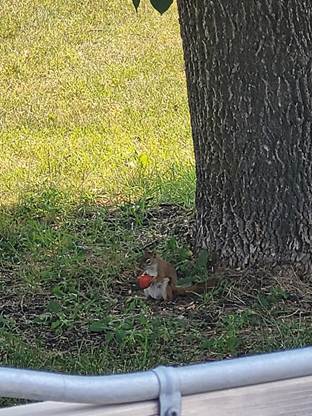
Program Assistants Brooke and Gibson visited Lanark Gardens on July 29th to watch three of the chimneys in the complex; unfortunately, no swifts were seen or heard during their observation. However, Gibson got to enjoy watching a nearby squirrel snatch a strawberry the size of its head from a dropped container in the Lanark Gardens parking lot, carry it off to the shade of a nearby tree, and snack away. Very entertaining!
On Thursday, July 30th, Katharine watched the chimney at Grant Wilton Apartments during the daytime. Three entry/exit events within 1 minute occurred, with ~50 minutes between the first two and only 10 minutes between the second and third exchange. While it is uncertain what stage of breeding is happening at the present, there is likely a nest at this site!
St. Boniface
Going back in time, Blair shared the results of a chimney watch at Archibald Storage during roosting hour on July 17th. There was one Chimney Swift present in the large chimney prior to roosting hour and, with numerous entries/exits throughout the observation period by three adult swifts, it’s likely this trio was tending to young in the large chimney.
More recently, during the afternoon of July 27th, Blair watched the chimneys on the Fire Hall and Euro Craft Office Furnishings buildings simultaneously. Unfortunately, swifts were entirely absent.
St. James
On July 28th, Program Assistant Brooke watched the Essex House chimney in the morning and saw no Chimney Swifts. Breanne visited the same site on July 30th for a roosting hour watch, recording two daytime exits along with roosting hour entries/exits. Given the results of Brooke’s prior daytime watch, it’s likely the daytime activity Breanne recorded at this priority monitoring site was simply swifts eager to roost early rather than nesting activity.
St. Vital
Program Assistant Gibson watched the chimney at St. George School during the morning of July 28th but did not see any Chimney Swifts at the site.
August 1st–7th
Darlingford
On Monday, August 3rd, Paul conducted a roosting hour watch at Darlingford School Heritage Museum; three Chimney Swifts roosted in the chimney, with entry/exit events occurring at 15–20-minute intervals during roosting hour. Paul suspects swifts tending chicks – perhaps a pair and helper with brooded young?
Selkirk
Members of the usual Selkirk team conducted more roosting hour watches at the Selkirk Mental Health Centre on August 5th! Here’s what they reported:
Nia and Linda watched the powerhouse/”yellow brick” chimney and the stack replacement tower (T04). Events at the former chimney were simple, with two Chimney Swifts entering to roost, but things were more complex at the tower; with three swifts in the chimney at the start of the watch, one daytime entry and exit were followed by nine roost hour entries and exits, and seemingly only two swifts remained to roost. Might a trio of adult swifts be continuing to tend to (now) non-brooded chicks at the site?
Dennis and Patti watched the east infirmary chimney and infirmary-attached tower (T03), recording frequent entries and exits at both sites throughout the daytime and roosting hour. There were a maximum of three Chimney Swifts in the tower and two in the chimney prior to roosting hour and, at the end of roosting hour, three and six remained in the tower and chimney, respectively. This activity remains difficult to interpret; do these counts include fledglings beginning to practice flight or just early, active roosting by additional adults? Further daytime observations may be required for a better understanding of current nesting behaviour at the sites.
On Thursday, August 6th, Fred and Nettie watched the taller west tower (T01) at the Selkirk Mental Health Centre, recording entries and exits throughout the hour prior to sunset and roosting hour. With five swifts in the tower at the start of the watch and four roosting in the tower, these observations may again indicate fledglings practicing flight before settling in to roost.
St. Adolphe
Here is a summary of more recent updates from Barb in St. Adolphe:
“This morning [Saturday, August 1st], 2 swifts enjoyed a long time out in the Tower; they entered within seconds of my arrival at 9:45; 1 left ~10:12; 1 was still in as I left at 10:25 (40-minute observation period). So, you just never know who’s in and who’s out at some sites… the maximum group size in air = 2 as the large group wasn’t about…”
“Having picked up on fledging at the Church and Tower, my focus shifted to Club Amical. That resulted in some great sightings of changes [on Monday, August 3rd]! … Summary for SE Club: 4 entries; 4 exits; pair moving together; good feeding rate for non-brooded juveniles. Summary for NE Club: 1 entry; 1 exit; 35-minute duration-in interval and limited number of entries indicate feeding is NOT taking place; adults could be late season incubating OR resting inside.”
“On Monday, August 3rd, Lewis and I enjoyed a lovely morning watching swifts at the St. Adolphe Church [after monitoring Club Amical]… between 9:45 and 11:15 AM… Activity is still quite high during the daytime at the Church post-fledging. In previous years, pre-migratory groupings took place at the Church. So, it is expected that the local swifts, including fledglings from other sites, will start using the Church chimney for daytime resting and nighttime roosting. “From-away” swifts were noted in St. Adolphe recently and they would add to the head count. The shift to evening watches and roosting hour head counts is necessary to track that development.”
“Shortly after arrival [Wednesday, August 5th], a low-flying group of 12 swifts (= maximum in air for session) passed over the Club; they fed in the vicinity; I suspected that some juveniles tucked into the formation! … Summary for SE Club: 5 entries; 4 exits; 1 remaining in at end of session; the approach/entry characteristics by 2 swifts suggests an adult was leading a fledgling into the site. Fledging Day nominally = August 4–5. Summary for NE Club: 2 entries; the nest was unattended [for] 50% of the observation session which suggests that the breeding pair are not tight on eggs if indeed they are incubating; alternately, they may be using the chimney for resting. More observations are needed to estimate the number of fledglings at the SE chimney and figure out if the breeding pair at the NE chimney are continuing with a breeding attempt.”
“We are now [Wednesday, August 5th] 1-week post-fledging at the Church and Tower, so the local St. Adolphe flock typically starts to form a pre-migratory roost… it’s all very dynamic with year-to-year variation… in the previous two seasons [2024 and 2025], the dry, smoky conditions were so bad that the group left town almost immediately. Perhaps the higher abundance of insects will support the swifts for a longer stretch this year?”
We here at MCSI certainly hope this is true – watching Chimney Swifts move through the stages of spring migration to nesting has been a joy and we’re not ready to say goodbye to the swifts just yet!
“Thursday, August 6th; SE Club Amical fledging Day + 1–2 Days… Synopsis: fledglings were using the SE Club Amical site; the estimated number of fledglings >2–3; an adult appeared to be leading a juvenile to the natal site and, in another instance, checking the interior but no feeding entries by adults were seen. No activity was observed at the NE Club Amical site; more observations are required to determine the breeding status, but feeding is not indicated.”
“Friday, August 7th… Synopsis: reduced activity at the SE Club Amical site post-fledging is on trend. The fledglings are using the chimney for rest stops but the feeding entries by adults has declined. Activity at the NE Club chimney is still apparent – an incubation exchange could have occurred but no entry/exit events at a rate consistent with feeding were obvious. A quick 25-minute recce was made at the Main St. site immediately following the Club Amical watch… no entry/exits were observed and a group of 3 swifts was seen once over the river; the big group of swifts was not in town this morning… the observation was too short to determine if fledglings were lurking inside the chimney. Luckily, we have very supportive homeowners who will let us peek into the cleanout at the end of the season to verify nesting activity!
“Still no opportunistic sightings of adults using the Brodeur Bros./Daycare chimney recently… roosting hour watches would tell us if the adults are still established at the site, but with the pre-migratory phase upon us, the absence of roosting swifts wouldn’t be definitive of abandonment.”
“And that’s a wrap for the first week of August in St Adolphe! The themes for next week will likely be more fledgling flight training, then gathering up the locals and “from aways”, for the up ‘n’ away moment… how is this season ending so soon?”
Truly exciting activity in St. Adolphe with fledglings on the move! Thanks as always to Barb for dedicating so much time to the swifts and sharing such detailed observations and interpretations with us all.
St. Andrews
Gerald and Brittany returned to the Lower Fort Garry men’s house and furloft chimneys during roosting hour on Sunday, August 2nd. Two daytime entries and one exit followed by eight and four roosting hour entries and exits, respectively, were recorded at the furloft, with five swifts roosting in the chimney. The frequent entries/exits may suggest the presence of a breeding pair feeding brooded or non-brooded young and 2–3 non-breeding adults roosting at the site. Similarly, at the men’s house, three daytime entries, one daytime exit, and six roost hour entries and exits (with only two swifts roosting in the chimney) may indicate frequent feeding periods of non-brooded young.
The next evening, Gerald again performed a roosting hour watch at the St. Andrews lock and dam powerhouse. At the north chimney, a single roost hour entry was seen. As noted by Gerald:
“The second swift is AWOL. I went over the video from 8:30 to 9:40 PM and could not find the second one. Maybe it went to help at the [Lower Fort Garry sites].”
Similarly, two swifts entered the south chimney. It was a quieter night, but these observations still represent important data confirming continued roosting at these sites!
Winnipeg
Charleswood/Tuxedo/Westwood
On the afternoon of Tuesday, August 4th, Graham watched the Canadian Mennonite University chimney and recorded four entries and exits from the chimney. These frequent (every ~10 min) entries/exits were more easily interpretable than activity recorded here ~2 weeks ago, suggesting a breeding pair is tending to non-brooded young at this site.
East Kildonan/Elmwood
Blair visited Riverwood Church Community Firehall for a brief observation on August 3rd and recorded two entry/exit events ~10 minutes apart during the afternoon. These frequent exit/entry intervals suggest a pair may be provisioning non-brooded young at this site.
Erin and Brennan watched the MMF tower (T09) during the morning of August 6th. A maximum of two swifts entered the chimney at one time during the observation period; with two entries and three exits recorded, and pair exchanges taking place ~20 minutes apart, adults are likely tending to brooded young at the tower.
Point Douglas
John returned to the Nutty Club Food Club to watch the hidden center chimney during roosting hour on August 4th, recording four entries, two exits, and two Chimney Swifts roosting at the site.
St. Vital
Blair observed the Riverside Billiards chimney on the morning of August 3rd. Blair recorded three entries and exits at odd intervals during the hour watch, with two adult Chimney Swifts recorded in the chimney at one time. Perhaps the pair is tending non-brooded young!
Overall
This was a long one… As Barb recently shared:
“Monitoring Chimney Swifts through the stages of nesting is time consuming and energy consuming… Following many nest sites simultaneously requires shifting between daytime and roosting hour at various locations to figure out what the swifts are up (and down) to… Monitoring stages of nesting before fledging is an exercise in patience and curiosity and trying to adapt observation approaches as dynamically as the swifts make changes. There are so many subtle nuances that signal transitions – from nest building/egg laying to incubation, from incubating to feeding hatchlings, from feeding brooded to non-brooded juveniles. But the IN-FRONT-OF-YOUR-FACE flying of fledglings is the most gratifying to observe if the Swift Deities gift you those wow moments.”

All signs point to the time of Chimney Swift fledging being upon us! Monitoring is now, as ever, critical to confirm nesting success across the province, and it can’t be done without your help. Thanks again to our dedicated volunteers for continuing to collect this important data!
If you haven’t had your fill of swifts after making it this far, follow us on Instagram and Facebook for other news about monitoring milestones and updates on all things swift. Catch you in the next one!
– Gibson (Program Assistant)
