“The time has come,” the Walrus said, “To talk of many things…” (Lewis Carroll, The Walrus and the Carpenter)
…but to roll out the 2017 MCSI season, we are going to talk of many swift related things!
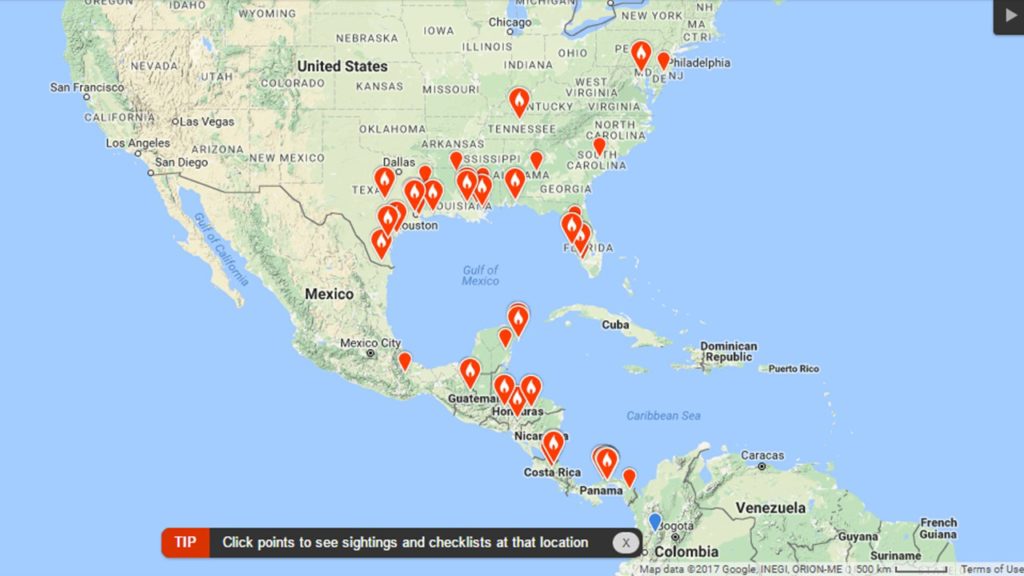
Our Chimney Swifts are migrating north from their wintering grounds in South America. The latest eBird map shows that our intrepid swifts are fast moving up the eastern coast of the USA, recently being seen as far north at Maryland and New Jersey. As an aside, it is interesting to see how few winter sightings there were in North America, just one near Bogota and one cut from this map in Peru.
With the swift’s impending arrival in Manitoba, mid- to late-May, it is time to SAVE DATES for the spring monitoring programs. The 2017 National Roost Monitoring Program (NRMP) dates are May 24, May 28, June 1, and June 5. The national organizers in Quebec use a recipe to choose dates each year: the first monitoring night occurs on the Wednesday preceding the last Sunday in May. Still with us? As a result of using this recipe, sometimes peak counts can occur before monitoring gets underway. This has happened in Ontario and in Manitoba, our later arriving swifts can be more abundant at roosts well after the NRMP finishes.
You’ve heard MCSI extol the value of “0” data-points. Those beautiful zeroes, which are so frustrating for bird enthusiasts to score, are so very important to establish true arrival dates. In order to get our Manitoba counts bounded by an observation before the Chimney Swifts arrive and to better inform seasonal peak counts, MCSI is adding two additional monitoring dates – one on either side of the NRMP dates. We would appreciate observation data for May 20 and June 9. Even if early arriving or lingering roosting birds are on-site, we can be confident to have captured seasonal maxima if NRMP counts are higher than our first and last night counts.
Now we have to capture you for monitoring at specific sites. In 2017, the steering committee asks for your help with three high priority activities. We recognize that this may result in a shake-up for some of our long-term supporters. Prioritizing monitoring sites may involve heading to a new site or accepting the helping eyes of additional monitors at your site.
First, we have 30 chimneys which need one additional record of use e.g., entries or exits, to make the site eligible to be registered as critical habitat. To help you locate these new chimneys, we have come up with a rather splendid looking map. If you are limited to NRMP monitoring, please consider selecting one of these sites to focus your efforts on this year. We will keep this map updated – those sites in blue require a new volunteer to check them and those in pink have a dedicated volunteer(s) already. We need to submit observations to Environment Canada asap to have sites listed in the registry. Tim will coordinate monitors, so please contact him if you are interested in a special assignment.
Second, we would like to continue tracking the 17 sites which have qualified previously as roost sites for the NRMP; these chimneys have housed 4 or more Chimney Swifts for overnight rest. Those chimneys can be found on the map below. Some of these 17 chimneys have dedicated monitors while, for other sites, new volunteers need to be assigned. Chimneys which have dedicated volunteers have purple pointers and those which do not have red pointers. We will update the map as people come forward to cover new sites. If you are willing and able to take on one of these sites please email Tim Poole at mbchimneyswift@gmail.com.
The third high priority action item is for season-long coverage of our 3 Big Roosts –Dauphin (213 Main St.), Selkirk (Large Stack), and at Assiniboine School in Winnipeg. MCSI is collating data on the dynamics of roost sites relative to nest sites. With counts for 2017, we will be able to publish an analysis of arrival times, dispersal, and put the non-breeding vs breeding portions of the Manitoba Chimney Swift population into perspective. After the NRMP and special MCSI monitoring night of June 9, we would appreciate receiving any roosting counts for the 3 Big Roosts over the remainder of the season. More is always better, so weekly visits would be ideal while checking in once every 10-14 days would still be helpful. Tim will be coordinating with the team leaders for each of these roosts and help steer supporters to the chimney rims as required.
Your monitoring results do make a difference. Rob Stewart, and co-authors Tim Poole, Christian Artuso, and Barb Stewart, recently submitted a manuscript “Loss and preservation of Chimney Swift habitat in Manitoba, 2007-2016” to Blue Jay (we hope to be published in the summer or fall edition). Data analysed in the paper represent ten years of observations made by our cadre of dedicated citizen scientists. Beyond informing the general public, the publication should be used by the Chimney Swift recovery strategy team. The authors cannot stress too much that the monitoring data, including the zeroes, were essential to this analysis, which we think is the first ever quantification of habitat loss in Canada. So, thank you all for engaging in the process of supporting this species at risk!
Spreading the word about Chimney Swifts is taking on a new look in St Adolphe. Organizers of the revitalization project for Main St. have proposed two exciting visual displays featuring swifts. Stay tuned as the rollout starts this summer…
We always enjoy gatherings to marvel at the aerial wonders of Chimney Swifts. Join us for A Swift Night Out which is being organized for Assiniboine School on Tuesday June 13, with a rain date of Wednesday June 14. There will be more to follow on this.
Now that we have monitoring and outreach issues covered, here is an update on habitat stewardship goals for 2017. Funding continues from Environment and Climate Change Canada’s Habitat Stewardship Program. We are currently looking to complete two chimney repairs in 2017. We are applying for more funding and we will keep you posted on any new developments.
Everyone at MCSI is looking forward to another exciting year of swift watching. Let’s keep in touch as the season spreads its wings…
— Tim Poole, MCSI Coordinator; Frank Machovec, webmaster; Christian Artuso, Ron Bazin, Neil Butchard, Lewis Cocks, Ken De Smet, Nicole Firlotte, Rob Stewart, and Barb Stewart, Steering Committee Members.
Always remember that it’s not just Santa who needs an open chimney. Thank you to all our volunteers and supporters for making 2016 a memorable year for Chimney Swift conservation in Manitoba. We hope you enjoy the coming holiday season and look forward to seeing many of you in 2017!
— The Manitoba Chimney Swift Initiative (Christian Artuso, Ron Bazin, Neil Butchard, Lewis Cocks, Ken De Smet, Nicole Firlotte, Frank Machovec (web maestro), Rob and Barb Stewart (St Adolphe gurus) and Tim Poole (Habitat and Outreach))
I thought now would be a good time to send an update to our supporters on the progress of our stewardship and outreach activities in the past couple of months. During the fall, MCSI employed a Winnipeg-based mason, Ed Loewen, to carry out repairs to five active chimneys which had become degraded and required repairs to ensure they would remain viable swift habitat. The selection of sites is carried out on a simple criteria, being:
Is or has the chimney been an active site for swifts in the past 5-10 years?
If it has not been active for a few years is there good reason for that (e.g. the top of the chimney has been blocked by falling masonry)?
If it has not been active for a few years but repairs would make it suitable, are there other Chimney Swifts in the area to suggest birds might return once the work is complete?
Most importantly, is there interest from the building owners and community in seeing these repairs through and to be champions of swift conservation in the future?
In 2016 we originally had a longer list of sites with which to work but due to various reasons, for example change of ownership, we were able to reduce the final list to five chimneys. Below, I will summarise the work we were able to complete.
Merchant’s Hotel, Selkirk (2 chimneys)
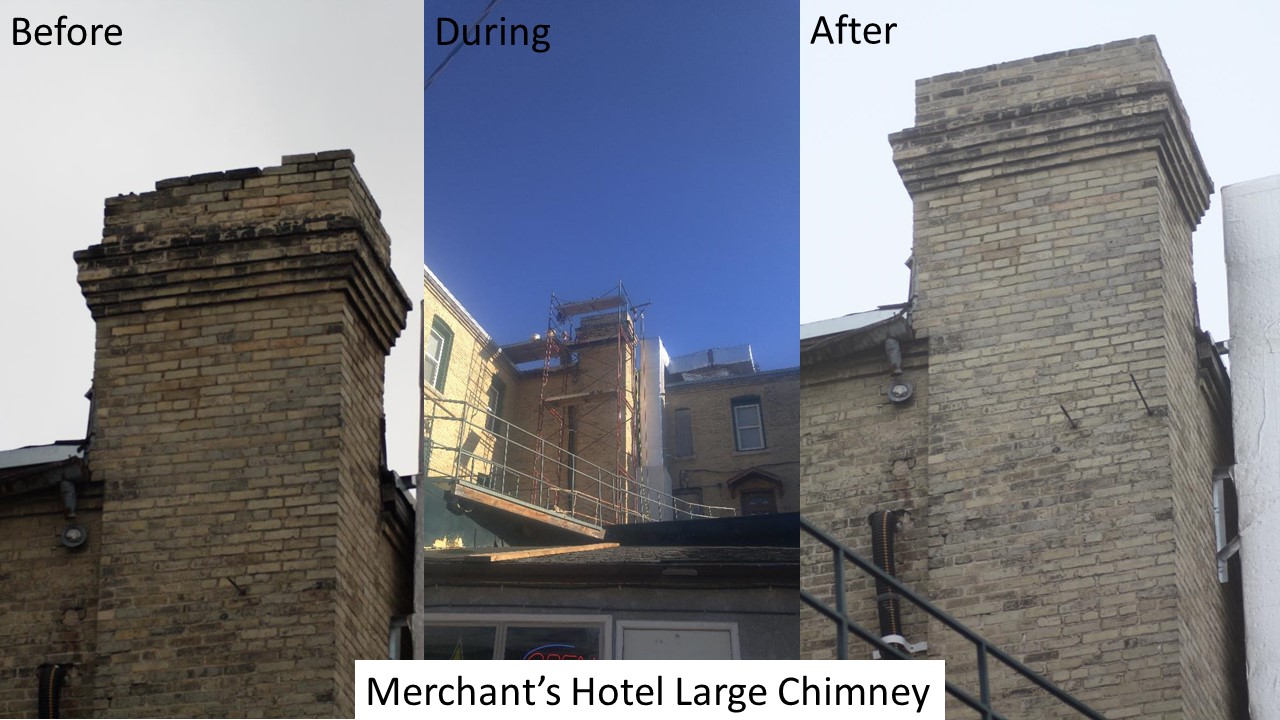
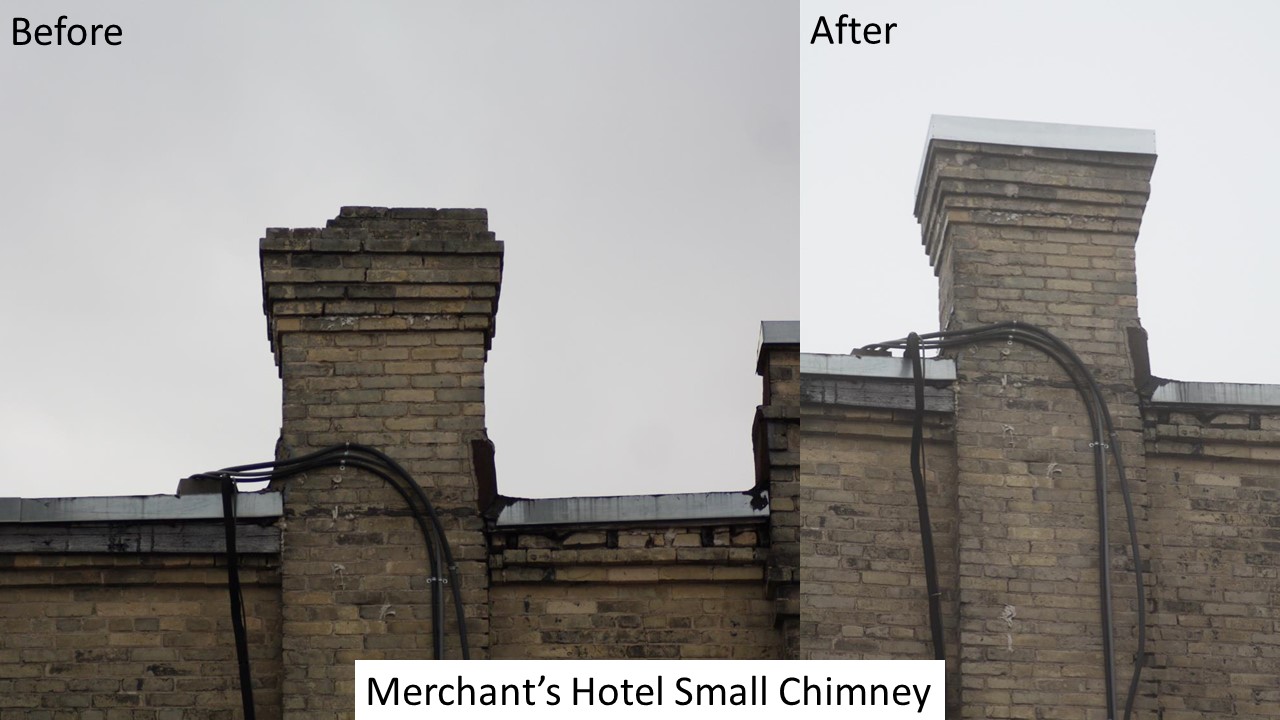
We were delighted to complete our first project in Selkirk with the Merchant’s Hotel. This building had recently changed hands and the new owner was very willing to work with us. There are two chimneys on the building. One was active and the other had been blocked by a bee nest. Inspection of the cleanout of the second smaller chimney revealed that swifts had historically used the site and we had repairs completed to both in the hope that a second pair of swifts will nest here in future years. The chimney had a flashing pan added to the top, offering greater stability over a longer period of time. The photos below show the before, during and after stages of this work.
St Norbert’s Parish Church
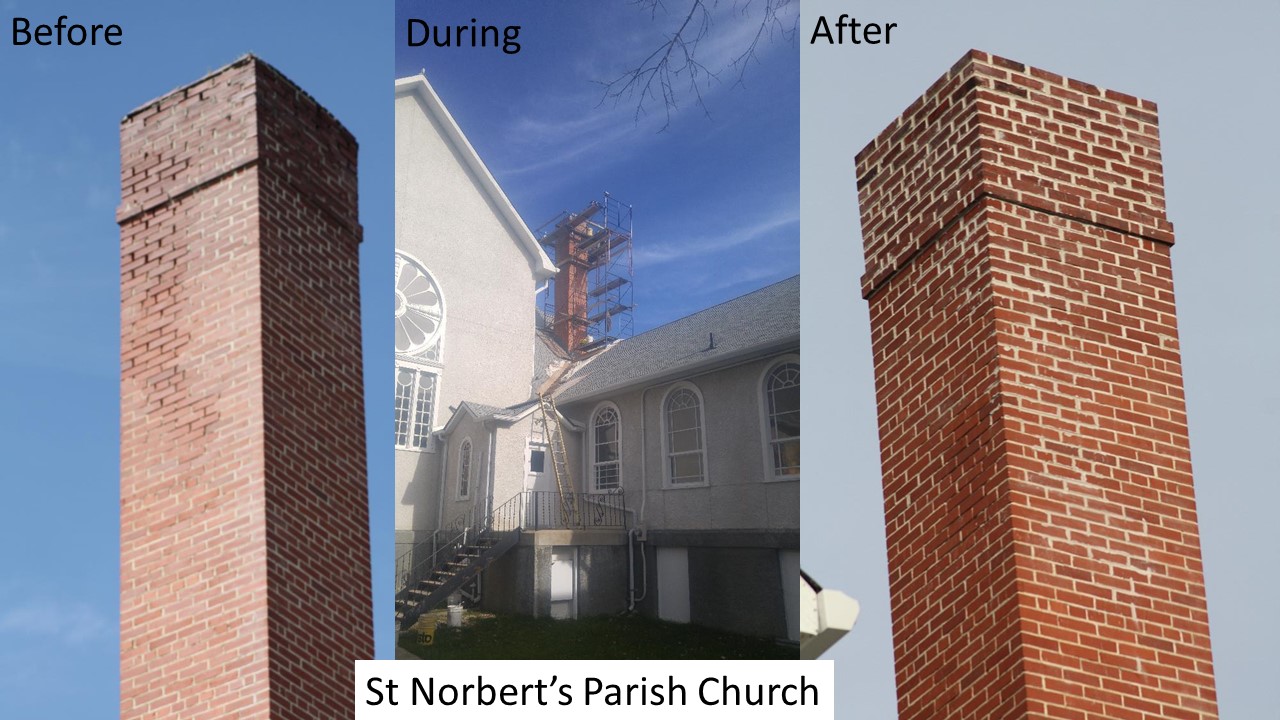
Local volunteer Blaire Barta first discovered the chimney on the rear of the St Norbert’s Parish Church while walking her dog in 2015. Following a no swift-show for new volunteer Lucy Johnson during the National Roost Monitoring Program evenings in 2016, it appeared that we might be out of luck. However, local reports suggested that swifts failed to appear in St Norbert until mid-June in 2016, a strange event indeed. Later in the summer following reports of swifts in the area, Blaire returned for another look. That evening six birds entered the chimney. Given the state of the top of the chimney, we moved fast to ensure that it could be repaired promptly, and this was completed during the fall. This was the most complex procedure due to the position and height of the chimney on the church building and the need to wrap scaffolding around the entire structure to protect the roof.
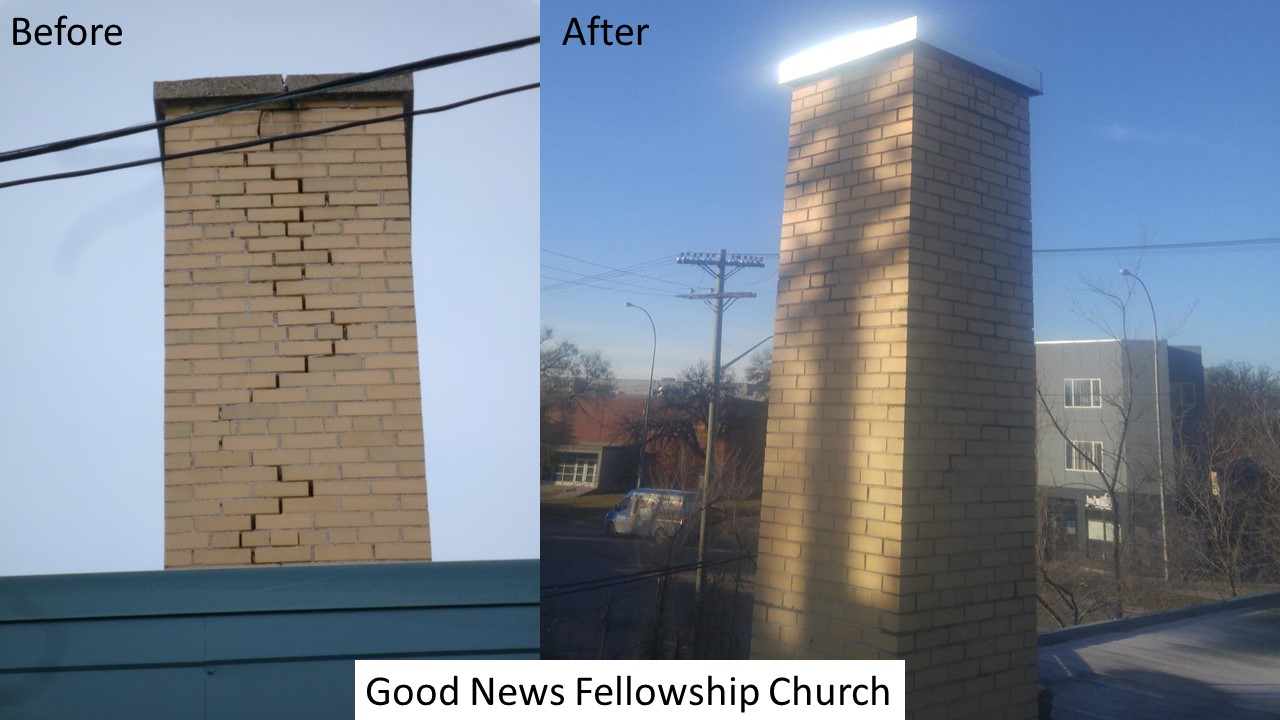
Good News Fellowship Church, St Mary’s Road, Winnipeg
The chimney on the Good News Fellowship Church was becoming extremely degraded with the mortar holding the bricks together eroding. Following a chimney inspection in the summer, the church building maintenance repointed the chimney on their own back. It was suggested afterwards by an independent source that a pan to cover the lip would help to stabilise the top layers of bricks and MCSI stepped in to help with this part of the work.
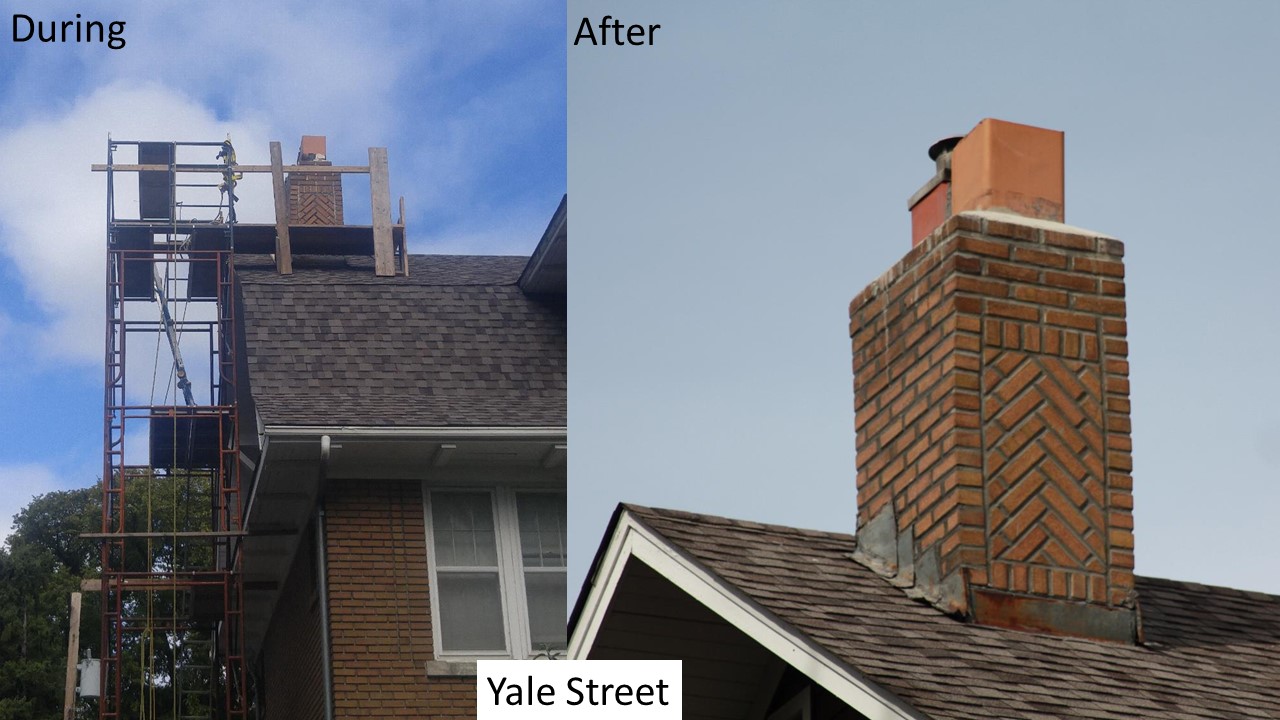
Yale Street, Winnipeg
This building was already made famous by a piece on the CBC website. This fall we had the chimney at the front of the property repointed. This allowed the owners to upgrade a previously capped chimney at the rear of the property in order to install a new central heating system. By doing so, we helped to conserve the swift habitat for future breeding attempts.
The work program above was achieved thanks to grants given by Environment Canada and a private donation to MCSI.
A few notes on the outreach part of our program. I am ordering some more copies of the Spits and Sticks book. I have recently donated copies to a school in Winnipeg and the town library in Carmen. I gave a short talk to the children of École St Avila in Winnipeg on the resident Chimney Swifts found there during the past summer.
Finally, it is always great to bring swift stories from Canada and the wider world to the attention of our supporters and there have been a couple of stories bought to my attention today. The first of these is from a website called the Birding Wire. Scroll to the bottom of the homepage and there is a story about Chimney Swifts in West Virginia. Always great to here of the considerable energy that communities across North America make for Chimney Swifts.
The other story relates to a blog from the UK from a chap called Mark Avery, formerly Director of Conservation at the Royal Society for the Protection of Birds. In a guest blog, we can see what artificial habitat looks like for the Common Swift. I am sure everyone can agree that it looks a lot less complicated than Chimney Swift habitat!
— Tim Poole, Manitoba Chimney Swift Initiative Habitat Stewardship and Outreach Coordinator
By: Tim Poole, Manitoba Chimney Swift Initiative Coordinator
2016 has been a busy and successful year for the Manitoba Chimney Swift Initiative and as the first snows of winter finally join us, this seems to be an opportune moment for an update to the Nature Manitoba membership.
Monitoring Successes
There are a large number of stories generated by volunteers spending dozens of hours peering at chimneys in search of a plunging swift and there is not really space enough to cover all of these in this piece. However, there are a few which are too good to pass up!
Manitoba’s first recorded shared nest and roost chimney was discovered at the Assiniboine School by volunteers David Wiebe and Adolf Ens. This is an unusual not unheard of occurrence in other parts of their range. Sharing a nest site with another hundred or so swifts seems a little uncomfortable!
Nature Manitoba member John Hays certainly caught the Chimney Swift bug earlier this summer, uncovering at least four previously unknown nest and roost sites in the area between the Health Science Centre and Exchange District. IBA summer student, Marshall Birch also got in on the act, helping to discover another three.
Discovering new sites in towns where we already know swifts are present is one thing, discovering them in new places is something completely different. Thanks to Manitoba Sustainable Development biologist Ken De Smet, we were able to add Manitou and Stonewall to our list of settlements with swifts. There were also swifts seen flying around in The Pas, only the second time this has been recorded.
St Adolphe continues to be the centre of a hive of activity, not least thanks to St Adolphe volunteers, and critical partners in MCSI, Barb and Rob Stewart. Chicks only fledged from the church in 2016, although some of the latest breeding attempts were made on record thanks to delays in breeding likely bought about due to less than satisfactory weather in June.
Our volunteers continue to astound us. In late May, during an apocalyptic downpour, Beth Hiltz and David Wiebe recorded our largest entry of the season, with 156 swifts entering the chimney at the Assiniboine School. Across Manitoba, volunteers have driven this program with enthusiasm.
Building for success
Thanks to funding from Environment Canada, we are able to repair damaged chimneys, retaining these critical habitats for Chimney Swifts. Without this funding, we risk the loss of these chimneys as they either collapse or are demolished. In 2016, MCSI have repaired five chimneys in Selkirk, Winnipeg and St Norbert. We are always looking out for new projects and more funding to ensure that we can continue with this program in future years.
Champions Galore!
Since 2014, MCSI has begun handing out plaques to some of our most distinguished building owners and volunteers. Swift Champions are those who have shown a demonstrable commitment to the conservation of Manitoba’s Chimney Swift population. In 2016 we have presented 6 plaques to landowners. We have also begun to present plaques to volunteers and we are pleased to announce that we are going to present plaques to a few groups of volunteers who have contributed hugely to MCSI knowledge through their monitoring programs at different sites. These volunteers do regular season-long monitoring at some of Manitoba’s largest roost sites and in no particular order are:
The Selkirk Birdwatching Club
David Wiebe (Assiniboine School volunteer)
Adolf Ens (Assiniboine School volunteer)
Ken Wainwright (Dauphin volunteer)
Gord Ogilvie (Portage la Prairie volunteer)
Lewis Cocks (MCSI founder)
And finally
Thanks once more to all our volunteers and the support of our partner organisations – MCSI would be nothing without the incredible support we receive from all of you. We look forward to a successful 2017!
There are a couple of stories in the news recently which may perk up peoples interest. The first is a mention of our Swift Champions Program (http://www.mbchimneyswift.ca/champion.html) in an article on CBC Manitoba about grouse populations in southern Manitoba. Here is the link.
Another example of swifts in the news has winged its way to us from Sweden via the Washington Post. Unsurprisingly for any swift aficionados out there, it turns out that this incredible group of birds are world record holders in their own rights, thanks to spending an absolutely mind-boggling 10 consecutive months on the wing. That’s correct, some Common Swifts from Sweden do not leave the sky for 10 whole months and can fly over 10,000 miles without a single break. Wow! The impressive feat can be found in a piece packed full of interesting information by clicking on this link.
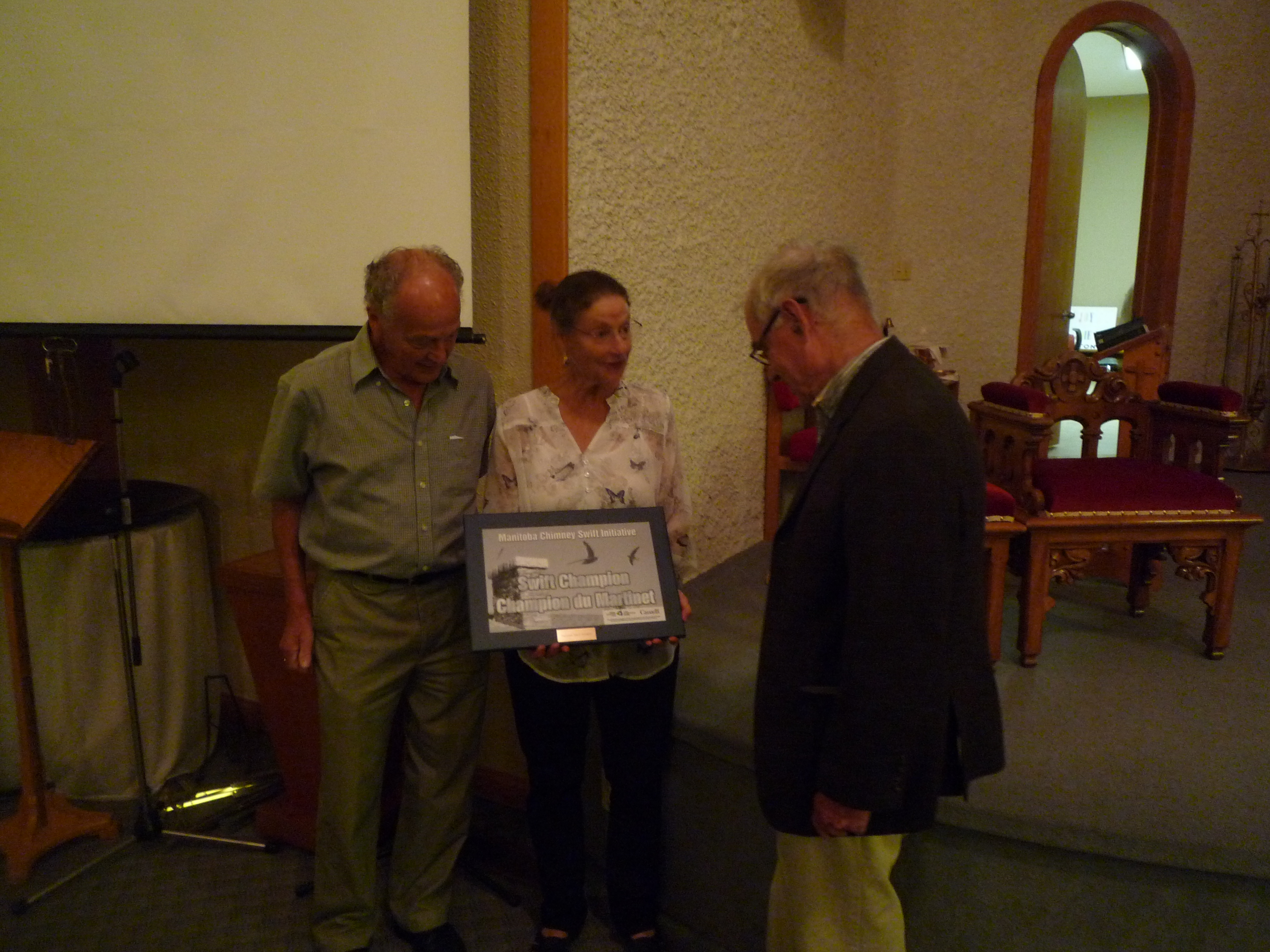
Earlier this summer, Barb Stewart and Tim Poole presented the latest of our Swift Champion plaques to the Paroisse Saint Adolphe and terrific local supporters, Father Gerald Michaud and parishioner Leon Verhaeghe.
The relationship between MCSI and the church is a long one, starting out almost at the beginning of MCSI in 2007. Father Michaud was supportive of the Chimney Swift conservation from the beginning, handing out information to parishioners at Sunday Mass. This in fact led to another local family coming forward with their own swift discovery. Later that same summer, Father Michaud and another parishioner came to the rescue as two exhausted swifts were captured and released after they accidentally became trapped in the church.
St Adolphe Church Chimney-R.Stewart
In 2009, the church became MCSI’s first repair project following a report recommending either immediate repair or demolition of the chimney. As this chimney had been used regularly since 2007 and was the sole roost in St Adolphe for migratory groups in August, the chimney had to be protected. The church were willing to partner with MCSI, something for which we are obviously extremely grateful. The church have also allowed the St Adolphe Chimney Swift tower to reside on its grounds following a move from land owned by the Rural Municipality of Richot. This tower resides on the property to this day, testament to not just the active involvement of the church, but also the community itself.
Still to this day, the relationship between the church and MCSI continues to be productive. Although (semi) retired, Father Michaud still leads mass at church. Leon Verhaeghe has also been a great support over the years, whether opening the church to access the cleanout each fall, volunteering to help move the tower to the church or supporting swift viewing events at the church. There have also been many other parishioners willing to help out for the cause of these summer members of their congregation for which we are thankful.
Presentation to Swift Champions Leon Verhaeghe & Father Michaud
An Ode to Chimney Swifts Dedicated to MCSI Volunteer Monitors
UNLESS WE CARE
Do you hear soft chitters fill the air –
See bowed wings dash through the sky?
Ah, Chimney Swifts are racing by,
Snatching at insects that fly up there.
At the chimney sides we sit and stare,
To glimpse at swifts which quickly drop,
Below the rim, to make a stop,
As roosting groups or a breeding pair.
After feeding through skies foul and fair,
They need a wall to safely rest,
A place to glue their sturdy nest.
Can those Chimney Swifts live anywhere?
As old growth trees are now quite rare,
Brick chimneys fulfill the housing needs,
But they are vanishing fast indeed.
So will our swifts. Unless we care…
Monitoring Results for the 2016 Season
Your monitoring observations for the recent season have been compiled, and the results are posted on the “results” page of our website (http://www.mbchimneyswift.ca/results.html) .
Since 2007, Manitoba Chimney Swift Initiative volunteers have monitored roost and nest chimneys throughout the province. After 10 seasons, we have learned a great deal about the distribution, abundance, and site dynamics of Chimney Swifts living at the northern periphery of their distribution. MCSI shares and acts on that knowledge through publications, habitat stewardship initiatives, and outreach programs.
Our thanks are sent out to the many people who have dedicated themselves to caring about this species at risk. Your efforts are appreciated and make a difference!
We look forward to welcome you all by the chimney sides in 2017,
— Barb Stewart, St Adolphe monitor and Steering Committee Member, for the MCSI team: Tim Poole, Habitat Stewardship and Outreach Coordinator; Frank Machovec, Webmaster and Steering Committee Member; Christian Artuso, Ron Bazin, Neil Butchard, Lewis Cocks, Ken De Smet, Nicole Firlotte, and Rob Stewart, Steering Committee Members.
Barb has delivered the final season ending blog, and it would appear that the swifts have retreated to warmer climes. Rather than disappear into hibernation, the MCSI are busy working on a few projects which we will share on the blog between now and May.
Common Swifts
We are also always on the lookout for interesting stories to share, not just on Chimney Swifts, but other swift species. Both pieces were published by The Guardian newspaper from the UK and relate to the Common Swift, the species which would nest under the eaves of my parents house in southeast London. The first is a ‘captivating’ (thanks Barb) piece describing the pre-migrating swifts in a village in eastern England. See https://www.theguardian.com/environment/2016/aug/16/above-our-village-swifts-speed-scream-country-diary. The second is from 2015 and refers to research showing the remarkable flight endeavours of Common Swifts which breed in the old imperial palaces in Beijing and winter in southern Africa. Truly remarkable birds! See https://www.theguardian.com/environment/2015/may/25/swifts-migrate-beijing-southern-africa-without-landing.
Here it is – the monster wrap-up monitoring blog for 2016. August sped by in a dizzying fashion, starting with the early dispersal of swifts from roosts. Yet the month stretched out as we tracked fledging, late nesting breeders, and migrating swifts. Without further ado, here is what you all reported…
In mid-July, Ken reported activity in the chimney of the Visitor Centre at Riding Mountain National Park. A mid-day entry and exit on July 14, and evening entry/exit cycles on July 15, indicated a nest site was active. A cleanout trap is accessible on this chimney so breeding success can be verified.
In late July, the St James monitors shifted to morning observations at three of their sites. Adolf and David noted activity at: the Carillon – 2 exits; the new 1780 Portage site – 2 exits and an entry; and Assiniboine School – an exit indicated that the nesting activities at this combined roost/nest site continued.
Similarly, John was as busy as his nesting swifts in late July. He monitored on July 30 and 31, then started in again on August 1. “I have been to Princess and McDermot the last three days and saw entry and exits every 12 to 20 minutes with about 30 seconds in the chimney. Yesterday morning I had 5 swifts flying over the nest at McDermot for about 10 minutes as well as one entry/exit in 40 minutes. I’m hoping that was flying lessons I witnessed with at least one more chick still being feed on the nest.” The timing was right for fledging and we hope that was the case.
An unexpected event unfolded in St James on the evening of August 2. Adolf was hosting a group from Bethel Place, assembling to “observe the phenomenon of Chimney Swifts entering the Assiniboine roosting chimney”. The phenomenon fizzled. No more than 2 swifts were seen at once and the total for the night was only 8! A week earlier, on July 25, 61-63 swifts had come in for the roost. The swifts were on the move.
Following on the theme of unexpected events, Gord and Janice checked their Portage sites in early August. The swifts were late-arriving in town this spring and showed no signs of nest building along the way. However, on August 1 (roost) and August 2 (daytime) feeding activity was noted at Victoria School. Janice saw 3 consecutive exits, 2 consecutive entries and 2 consecutive exits in 30 minutes of viewing over the noon hour on August 2. Returning August 5, Janice noted 4 feeding cycles in an hour of dinnertime monitoring on August 5. This is the FIRST nesting attempt recorded for this site.
Frank and Jacquie hit the road again on August 3, passing through Aubigny. There was a brick chimney of interest on the rear of the church. Heading back on August 5, 0 swifts were seen in the airspace. Given the early departures witnessed in Winnipeg, another look-see next year is warranted.
John continued his “new site magnet” ways on August 3. “On my way back from the north end today I stopped at two chimneys for a 5 minute peak. No luck with the first, which was more of a smoke stack than a chimney. At the second I had an entry and exit, then 20 minutes later had 2 swifts entry and exit less than a minute later. Looks like another nest!” Site 2016-20 is located at 70 Higgins. This new site is John’s fourth discovery for 2016 and the last addition to the critical habitat registry list for 2016. Great work John.
To keep John’s accomplishments together, here is a summary of his sites:
Site 2016-4, William Ave; maximum count = 4, June 2 (NRMP-3);
Site 2016-6, 579 McDermot, nest site; likely successful; fledging ~ August 1;
Site 2016-14, 41 Princess; nest site; likely successful; 3 roosting August 16;
Site 2016-20, 70 Higgins; nest site; successful; 5 roosting August 15.
Moving on to Selkirk on August 3, Winona was at her Merchant Hotel site and watched 8 swifts flying about – they all roosted! The breeding attempt appears to have been successful. On July 27 and 28, increasing entry/exit activity was noted before the increase of roosting swifts was seen on August 3.
More good Selkirk news came from Robert on August 3. He saw 4 swifts enter the Infirmary chimney – 2 of them were juveniles! The benefit of making frequent, concurrent observations at nearby sites is that the synchrony of breeding events can be compared. Both the Merchant and Infirmary sites had a breeding pair on site in May during the NRMP.
At another Selkirk site, Gerald saw no activity at his Manitoba Ave site on August 2. No flying swifts were seen either.
Large Stack in Selkirk
Similarly, no swifts entered the Small Yellow Chimney on August 3 when Gerald and Robert watched it. On July 18, during a robust roosting hour session, 8 entries and 6 exits were seen and 3 swifts were inside at one time. This indicated a possible helper was onsite at a nest chimney, but July 18 is too early for fledging. The earliest known fledging date this summer was July 30 at the Church in St Adolphe; the family group was still present on August 5. So the absence of swifts at the Small Yellow Chimney on August 3 may have reflected a nest failure.
Still in Selkirk on August 3, Carol, Gerald, and Robert counted 27 roosting entries at the Large Stack; this was up from July 18 when 17 swifts roosted. The increase suggested a pre-migratory group was setting up, but this secondary late-summer peak was 6 less than the spring peak count of 33 recorded on May 25 (NRMP-1).
Matt sent an update from Carman on August 5. All three nest sites in town were occupied and young were in the nests. Bad news winged in on August 6 – no swifts were using the elementary school over two hours which straddled daytime and roosting hours (2030 – 2230 H); a construction trailer was below the chimney. On August 8, Matt returned to the school to find the chimney demolished. Apparently, the heating system had been upgraded and it was felt the chimney was no longer necessary.
Ken and Jan went to their Dauphin roost on August 5. At the very end of the observation hour, 10 swifts arrived. Interestingly, Ken noted that “they all went down in about a 2 minute period with one having trouble lining up and after 4 tries down it went.” It was likely a young bird or, at least, one that was not familiar with the chimney.
On August 6, swifts were still active at the private home and Memorial Hall chimneys in Carman.
Tim was in Melita on August 6 and saw “a swift doing a terrible impression of trying to enter the chimney ~ 0930 H”. A fledgling telegraphed its need to learn how to drop past the chimney rim! This site was discovered in 2015 as an active nest site but the outcome was not determined. We are glad to upgrade the status to a successful breeding site for 2016.
Assiniboine School
David and Adolf rallied at the Assiniboine School August 6. They “did not see a single swift until one snuck up from behind us, southeast, and entered the chimney at 9:41, 40 minutes after sunset. Then lo and behold, it or a second bird, exited 2 minutes later at 9:43. We hung around for another 10 minutes or so, but saw nothing else and the mosquitoes were driving us crazy.” Despite the apparent abundance of food, the swifts had finished using Assiniboine School for 2016. This was another example of swifts being on the wing after curfew with their roosting destination unknown. A special shout out of thanks goes to the St James monitors for their many, many long hours of monitoring this year.
Millie and Margaret generously scouted out Souris after their Brandon site was abandoned in July. On August 5, a group of 8 swifts (less than the 12 seen on July 28) were flying about, but no roosting entries were seen at Murphy’s (5 roosted on June 2 when the chimney was watched by Tim and Gillian). We appreciate your extra effort in monitoring one of the “remote” communities Margaret and Millie.
Frank, Jacquie, and Lewis travelled from Winnipeg to Otterburne again on August 7. It was a rewarding road trip. A lot of activity was seen at Providence College, including some “tentative entries/approaches after low level circling of the site”. Fledglings were in the air! The final roosting tally was: 0 in the Chimney near the Bell tower (Site 550); 13 entries which included juveniles, 8 exits, and 6 roosting swifts = a successful nest site at the Large Chimney (Site 551); 7 entries which included juveniles, 2 exits, 5 roosting swifts = a successful nest site at the Skinny Chimney (Site 552). Thanks so much folks for going the extra distance this year.
David saw 1 entry at his La Broquerie church site on August 7. Being curious about the low roosting count, David watched again the next night. There were 2 entries and “one of the birds did a near miss and had to go round again”. A fledgling or adult unfamiliar with the site was attempting a landing.
Jacquie and Frank trekked out to Steinbach on August 8 to fill in yet another gap in our database for 2016. Three proficient roosting entries were seen. A visit from a “nice security guard” rounded out the evening’s excitement.
Moving over to St John’s Ravenscourt on August 10, Frank and Jacquie saw 1 exit and 4 consecutive entries – the last one being a fluttery tumbling entry of a fledgling. Another bonus round followed as “We chatted with another nice security person, too.” It was like a Spy vs Spy vs Spy caper – the security guard checking out the monitors checking out the chimney.
Trinity United Church in Portage
Between August 2-10, Janice did a huge job monitoring the Trinity Church in Portage. There are two chimneys that can be seen simultaneously – a main chimney and a clay-lined chimney on the north side which was seen to be used for the first time this year. For the main chimney: 4 feeding cycles were made and 2 roosted on August 6; 1 feeding cycle and 3 roosting swifts were seen on August 8; 3 feeding cycles and 2 roosting swifts were counted on August 9. On August 10, things got interesting…3 roosting entries only were made in the main chimney while 4 other fluttery attempts were abandoned. PLUS, Janice saw 11 entries and 8 exits with 4 in at one time and 4 roosted for the night in the north chimney. A total of 7 swifts called Trinity Church home for the night. Having witnessed several chimney hopping events with St Adolphe fledglings, I am inclined to think Trinity fledglings got airborne from the main chimney and dropped into the second, adjacent chimney. Then the parents continued feeding them in the non-natal site.
Matt continued to track the Carman swifts from August 8 through 14. He dealt with “a wing flash over the edge of a chimney”…sneaky entries and pop-up and away stealth exits plague us all. The breeding attempt at Memorial Hall was successful – the maximum count of 5-6 roosting swifts came on August 9; by August 13, no activity was seen in the evening and, again, no activity took place on August 14.
Matt’s scrutiny paid off with an amazing observation at the private home on August 12. It is best told in Matt’s words: “Friday 2030 to 2200 hrs House on 1st SW: Single swift exiting chimney then re-entering, about twenty minutes apart. Other swifts were calling in the area; Martins were calling etc. At about 2055 hrs a single swift left the chimney, calling loudly as it went overhead. Three other swifts then left spaced out about a minute apart. Though I watched until 2200 hrs they did not return. At 2130 hrs it had become very dark with storm clouds overhead. The chimney was barely visible but I am sure if the swifts had returned I would have seen them.” Matt continued by saying “I have seen swifts returning in the dark after foraging far afield just prior to leaving on migration….but these birds, old and newly fledged young appear to have left at night and not returned.”
Your insights are fascinating Matt – thanks for sharing this rare gem with us! We know so little about the migratory behaviour of Chimney Swifts in Manitoba.
Ken and Jan finished their season in Dauphin on August 16 when the roosting count was “0”. Thanks so much for taking on the monitoring duties at our northern-most roost site and enduring to get that final data point.
Ok – time for a breather here. We’ve made it to mid-August and the roost sites in Dauphin and Assiniboine School have emptied; the Selkirk roost was down to 1 swift on August 9 when Carol, Gerald, and Robert were at the chimney-side. Fledging was reported for nest sites in St Adolphe , Carman, and Winnipeg.
A lot of activity followed in the second half of August. Monitoring teams were still tracking the cluster of sites in Portage, Selkirk, and St Adolphe. Late nesting swifts were on the radar. John was pushing on for season ender observations in his group of newly discovered City Centre and South Point Douglas sites in Winnipeg. Veteran monitors were sharing their final observations. It will make most sense to clump reports by observers, sites, and/or areas for the last couple of weeks of August. Here we go…
Rudolf saw 2 swifts over the Melita museum on the evening of August 10. In East Kildonan, closer to home, 9 were flying over Kildonan Dr on August 4, while 2 were seen in the E.K. area the next day. On the 16th, 4 swifts including 1 juvenile were in the air – likely from the cluster of nests near the Northdale Shopping Centre. At least 1 swift was heard over Kildonan Dr on August 18.
On August 17, Blaire noted that no swifts had been flying in the St Norbert area for the past week. The last big sighting event was on August 3, ahead of a storm, when over 12 swifts put on an amazing aerial display for over an hour. Blaire’s visitors were treated to quite a performance as the swifts swooped about. When storm fronts meet, there can be an upwelling of insects which provides rich feeding opportunities. One year in St Adolphe, the opposite phenomenon occurred with forest fire smoke descending in town. Chimney Swifts, Purple Martins, Barn Swallows, and Tree Swallows were moving in one dynamic feeding group – inches off the cemetery grounds – as all the insects were forced down with the sinking smoke.
Chimney Swifts were seen over the Assiniboine English Garden on the morning of August 16. John saw 4 flying for ~35 minutes between 0700-0800 H.
Two multi-site recons were done on August 17 – in Portage and St Adolphe. In Portage, Janice and Joyce recorded 6 roosting entries in the main chimney of Trinity United Church while 3 swifts roosted in the north chimney. Gord saw 3 swifts enter the Correctional Centre chimney. Jim noted 1 entry at the Duffield and Duffield site. Cal had 7 entry/exit cycles and 5 roosting swifts at the Victoria School/Red River College chimney; a successful nesting attempt was indicated.
The August 17 multi-site in St Adolphe laid the baseline for interpreting nesting outcomes. During the robust roosting hour the net roosting count was: 2 in the SE Club Amical chimney and 0 in the NE Club Amical Chimney – Rob and Kathy were on site; 0 at Brodeur Bros – Jacquie enjoyed viewing the sunset; 3 roosted at the Church and ALL of the swifts entered before the roosting hour – Frank and Lewis were observing; 2 juveniles at Main St – Barb was watching.
The family group at the Church had dispersed after August 5 when 8 roosted (July 30 = fledging). Fledging at Main St took place on August 12, so it was surprising to have dispersal of the family group only five days later. Fortunately, observing the cleanout trap contents will inform the clutch size etc.
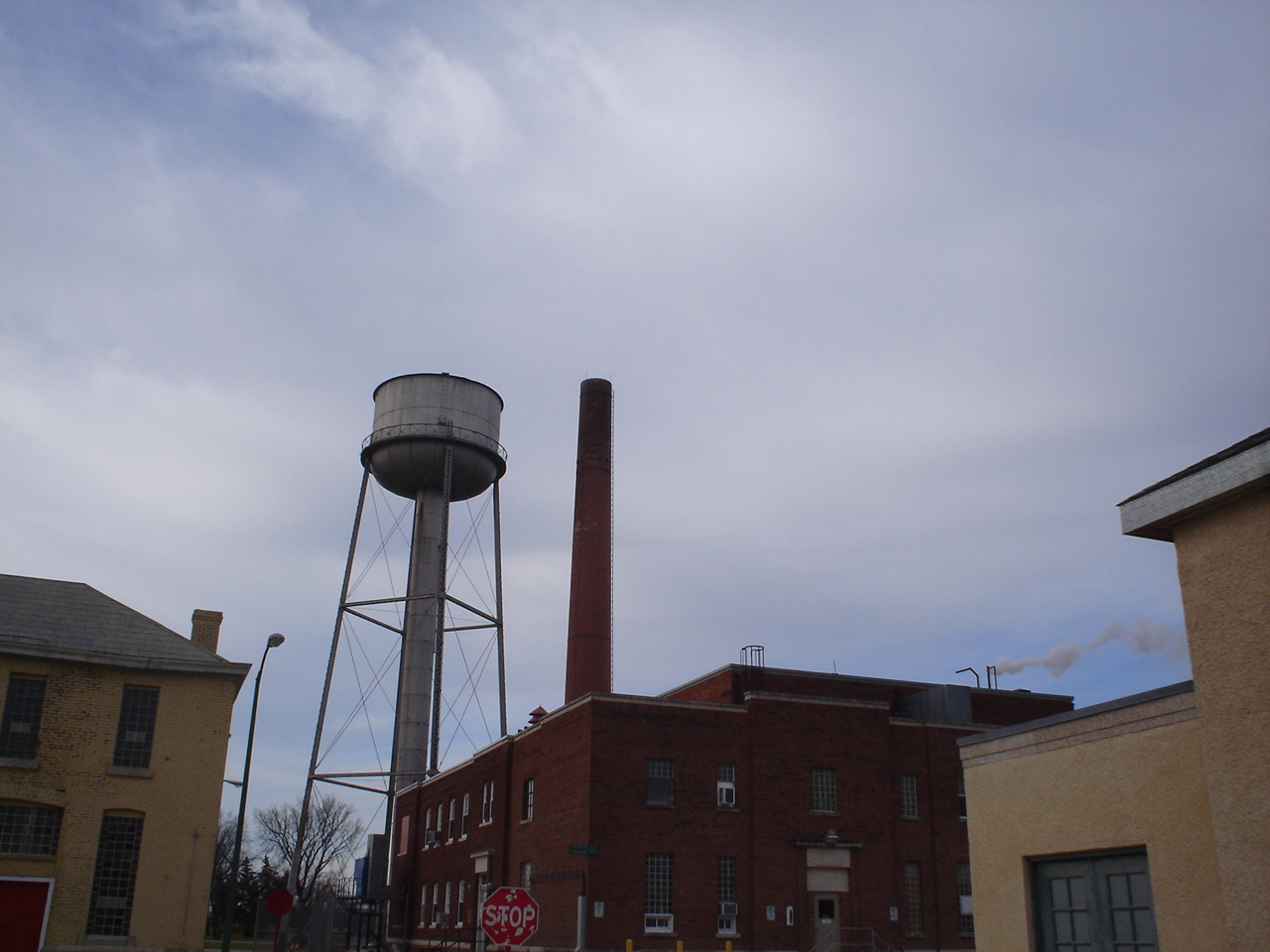
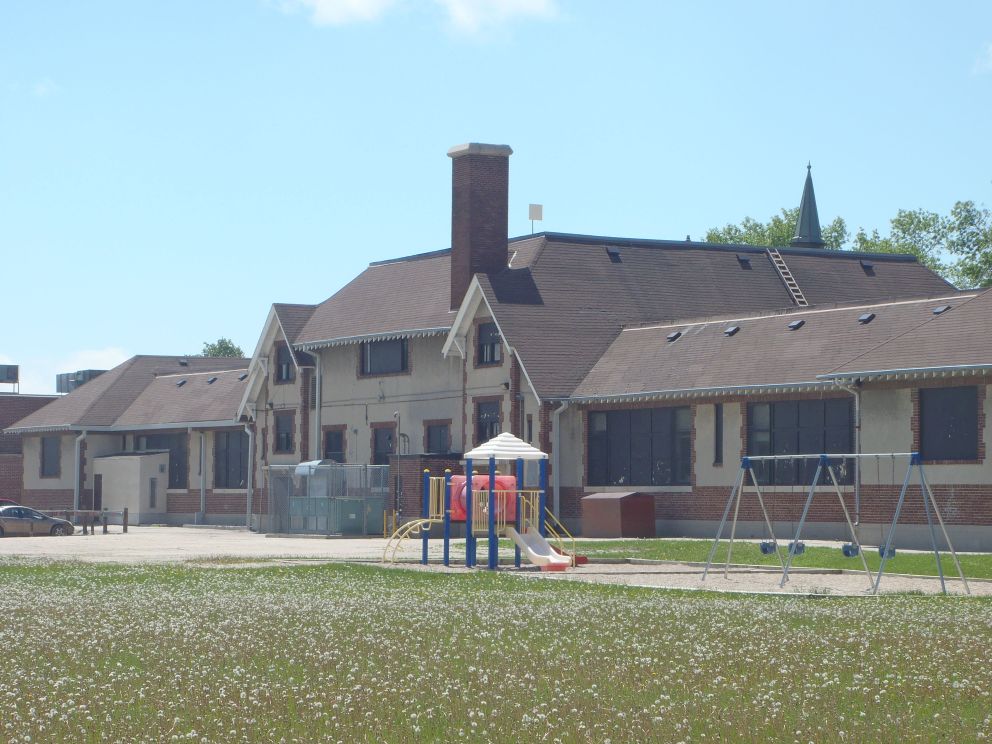
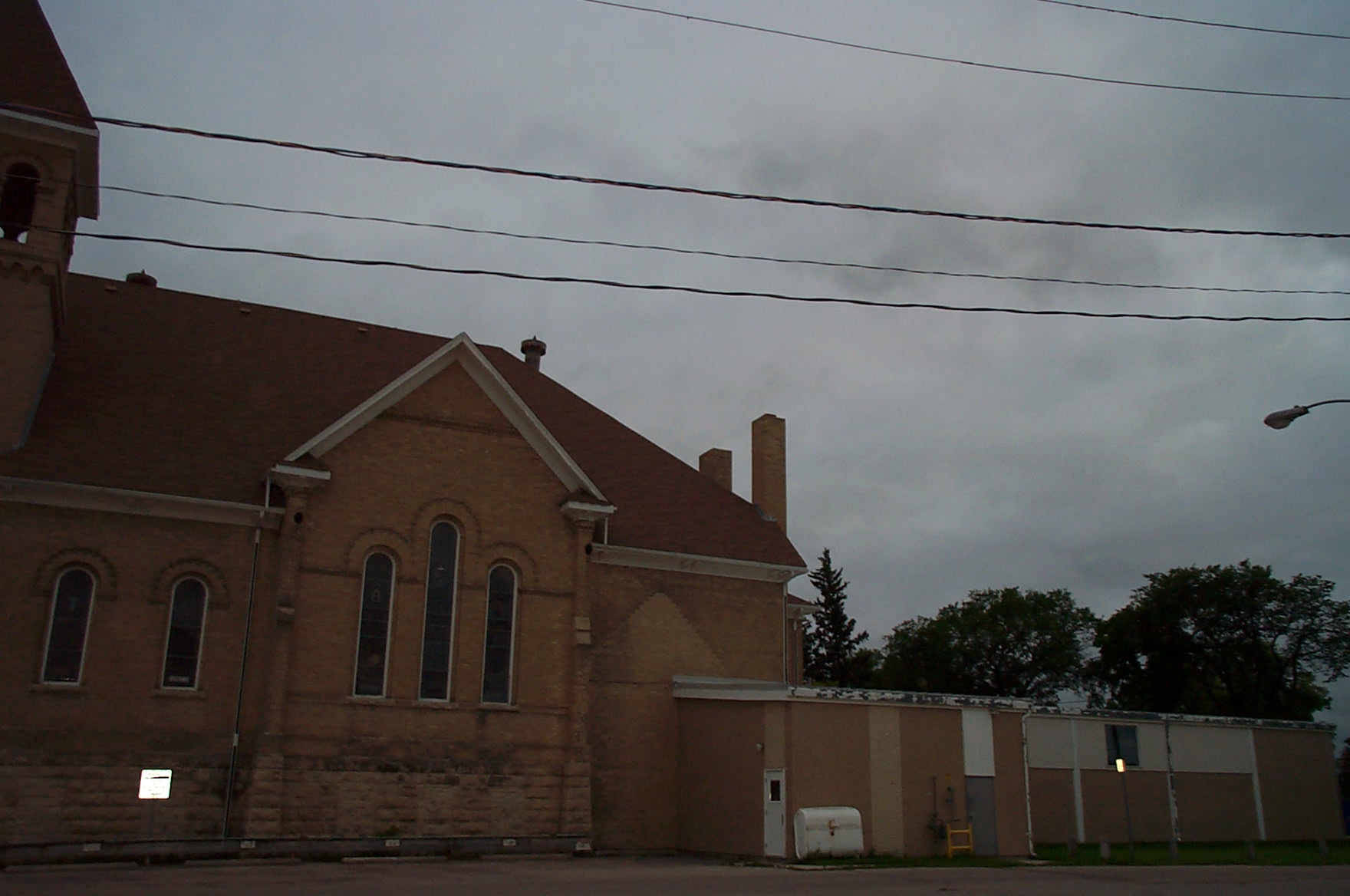
The cadence of the SE Club Amical pair was never established and, frankly, they drove me crazy most of the summer. A re-nesting was indicated but a perfect storm of roofers, electrical and rain events, plus “helpers” (sometimes non-parental birds arrive and push eggs out of nests or peck juveniles to death) added to the confusion. August 22 was an inflexion point, as the feeding activity declined to 1 cycle per hour then it petered out on August 23. Daytime activity stopped on August 24. That night, 2 swifts entered the SE chimney but both left again; 1 swift returned to the SE and 1 swift roosted at the NE chimney. The breeding attempt at the SE chimney was over – no record was set for successful late nesting. On August 30, no swifts roosted in either Club Amical chimney.
We got a head’s up about a nest full of juveniles at St Avila School on August 18 (see the “Peering Down the Chimney” blog, August 21). Juveniles stay in the nest until ~21 days of age, so these young had a lot of growing to do. Frank and Jacquie did another special assignment on the evening of August 19. They noted very active feeding – 8 entries and 6 exits took place in the robust roosting hour. The adult swifts persisted through 17 C temperatures and periods of light rain. On August 24, there was active feeding = 3 X hour. All seemed well. Activity was lean on August 25 early in the evening. Returning on the afternoon of August 26, only 1 feeding cycle was made in an hour – no juveniles were seen and the airspace was empty except for the quick, competent entry and exit. Two swifts roosted just before the roosting hour on August 26 – no feeding cycles were seen. On August 28, a fast entry/exit cycle was noted and 2 swifts roosted for the night. On August 31, Jacquie and Frank saw only 1 swift roosting for the night. Similar to the SE Club Amical experience, the late nesting pair at St Avila seemed to exhibit decreasing feeding activity that resulted in a failed breeding attempt.
Tim offered an interesting perspective. Begging calls from juveniles elicit feeding from adults. If the young in the late nesting sites were weakened by cold overnight temperatures, or weather induced low food availability etc., then the attending parents might not push ahead with feeding, despite an apparent abundance of mosquitoes being about.
The swifts at St Avila and St Adolphe were record breaking in terms of the latest date when feeding behaviour has been seen at a nest site. The adults did not abandon their young, despite migration being underway, but their efforts were not enough to achieve fledging. We come across these situations so rarely that we really don’t understand all the issues. Clearly though, the recipe for a possible successful nesting outcome still = a breeding pair onsite + nest building by June 1-4. Time is a challenge for Chimney Swifts breeding in Manitoba.
Many thanks to the Selkirk birders group for taking on so many monitoring missions this year. They have pushed hard in August to track three active sites. A summary of their work follows…
At the Selkirk Infirmary, a successful nest site, Robert noted 2 roosting swifts on August 9; 3 roosting birds on August 17; and 0 activity on August 22.
At the Selkirk Large Stack: Carol, Gerald, and Robert had 1 entry/exit cycle and 1 roosting swift on August 9; Virginia and Linda saw 2 entry/exit cycles involving 2 birds then 2 roosting entries on August 17; 3 swifts roosted on August 22 when Gerald and Robert watched; 0 swifts entered on August 29 when Winona, Gerald and Robert were on site.
At the Selkirk Merchant Hotel, Winona spent enumerable hours tracking this successful nest site. On August 15, 1 swift roosted; 2 roosted on August 16; 1 roosted on August 17; 2 roosted on August 18; then 0 roosted on August 24, 25, and 26. This was an interesting alternation of 1 and 2 roosting swifts – then it was time to migrate…
Segue to migration. Gord sent word that all the Portage swifts had left by August 29.
John had 0 roosting swifts at his Higgins site on Aug 28th. Earlier in the day, John saw 5 swifts flying west of Shaftsbury and Corydon.
Spectacular September observations, made by Suzanne at her Main St home in St Adolphe, wrapped up the Chimney Swift sightings for 2016. It was a bookend experience for a truly memorable season which started with Beth and David’s season opener, May 25 (NRMP-1). In the pouring rain, 156+ swifts funnelled into the Assiniboine School roost at the very end of the drenched evening.
Suzanne and her husband watched in awe as Chimney Swifts fed on insects, low in their garden, on the evening of September 2. Mosquitoes had been very abundant in their yard recently, hiding in the plants during the day. The swifts flew very close to the ground and circled through the foliage – they had a swallow- like appearance but appeared unusually large. Isn’t it an interesting change of perspective to see swifts up so close?! The next evening, September 3, the same feeding frenzy took place then some of the birds flew up to the roof top and began circling the chimney. After repeated laps, they hovered over the rim and dropped into the chimney. None were seen leaving that night. So, it appears that an opportunistic foraging took place before migrants bunked in for the night, ahead of a huge thunderstorm. This was a reverse bed ‘n’ breakfast scenario – dinner buffet in the yard followed by nighttime accommodations in the 2.5 X 2.5 brick chimney.
Nobody deserves to see such a spectacle more than Suzanne – she is a Swift Champion (see “Volunteer Champions” blog, March 31, 2016) who has indulged me staring at her chimney and sneaking peeks in her cleanout trap for 10 years!
It has been rewarding to work with you all this year, as we attempted to unravel what it means to be a Chimney Swift in Manitoba. Lewis Cocks, the founding father of MCSI, aptly described working with these birds as “an enigma wrapped up in a dilemma”. Many of you shared that kind of experience, facing the mystery of the outliers. Many of you established the framework to describe the more “typical” condition. Either way, your efforts have helped make season 10 an extremely successful year. We have learned much, discovered new sites for the critical habitat registry, and saved some chimneys. Thanks for it all!
Now comes the time to check the databases behind the scenes. Both of the NRMP and MCSI Roost and Nest Site databases will be finalized shortly. Then, webmaster Frank will beam them up to the MCSI website with provide document links.
Tim is busy now with habitat stewardship issues. Once it gets too cold to lay mortar, he will have updates for us. Then, the MCSI Steering Committee will hunker down to set goals for the 2017 season. We will keep connected..




 There are a couple of stories in the news recently which may perk up peoples interest. The first is a mention of our Swift Champions Program (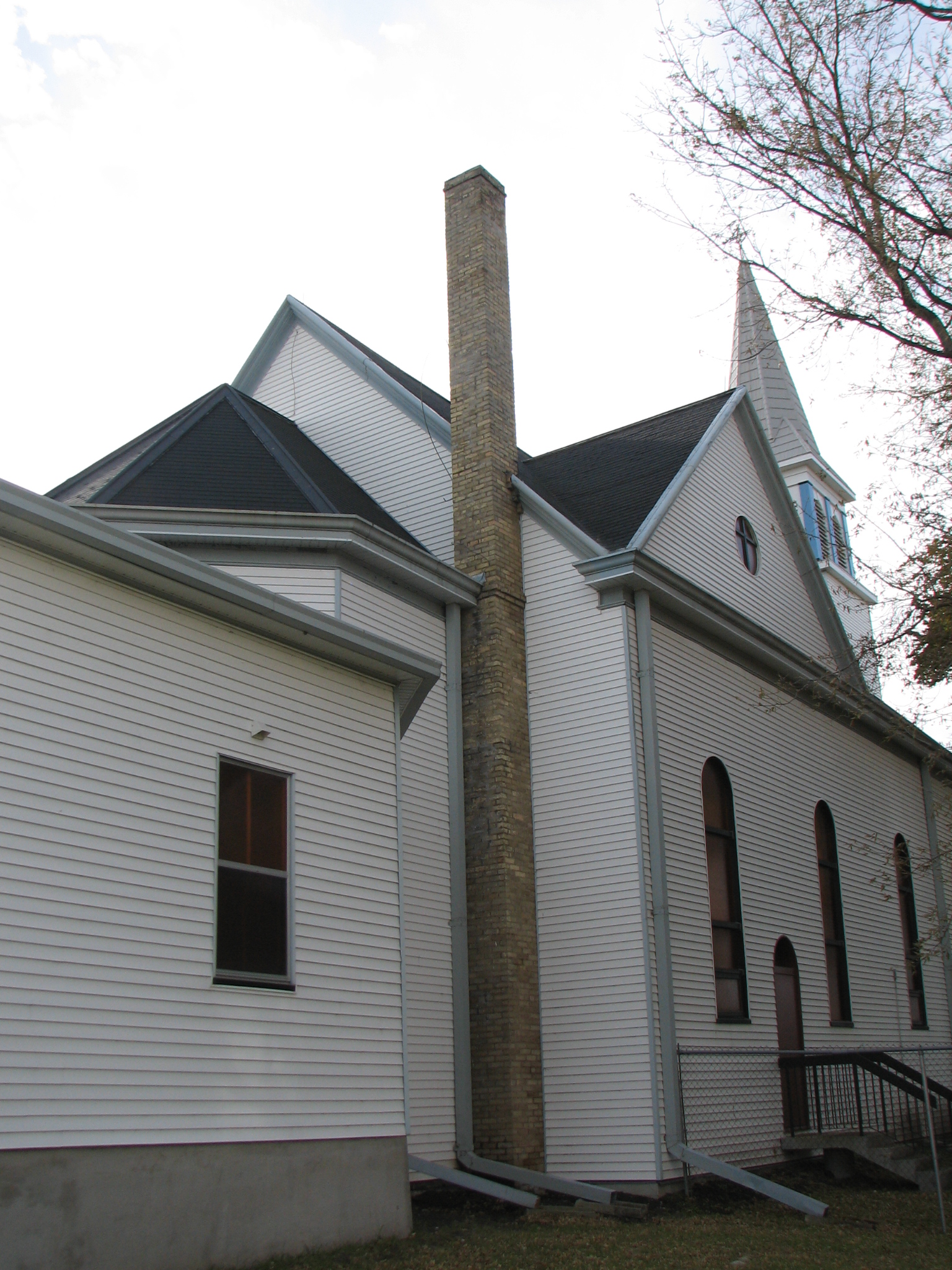

 Our thanks are sent out to the many people who have dedicated themselves to caring about this species at risk. Your efforts are appreciated and make a difference!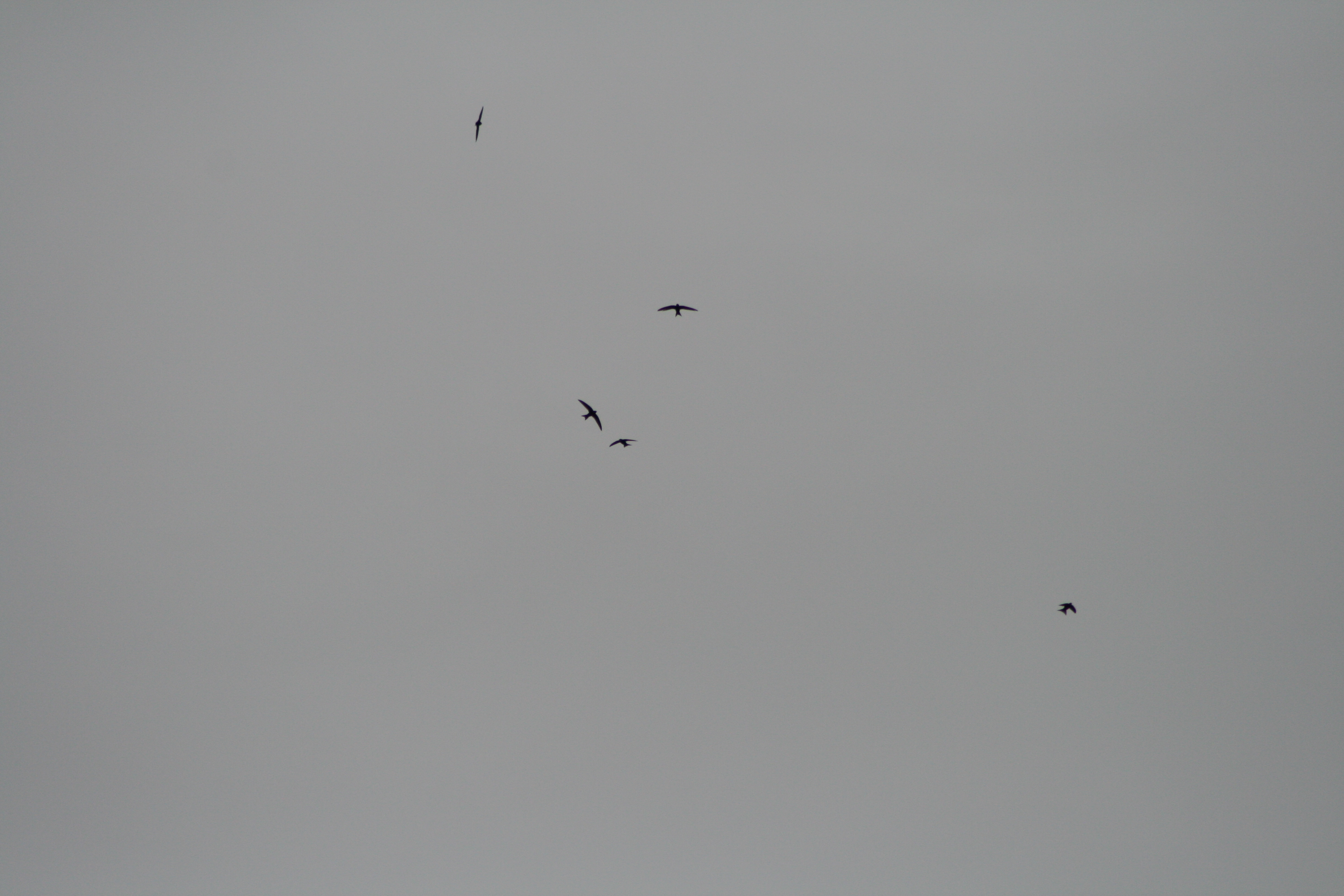
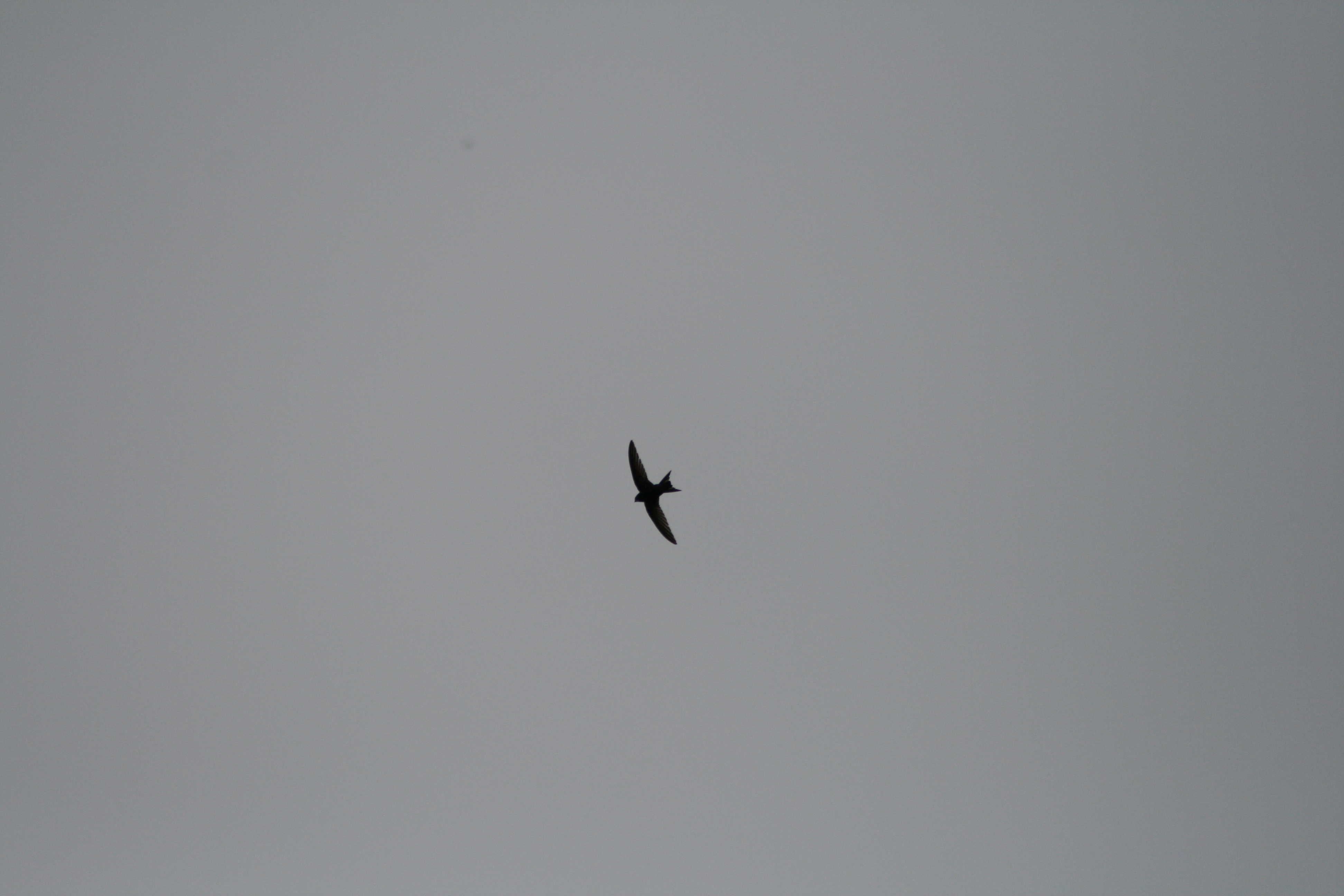
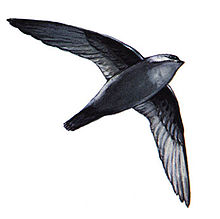
 The cadence of the SE Club Amical pair was never established and, frankly, they drove me crazy most of the summer. A re-nesting was indicated but a perfect storm of roofers, electrical and rain events, plus “helpers” (sometimes non-parental birds arrive and push eggs out of nests or peck juveniles to death) added to the confusion. August 22 was an inflexion point, as the feeding activity declined to 1 cycle per hour then it petered out on August 23. Daytime activity stopped on August 24. That night, 2 swifts entered the SE chimney but both left again; 1 swift returned to the SE and 1 swift roosted at the NE chimney. The breeding attempt at the SE chimney was over – no record was set for successful late nesting. On August 30, no swifts roosted in either Club Amical chimney.