June 21st. Summer Solstice. The longest day of the year in the northern hemisphere. In ancient Asia, Summer Solstice was the time to celebrate the Earth and “yin” forces. Summer Solstice continues to be a significant Heritage Day for Indigenous cultures.
Summer Solstice is associated with change, nature, and new beginnings. For breeding Chimney Swifts, the time around this solstice is the beginning of a new stage of nesting – incubation.
Chimney Swifts have moved through the early stages of nesting. In the arrival stage, spring migrants used sites for nighttime roosting only. Then, breeding pairs of adult swifts began daytime activities inside chimneys and nest building was underway. Both parents would grab small diameter twigs from dead branch ends and fly them into their nest sites. The twigs were attached to the rough interior wall, using the swift’s sticky saliva, to form a small cup-shaped structure. Here are some basic timelines for the nest building to egg laying stages of nesting:
A nest under construction is ready to hold an egg after 7 days.
Egg laying may then start and a new egg is laid every second day. The nest continues to be built around laid eggs – it is a tricky process!
Clutch size is 2–7 eggs. There is no way of predicting how many precious eggs will be laid; energy reserves of the female, weather, and foraging potential etc. may all affect the clutch size, and therefore, the onset of incubation.
Incubation begins with the second to last egg laid and lasts 18-21 days. Additional twigs are added to the nest during this phase.
Our dedicated monitors are nearing the last Wednesday MCSI spring monitoring night and have finished the NRMP evening counts. If your swifts have been arriving in pairs, as Gerald aptly describes in “Noah” fashion, it is likely the chimney is being used as a nest site. For those of you who are captivated by this Chimney Swift activity and are lured by what will follow, there are ways to track nest site developments…we welcome your ongoing participation in chimney-side monitoring beyond the end of our spring roost monitoring!
Continued monitoring, ideally with maximum 3-to-4-day intervals – including daytime sessions as you can manage – will help reveal the swift’s progress. As monitors, we record the times of entry and exit events at the chimney. It is simple data to collect but it informs many complex things. Importantly, the sequence and frequency of entry and exit events at a nest site reflects the various stages of nesting.
Two intervals are useful to calculate:
1. The time between an entry and an exit. This interval can be either a length of time a single swift spends in the chimney = duration-in OR a turnaround time for partner exchanges when mates take turns with duties inside the chimney.
2. The time between an exit and an entry. This interval is the time between-visits to the nest site.
Sequential entries and exits can be used to estimate the maximum number of swifts in the chimney at one time.
Also, look at the sequence of events to determine if any swifts were present at the start of your observation period and/or if any swifts remain inside at the end of viewing.
During the late nest building-egg laying stage, pairs of Chimney Swifts are seen together less often. The chimney is occupied, or attended by a swift, for a greater proportion of time. So, entries and exits tend to shift to single bird events and they occur less frequently. If you are in an area with a high concentration of nest sites, lower group sizes of swifts are seen in the air. Monitoring now and through the incubation stage becomes very challenging. Okay, it gets downright boring sometimes!
Pinning down the start of incubation is very, very difficult. What follows is a Rule of Thumb for determining the onset of incubation at a nest site, established by a pair of breeding Chimney Swifts, usually ~2-3 weeks after nest building started (note: this is variable!). Three signs of incubation, in increasing order of certainty, are:
Good. Attendance >50%. For a standard 60-minute daytime session, a swift is present in the chimney over half the time. A swift is continuing to work on the nest construction, plus laying an egg and/or starting incubation. Both parents can be out of the chimney at the same time.
Better. Interval between entry-exit <10 minutes. An incoming bird is likely switching up with the partner which goes out to feed. Both partners may be out of chimney at the same time but one tends to return soon.
Best. Classic incubation exchange = an entry followed by an exit 30 seconds to ~2 minutes later. These exchanges usually occur once an hour. Swifts at this stage are “tight” on eggs and the partners are changing up to share incubating duties between foraging bouts. Both parents may leave the nest site (eggs are unattended) but one usually returns shortly to resume incubation duties. Typically, this happens more as the roosting hour approaches – the parents are getting a last feed, and possibly a drink, before roosting.
Monitoring in St Adolphe has continued since the inaugural year of MCSI activity in the spring of 2007. So, 2021 represents the 15th consecutive year of following the breeding success of swifts using 5 chimneys located in 4 historical buildings along Main St.
This year, swifts arrived in low numbers in mid-May and primarily fed for two weeks. By the end of May, all 5 nest sites were claimed by a breeding pair and nest building finally got underway in earnest on May 31st – about a week later than normal. The cold spring weather was likely a deterrent for the birds to start nest building; instead, they fed and rebuilt energy reserves lost during migration.
Fortunately, swifts at all 5 nest sites were underway with nest building by June 3rd – 4th = the last known starting date of nest building to be followed by a successful breeding outcome.
Incubation was first noted for swifts at Brodeur Bros./Daycare and the Church on June 17th; SE and NE Club Amical on June 18th, and finally at Main St on June 19th. Here are some recent monitoring data which indicate incubation is underway…note the variable activity patterns seen at the 5 nest sites!
Attendance >50%:
Brodeur Bros./Daycare; Thurs. June 17th; 10:50 to 11:50 AM.
11:04:10 1 Entry
11:17:47 2 Exits; 1 swift in at start of observation period.
11:41:57 1 Entry
Church; Thurs. June 17th; 12:05 to 1:05 PM.
12:34:34 Entry
1:05 End of session with 1 swift in.
SE and NE Club Amical; Fri., June 18th; 11:00 AM to 12:00 PM.
11:04:08 Entry – SE; with 1 other swift that flies on; 2 swifts close together on approach.
11:11:39 Entry – NE; alone.
11:39:42 Entry – SE; arrives alone; 2 swifts in.
11:44:23 Exit – NE; alone.
11:46:20 Exit – SE.
11:46:22 Exit – SE; joins above bird and both swifts leave vicinity together; 0 swifts in.
Interval between entry-exit < 10 minutes: Main St; Sat., June 19th; 10:48 to 11:48 AM.
11:13:24 Entry; 1 swift had been feeding locally since the start of observations.
11:23:07 Exit; no further swift sightings seen by the end of the observation period.
Classic incubation exchange: none seen yet, but the time shortly after Summer Solstice will be the period to watch for this sure sign of incubation.
Questions? Keep in touch as we are always happy to help interpret nest site data. Good luck on tracking your breeding Chimney Swifts!
Join Vicky again, for another recap of this past week of Chimney Swift monitoring…
Week Three
We are now almost at the halfway checkpoint for the Chimney Swift monitoring season. Swift activity has been picking up, as we have a pile of papers from everyone on this week’s findings! With this week over, the NRMP nights are now completed, good work everyone! Our own chimney swift monitoring program, the MCSI nights, continue. We had sightings in Brandon, Otterburne, Selkirk, Dauphin, St. Francois-Xavier, Portage La Prairie, La Broquerie, and Lockport.
Back on May 30th, Tim Verbiwski and Gerald Machnee made their way to St Andrews Lock and Dam Maintenance Compound where both chimneys were observed. At the south chimney, four entries were noted, and in the north, there was two.
Bonnie Chartier, Tim and Sandy all went out on June 7th to check out the St Andrews Lock and Dam as well. At both chimneys there were two entries and a few flying around throughout the monitoring period.
On June 11th, Gerald made his way to St Andrews Lock and Dam Maintenance Compound. Both chimneys also each had two entries. There was a clear illustration how Swifts enter the chimneys when rain is imminent, as both pairs entered their respective chimneys just before it started to rain.
We have quite a bit of information from Tim and our volunteer monitors from the Selkirk Birders Club. On the morning of June 3rd at Selkirk Mental Health Centre, the three new towers were observed. The only swift entry was in the tower attached to the infirmary building. The other towers had one to three flying above. In the evening, at the same sites, none had any signs of entry but there was still the occasional four to six swifts flying around. Moving on to the June 7th NRMP night, at the same three sites, there was a perfect double entry in each chimney! All during roosting time.
Back on May 30th, Robert Hempler watched the two chimneys at the Selkirk Mental Health Centre Infirmary for NRMP night. While the infirmary chimney had one Swift enter, the tower chimney had none. A couple of Swifts could be seen flying above with one Nighthawk mixed in the crowd. Forward to June 7th, this time Robert went out with Donna to find two Swifts making an entrance in the infirmary chimney, while there were no entries in the attached tower chimney. More than six Swifts could be seen flying above though, I wonder where they went.
Nia and Linda monitored the Selkirk Mental Health Centre yellow brick chimney on the 30th of May for a NRMP night. No entries were noted, but about five Swifts could be seen flying around. They came back to the same chimney for June 3rd (NRMP night) where they saw two Swifts come in quite late to roost for the night. This time there was a max of eight Swifts flying around. The last NRMP night, there were two entries and five to six Swifts flying around.
Tim monitored both the small and large tower chimneys at the Selkirk Mental Health Centre on June 1st, where he observed no entries or exits, but kept note of the growing curiosity the Swifts had in these chimneys. It seems like the curiosity got the better of them, as Tim later wrote in an email the strange happenings on the night of the 10th at the various Mental Health Centre chimneys, “There was definitely a shift last night (June 10th) in swift activity at the Selkirk Mental Health centre. Robert Hempler watched the old infirmary chimney on June 7th for the final NRMP night. In his report, the swifts were mainly behind him, towards the yellow brick chimney and the short tower (2021-T2). Last night (the 10th), the swifts were very active over the large tower (2021-T1) making numerous passes in that direction. In total, eight birds were counted in the air, but there was usually only six or seven accounted for. It was clear something was up when at 8:43 a pair of swifts circled over the top of the tower several times. Over the next few minutes the entire flock appeared to descend over the tower, swirling and chasing around the area. A pair were flying low over the entrance of the tower at 8:52 when one suddenly lunged towards the entrance and pulled away. At this point pandemonium appeared to break out, three swifts were spinning the top and suddenly a fourth appeared, either from within the tower itself, or coming low from behind. It was clear though by this point that the swifts had finally found this tower and finally were taking a very close interest. Regular visits to the tower was followed at 9:22 by a sudden drop into the brick chimney on the old infirmary. This site was being monitored by Robert again. Yet still there were two, three or four birds visiting the top of the tower. At 9:31, three swifts were over the entrance. At last two swifts took the lunge and entered the tower for the night. The drop did not feel too clumsy, suggestive that this was not the first time these swifts had used the tower. The third swift circled the tower several times over the following 10 minutes, at one stage sweeping between it and the old infirmary chimney. This is likely the same swift which turned in for the night at 9:45 in the infirmary, to make it two for that site.”
As I read this email, I could not help but feel like I was reading an action novel!
On the other side of the Selkirk campus on June 10th, Linda and Nia had a late entry/exit at the yellow brick chimney before two roosted for the night. Gerald also recorded an entry/exit at the short tower (2021-T2) but this was earlier in the evening. There was only one swift counted in this chimney, but maybe that early entry/exit was some sort of exchange? In town, Winona recorded two exits early on at the Merchant’s and two came in to roost. The current roost of choice in Selkirk is in the Main Street apartment. Here there were 9 swifts counted by Ray and Sybil.
Tim also noted that the fourth new tower is going up at Selkirk Mental Health Centre. While this new tower is likely too late for swifts to use it during the 2021 nesting season, we know from past observations that once they fledge, young swifts will fly around and check out/ roost in other nearby chimneys. Or perhaps some non-breeding pairs from this year will discover the tower and come back next year to nest. All of the artificial Chimney Swift Towers going up at the Selkirk Mental Health Centre are to mitigate the impact of removing some existing swifts roost and nest sites, which had to be removed due to safety reasons.
Backing up a bit, Ray and Sybil went out on the 30th of May for NRMP at 367 Main Street, Selkirk. They saw no Swifts, and all they could say that night, was that it was cold. Better luck on the 3rd of June, they got nine entries in total this time, but still a very cold night. Finally, a warm night on the 7th, they had a total of nine entries in the chimney again, all at relatively different times, except for the last four that went in as pairs.
Winona monitored the Merchants Hotel in Selkirk on May 30th for NRMP night to see two Swifts making an entrance, eight minutes apart from each other. They entered the chimney directly without flying around. On June 3rd, two entries were observed again in almost the same way as on May 30th but starting at 8:50 this time. On the 7th, there were no Chimney Swift entries at all, but a few flying by periodically. Winona specially notes that it may have been due to possible wasps in chimneys during the time, but was not entirely certain.
Gerald has also been periodically watching southeast chimney on the Fur Loft building at Lower Fort Garry. On the June 2nd for the 2nd MCSI night, there was no view of Swifts nearby, but some Barn swallows did fly by. On June 13th, Gerald headed back to Lower Fort Garry in the evening. There was little activity, but there was an exciting entry of a couple Swifts entering the chimney! You may not have known, but this chimney is plastered in the inside, making nest building difficult for Swifts. Early this spring MCSI, Tim Poole (from the province) and Parks Canada staff tried to solve that problem by installing a false chimney wall – similar to what is found inside the artificial chimney towers, so it is good news to know Swifts are still using it. We are having our other summer student, Ariel check out the southeast building soon as well! Hopefully, we can see if there is some nesting action from the Swifts soon.
Back on May 30th, Breanne, finally caught some Swift action at Maryland Foodfare in Winnipeg. Two Swifts entered the chimney at 9:23 in the evening and 40 were seen in the air! Breanne noted a few pigeons, sparrows, and gulls scattered on different rooftops too.
As of June 7, “The swifts have come and gone” Ken Wainwright writes, as the Swifts in Dauphin leave the roost site and start heading to the nesting chimneys. For the last NRMP night, two chimneys were monitored to have three Swifts each, with a 3rd chimney occupied by a single pair. This gives a grand total of eight Swifts in the vicinity. It was noted that most of the Swifts were more active after sunset rather than in the day.
On June 8, Tami Reynolds and Mike Karakas watched the Assiniboine Park Zoo Tower. They saw three Swifts flying around and eventually three entries into the chimney, all within five-minute intervals.
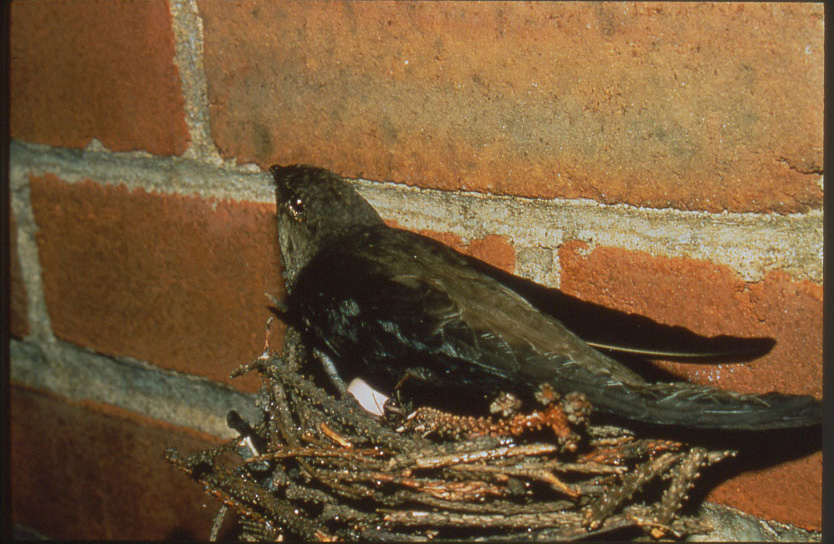
Chimney Swift in Nest
courtesy South Carolina Department of Natural Resources
For the 3rd MCSI night on the 9th, we had Jo and Betsy watching the Assiniboine park chimney. One Swift made an entry at 8:53, and another two at 9:34. A few more Chimney Swifts were seen flying around as well. If you head out to watch the Swifts at the Zoo Tower, you will notice a hole on the side of the chimney. From Jo and Betsy’s observation that hole is being used by Pileated Woodpecker (who they saw enter in the evening). We are not entirely sure what the Pileated Woodpecker is using the hole for (nesting or roosting), but the woodpecker and the Chimney Swifts appear to be co-existing peacefully. Three nighthawks were seen that evening as well!
A Zoo staff member, Kirstyn, came out during the day of the 10th to watch the Assiniboine Park Zoo tower. There were two separate entries and one exit. To make the day a little more troublesome, someone was driving their lawn mower around the chimney for 17 minutes. And ironically, 17 Swifts were seen flying in the air.
Back at the River Manor Apartments (424 River Ave) for the 3rd MCSI night, Barbara and Phil Barnett watched its west chimney. They counted 193 Swifts entries! I have not seen the chimney myself, but I cannot imagine how full it is now. They started flocking in around 9:00pm in batches of 1-4, until 9:40, where many would enter at a time. They described it as an “Extraordinary experience and mesmerizing to watch.”
Jon watched the River Manor Apartments east chimney (“invisible chimney”) on the 3rd MCSI night where there were no entries. Although non-stop chittering could be heard, it all stopped around 9:50 (likely when all the Swifts had entered the west chimney on the same building).
Luc Blanchette watched the Saint-Jean-Baptiste Church for the 3rd MCSI night. There were two entries in the chimney, with only one Swift in the chimney at a time. Another Swift was about to go in, but it veered off at the last second! Luc stayed a little later to see if the Swift would try again, but to no avail, as it did not enter in the end.
In Brandon, Glennis Lewis monitored the Orange Block’s small chimney on June 3rd. No action was seen, but later on June 9th, one Swift entered the chimney at 10:01, another two entered at 10:04 and two more at 10:07.
Back in Winnipeg on the 7th of June, Blair watched the Franco Manitoba Cultural Centre, with no Swifts in sight. On the 9th, Blair went out to 188 St. Mary’s Rd to come up empty again. Fortunately, Blair’s most recent outing to 188 St. Mary’s on the 13th came into fruit where two Swifts were sighted making an entry and two more flying in the air!
Beth first went out on June 7th with Jake and Anna to Assiniboine School for NRMP night. They had two separate entries during the monitoring period and a few Swifts flying around throughout the time period. A high of seven Swifts were seen flying at one time at 9:34. On the 9th, for MCSI night, Beth went back alone to watch the Swifts. Another two entries in total that night, and once again, timely appearances of Swifts flying throughout the whole period.
At Chief Peguis Junior High, Lynnea kept watch on June 7th for the evening. The chimney had one Swift come in at 9:20 and another at 9:40. The rest of the monitoring period was quiet.
On June 7, Carl and Debby monitored the Old Grace Housing Coop where two Swifts were seen flying above the centre of the courtyard, but none making their way in or near the chimney.
Ron Bazin, who had watched all three chimneys in Otterburne for the last three NRMP nights, also monitored them for the last NRMP night on June 7th. There were two entries at the chimney near the bell tower, two entries in the large chimney, and four entries in the small chimney. Despite being the smallest chimney, it gets the most action out of the three. Besides the entries, there were eight to ten Swifts flying overhead upon arrival. Noting a definite V-flight by at least two. After that night, Ron makes his way to observe St. Nobert RC Church on the 8th, where a total of four entries into the chimney. Then on the 10th, Ron watched the Fire Hall on Marion, where two entries were observed.
For the 4th NRMP night, we had Amanda check out the Moorgate apartments on Portage. There was a total of four Swift entries and many flying around throughout the monitoring period. Most flew continuously overhead of the chimney.
On June 9th, for MCSI night, Pam watched the St. Mary’s Road United church for the evening and did not see any Swifts.
For the 4th NRMP night, Frank and Jacquie went out to La Broquerie to St Joachim Church to observe in the evening. The large chimney had three entries and the small chimney had five entries. That makes for eight in total that were seen that night. The pair also made way to Transcona Collegiate on the 9th for MCSI night where two Swifts made entries.
I had gone out on the 10th to the Maple apartments with my parents to share the wonderful joy of watching Swifts. There were many times that the Swifts would dive in but pull back right at the last second. It felt like watching a soccer player about to score a goal, only to miss. I had a max of 15 flying at once in the air and two pairs going into the chimney just after sunset at 9:36 pm.
Blaire Barta monitored the Behavioral Health foundation on the 10th of June during the evening. There was a total of two entries, each at separate times. Blaire noted the day before the 10th, there were three in the air around the site. So, that leaves one perhaps spirited away.
Mike and Michele Tumber monitored the St. Francois-Xavier RC Church on the 10th during roosting hours. They observed two entries at 9:31.
On June 11th, Rudolf watched the Rufus Prince building in Portage La Prairie for a short period and saw 12 Chimney Swifts flying around the west end of Crescent Lake. Making his way back to Winnipeg for June 13th, he also stopped by Roxy Lanes and saw three Swifts flying with one swift entering the front (red brick) chimney. MCSI partnered with the owners of Roxy Lanes last year to repair that chimney, so we are doubly pleased that it is being used by the Chimney Swifts again this year!
And last, but certainly not least, on June 12th Nicole Firlotte watched the Fleetwood Apartments in the evening. There were two entries both at 9:48 pm. Nicole also notes earlier in the day, there were three Swifts flying around the neighbourhood. Use of this chimney is also exciting, as it was also repaired under the MCSI program last year as well.
The 2nd week of Chimney swift monitoring – Join one of our summer students, Vicky, for a recap of recent monitoring efforts.
Welcome to the 2nd week blog on our Chimney swift monitoring efforts! Yesterday, the 7th of June was World Swift Day. This day was first celebrated in 2019 by 39 countries, where they would introduce and share to the world about swifts. As of 2020, the number of countries that actively created events for swifts increased to 49! I would like to use this chance to thank again, all our volunteers for contributing to the monitoring of swifts in Manitoba. Without volunteers, our database would have nothing to prove the existence of swifts and their dwindling numbers. So, happy belated World Swift Day!
I have been going through all your data entries, and it is exciting to see so many sightings! June 2 was our second MCSI night. As well as our second and third NRMP nights on May 30 and June 3. With it finally warming up, we can expect some swifts in action! We had sightings in Dauphin, Winnipeg, La Broquerie, Portage La Prairie, Carman, St Jean Baptiste, St Francois Xavier, Brandon, Selkirk and Otterburne.
Ron Bazin kept watch over in Otterburne at the Providence College for the first NRMP night with its three chimneys. He saw three swifts fly by on May 26. There were three entries in the big chimney all at separate times, with the first one flying out before the other two swifts entered and remained inside. The 3rd chimney by the bell tower had swifts flying in and out from 8:20 to 9:00, making a total of twelve entries. Coming back on the 30th for the second NRMP night, there were six entries in the small chimney. The large chimney had four swifts all come in around 9:20 to 9:40. There were nine in the air, so one swift seemed to have gone missing. At the bell tower, we had two more entries. During the 3rd NRMP night, two entered the bell tower chimney, six in the large chimney, and seven in the small chimney. Ron also made his way to St Norbert RC Church on the 1st, where there were two entries and to the Fire Hall on 864 Marion on the June 3rd where there were six entries.
As a new student, I went out for my first monitoring on June 1st to 161 Stafford St, where I saw 15 swifts fly by! No entries though. They were headed to the west. The next day for the 2nd MCSI night, I headed to the apartments at 555 Lanark St and spotted my first swift entering the chimney! I was surprised by how smooth they entered. One entered at 8:40 while another did not enter until 9:40.
Our other summer student, Ariel Desrochers, monitored her first chimney on May 26th at the Lothian Block apartments in Wolseley. Unfortunately, no swifts that night. However, she was there on our first watch night to confirm the large number of swifts at our new roost site on 242 River Ave on June 3rd, so all is well!
Blair Reid monitored 261 Youville street on May 30, where Blair caught two swifts making entries in the evening. On June 2nd, two entries were also observed at 690 St. Joseph, with two more flying about in the air.
Amanda was out to the Assiniboine School on the 31st of May. Last MCSI night an unusually low number of swifts were observed, this week was not much different, dispite the much nicer weather. She encountered six swifts flying about and one making an entry into the chimney. It seems like this site has lost its popularity with the swifts! Hopefully, they found a nice chimney elsewhere (Maybe they moved to that new chimney at 242 River Avenue we just recently discovered!).
Adam watched the chimney at Assiniboine Park on the 26th during the day. There were no swifts during his monitoring time. However, on June 2nd, we had Evelien and Allery watching during the day, and had a single entry.
Jo and Betsy monitored the Assiniboine Park site on June 5 for the evening. They had many sightings of swifts, but two entries in total. One at 8:59 and 9:41. Two swifts were calling almost constantly throughout the monitoring period. If you have seen the Zoo Tower, you know that woodpeckers have also used the tower (by creating holes, unfortunately). Jo and Betsy thought that they might have seen scattered feathers near the hole in the side of the chimney, and possibly an entry into the hole by a Pileated Woodpecker. Due to the angle at which they were watching the chimney, it was hard to tell. They were obviously set up for Chimney Swift monitoring, not expecting to need to monitor for Pileated Woodpecker entries into the chimney. We are going to have to wait for someone to confirm more information!
We had Gordon Ogilvie on the evening of June 2nd during the 2nd MCSI night at the Trinity United Church South chimney in Portage La Prairie, where four swifts entered. To add on, there was a special guest, the Common Nighthawk! I have never seen one with my own eyes, but according to allaboutbirds.org, they have this special sound they make when diving towards the ground. With the wind rushing at its wing tips, they make sounds equivalent to a race car! How cool is that.
Luc Blanchette managed to see some swift action this week at the Saint-Jean-Baptiste Church on the 2nd MCSI night with as many as seven flying over and two making an entry. On June 3rd, Luc made his way to Ecole Regionale Saint-Jean-Baptiste, where he got one Chimney Swift entry and a few flying over making calls.
Blaire at St. Nobert Behavioural Health Foundation also had two swifts enter the chimney on the evening of the 2nd. Glad to have so many of volunteers who braved the chilly weather from two weeks ago seeing swifts recently!
Frank and Jacquie Machovec monitored two sites for us this week. On June 2nd at Carman Memorial Hall, three swifts flew to the northwest, and a few could be heard to the east from 8:10 to 8:40. At La Broquerie St Joachim Church on June 3rd for our 3rd NRMP night, five entries were observed in both the small and large chimney in the evening. There were, however, seven flying around during the whole monitoring period. Where did the other two go? Seems like the mystery continues…
At St. Francois Xavier RC Church, we had Mike and Michele Tumber monitoring the chimneys on the 2nd MCSI night. They saw three swifts make an entry, while one more went in and right back out for a 2nd attempt into the chimney, making the total entry of four swifts.
Pam and Bill Lucenkiw had St Mary’s United Church on watch for the 2nd MCSI night and saw one swift making an entrance into the chimney, with three flying around later.
Glennis Lewis was monitoring the Orange Block Chimney in Brandon at 1203 Princess Ave on June 2nd for MCSI night and had 1 swift flying from a distance. The same result was observed for the other chimney at the back of the building.
Rudolf kept watch over the Curtis Hotel and the Brazier house apartments in East Kildonan, Winnipeg on June 2nd. Two entries were observed, each at both locations, and seven could be seen flying from a distance.
Nicole Firlotte went over to the Assiniboine School on June 3rd for the 3rd NRMP night. Nicole saw one swift enter a chimney, and other swifts flying to the north, east and west. It would have been perfect if some flew to the south. We would then have all four directions!
Ariel and Devon, and Leah and Donald were our strike team heading out after an emergency call from Amanda at the end of the day on June 3rd after we had just found out about the new large roost at 424 River Avenue. Leah and Donald watched the east chimney and had two swifts enter for the evening. Ariel and Devon who watched the west chimney on the same night counted 123 swifts! A more recent observation was on the 5th by Linda Pearn, who saw an estimate of 140 swifts enter the west chimney! They just keep coming.
Sandra Hardy went out to the Old Grace Housing Co-op during the evening of the 3rd where swifts were nowhere in sight.
Garry Budyk kept watch over Pro-Tac Roofing’s own roof for Chimney swifts and found two entering around 9:25, and one more at 9:33, with no exits. This may be a sign of a helper swift! It is common in some bird species to have the existence of helpers (or visitors). Helpers are young, non-breeding swifts that help a breeding pair with different tasks. However adult swifts, after breeding, have also been found to become helpers with their past young as well.
We have word from Ken and Jan in Dauphin for the 3rd NRMP night on June 3rd. With their crazy number of swifts last week in Dauphin, site #600 has went from 49+ to at most, ten swifts in the chimney. All three chimneys in Dauphin are occupied now. The swifts are staying out late these nights. Ken and Jan suspect that they may have already begun nest building, but they’ll need day time observations to confirm. They believe that two swifts are using site #600 to nest, while the other eight late comers are just using the chimney for a nightly roost. This is our 4th mystery I believe, what happened to those 49+ swifts? I like that Ken mentions trees as a possible home. It would be neat to find a swift roosting in hollow. Swifts in trees will be hard to find though!
In Selkirk, we have the Selkirk Birders watching the Selkirk Mental Health Centre and Merchants Hotel on the 3rd and 4th of June. At the centre, a staff person stopped to chat with Gerald Machnee, asking what he was doing, and right as he was explaining, a swift flew in the artificial chimney! Its as if the swifts heard him talk about them. In total, three swifts were seen flying around, with that one swift who went inside. The next day, there were two making an entry. The yellow brick chimney had two swifts, and at the Merchant’s Hotel, another two. In another email, Gerald mentioned that Ray and Sybil may have found the disappearing swifts from last week at the apartment on Main St. They made the observation on June 4. The swifts entered just before 10 PM, with seven more coming in, making a total of 9 swifts in the chimney.
That is all for this week folks! I cannot wait to hear more for next week.
Looking for an exciting Chimney Swift experience? MCSI has been made aware of (and confirmed) a new roost site at 424 River Avenue, just off Osbourne St. Two of our volunteers were able to monitor yesterday night and counted a total of 125 swifts (you read that right 125!) that came in over a course of approximately 30 minutes.
We are looking for volunteers who would like to monitor this site for our remaining NRMP night (June 7th), and Wednesday night monitoring until June 23rd. We do not necessarily need the same volunteers to monitor all nights, so if you would like to monitor one night, or several, we can work that out. If you are interested, please email mbchimneyswift@gmail.com
Looking for an exciting Chimney Swift experience? MCSI has been made aware of (and confirmed) a new roost site at 424 River Avenue, just off Osborne St. Two of our volunteers were able to monitor yesterday night and counted a total of 125 swifts (you read that right 125!) that came in over a course of approximately 30 minutes.
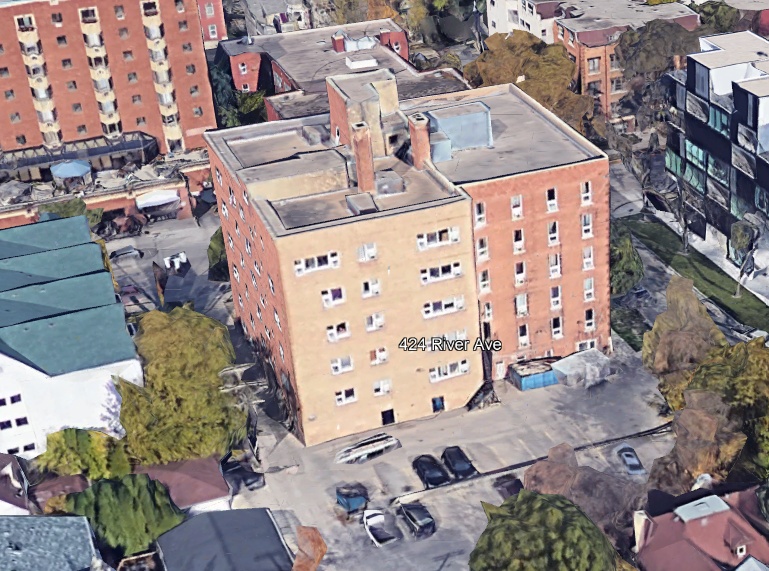
424 River Avenue
We are looking for volunteers who would like to monitor this site for our remaining NRMP night (June 7th), and Wednesday night monitoring until June 23rd. We do not necessarily need the same volunteers to monitor all nights, so if you would like to monitor one night, or several, we can work that out. If you are interested, please email mbchimneyswift@gmail.com
Our first official night of Chimney Swift monitoring started off chilly! May 26th was the first night of monitoring under both the MCSI and NRMP monitoring protocols and it was great that everyone was monitoring together. We had people out in Dauphin, Winnipeg, Portage la Prairie, St Jean Baptiste, La Broquerie, St Francois Xavier and Selkirk.
Unfortunately, with the cool weather last week, and particularly on Wednesday, we had quite a few zero counts. Some sites likely did not have swifts, but at other sites it is possible that the swifts went down the chimneys before our counts started due to the cool weather itself, as well as the low temperatures and wind keeping the swifts’ insect prey grounded.
Justin Schell monitored at the Goodnews Fellowship Church for us this year on May 26th and did not see any swifts. This previously used site has not hosted swifts for a number of years, but we know that swifts do sometimes move around, so we are still hoping they may recognize this chimney is a great site (and hosted by a great congregation of chimney swift “landlords”)!
Francene, Jack, Carl and Debby watched the artificial chimney tower at Old Grace on May 26th and unfortunately did not see any swifts either.
A new Chimney Swift volunteer to our program this year, Anastasia, set up outside the apartments on 25 Valhalla on May 26th for us. Breanne is also a new volunteer this year and was set up at the Maryland FoodFare to watch the newly renovated (by MCSI) chimney. Unfortunately, on both of their first nights out, they did not see any swifts. However, we thank them (and all of you) for persevering despite the cool and windy weather!
Luc monitored the St. Jean Baptiste Church on Wednesday. Once again, no entries were seen but he did have one swift do a vocal flyover just after 8:30pm.
Blaire watched the St Norbert Behavioural Health Foundation chimney on May 26th. She did not have any swifts during her monitoring period, however, she reported that on May 14th there were four swifts that entered the chimney around 8:45pm for the night.
I watched the Grant- Wilton Apartments in River Heights on Wednesday. Like many others, I saw no swifts, a couple of crows and gulls were my entertainment for the evening instead.
Phil and Barbara covered two of our chimneys on River Avenue on May 26th. Barbara was at the Rosemount Apartments. She had a brief view of what may have been a Chimney Swift flyover at 8:30 pm, but no swifts entered the apartment. Phil was at the Biltmore Apartments with no swifts to be seen.
Mike and Michèle Tumber took up their usual spot at the Roman Catholic Church in St Francois Xavier on May 26th. They had two swift entries, but noted that the swifts entered the chimney almost a full hour earlier than they normally see in their monitoring periods with entries at 8:27 pm and 8:28 pm.
Blair watched the chimney oat 690 St Joseph on May 26th. He had one flyby near 9:00 pm, but no entries. This building has hosted swifts for the last two years.
Gordon was out watching the Rufus Prince Building in Portage La Prairie on May 26th. He had three swifts entering the chimney. Two swifts entered at 8:55 pm, and one more a couple of minutes later at 8:59 pm.
Gary and Marj watched the chimney at St John’s Ravenscourt School on May 27th. They had two entries, but quite far apart, which is somewhat unusual. One Chimney Swift entered at 8:48pm and the second did not enter until 9:46pm.
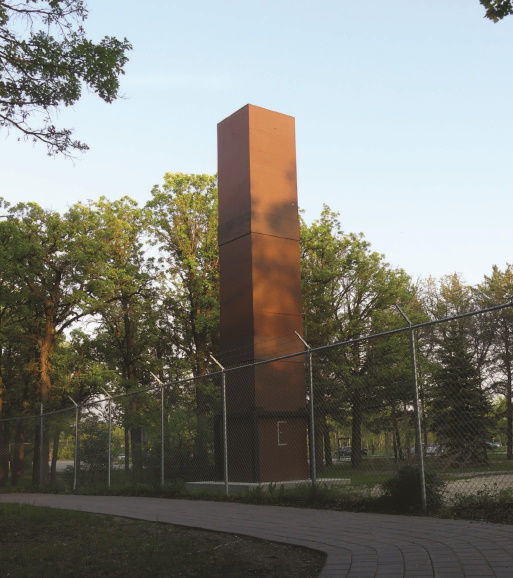
Tower at Assiniboine Park
Jo was also out on May 27th watching for us. She was stationed at the Assiniboine Park Zoo tower and was tasked with keeping an eye out for resident woodpeckers in addition to the Chimney Swifts! Woodpeckers have been creating holes in the wooden tower structure (probably liking the nice noise the hollow “tree” makes for territorial drumming). She saw three swifts winging overhead periodically, and then had one swift enter at 9:30 pm, and a second enter at 9:54 pm. The third swift was still overhead feeding near the tower when she had to leave for the night just before 10:00 pm.
Garry watched 722 Watt St in Winnipeg on May 27th. Unfortunately, like several others, there were no swifts to be seen.
Jon was at 465 St Mary Ave in Winnipeg on May 30th. He spotted three swifts in the air just before 9:00 pm but they headed off to the south instead of going down the chimney. Unfortunate as his spot had a nice picnic table, which would have made a good home base for swift watching!
Gerald was out watching the two chimneys at the St Andrews Lock and Dam maintenance compound for a couple of nights. On May 27th he headed out and saw one swift each drop into the north and south chimneys.
On May 30th Tim Poole and the Selkirk Birders coordinated a monitoring session of all the possible sites in the area to see how the swifts are distributing themselves with the two original chimneys coming down and the three artificial chimney towers going up. Gerald was at the St Andrews Lock and Dam maintenance compound. For the north chimney he reported one entry at 9:35pm, and one at 9:52pm. For the south chimney he reported one entry at 9:45, one at 9:53 and two at 9:54 pm.
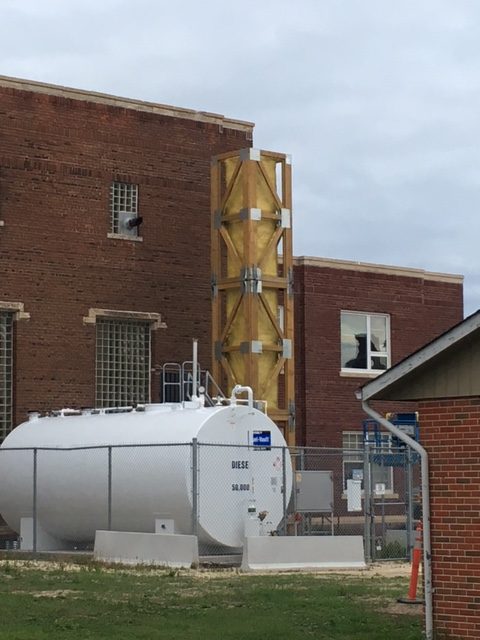
One of the new towers at SMHC
In Selkirk Tim was watching both the large tower and the attached tower at the Mental Health Centre, Robert was watching the administration building chimney at the Mental Health Centre, Winona was at the Merchant’s Hotel, and Ray and Sibyl were at the site on Main St. When Tim arrived there were two swifts, which increased to three after about 10 minutes. He wrote “All evening there were 2 or 3 swifts present, each time they appeared they would loop over the tower and seemingly float north in the wind… At 9:11 the flock was up to 4 birds, and seemingly 2 pairs. By 9:28 there were 3 and they seemed to be doing the classic swift chase. At 9:35 there were 5, 4 to the north between the yellow brick and the admin building, and one could be heard chittering to the south and at 9:38 we were up to 6. Great, some swifts to share between the chimneys and towers!” At 9:48 Robert noted an entry into the administration building chimney. There were no entries into the yellow brick chimney or either of the new free-standing towers. Winona had two swifts enter at the Merchants Hotel, one at 9:40pm and one at 9:49pm. Ray and Sibyl had no sightings of swifts.
For NRMP monitoring Frank and Jacquie were keeping their eyes (and Timmies) on the St Joaquim Church in La Broquerie for NRMP nights 1 and 2 (May 26th and May 30th). No swifts were seen the first night. If you have been following the MCSI blog for a while, you know that it is not a monitoring season without several Chimney Swift mysteries. Frank and Jacquie have our first of the year. Frank wrote, “We staked out the church in La Broquerie for night 2, and we have good news and bad news, and a bit of a mystery. There was activity in both chimneys and there were five vocal Chimney Swifts in the area from 20:10ish to 21:32, but we only had two birds in chimneys at quitting time. After two birds entered the larger chimney at 21:32, things went quiet. From our vantage point (and our degree of caffeination) I don’t think we missed any entries. Mysterious birds indeed.” We only know of the one site (two chimneys) in La Broquerie, so where did the extra swifts go?
Assiniboine School
Beth and myself both watched the chimney at Assiniboine School (on different evenings) for NRMP. Beth took the first watch for May 26th. She saw seven swifts in the sky, with four entries just before 9:00pm. There were three remaining swifts who flew overhead several times, last seen around 9:30. As this site is an NRMP site, I monitored four days later on NRMP-2 May 30th. It was once again cold and windy, very much like May 26th. I had one swift that left the chimney, with a total of three swifts doing fly-bys, but no one entering the chimney. As this was unusual for this site (which is usually our biggest roost in Winnipeg), I went back the next day with warmer weather, and calmer winds to see if the lack of birds was a result of birds huddled in the chimney due to cold weather, or a real lack of birds at the site. Unfortunately, my experience was very similar. Four birds consistently circling overhead for much of the evening. 10 minutes after sunset six birds appeared and flew low to the chimney, but only one entered, and the others flew off. Just before I left the single bird came out of the chimney and flew off as well. The second swift mystery of the season. Swift roost sites can change – indeed we have seen sites “lose” and “gain” their roosts before in MCSI memory, so we will have to do our best to piece together what has happened.
Ken and Jan have been out for both NRMP nights at the Dauphin roost site. On May 26th for the first night Ken relayed a night of much excitement, “Well, here we go again, first night of the spring national roost count, an hour before sunset and we’re thinking “why are we here this early, normally these swifts don’t show up until after sunset, oh well, we’re here now”. Got out the data sheet and filling it in when Jan says “I can hear them!” and we glance at each other and then turn our heads to the sky…. Now filling in the bottom of the data page and there’s more swifts flying by, probably same ones, 2, 4, 6, 8, . . . .24, 26, . . . 30+ well what’s happening here? We’ve only been here 10 minutes! Good, got the data sheet filled in and here they come again but they look like they are circling to go down, no way, but 6 just went down. We look at each other and say together “Oh NO” we know what’s coming or should I say going down!! With that we start counting out loud: 1, 2, 3, nope that one went past, 4, 5, . . .. quickly write down 25+, add two minutes of time to the data sheet and start again: 1, 2, 3, . . .. OK only 12+ that time: 2 minutes later 6 more go down and the sky is clear. Look at the watch and it’s still 30 minutes till sunset, a new record for Dauphin, all the swifts tucked into bed with an hour of count time to go! Total count for first night 49+ swifts.” Quite a contrast to the swift experiences by counters in more southernly areas of the province so far this year!
NRMP night #2 for the Dauphin roost went more as usual with Ken noting that the evening was quiet until around 10:00 pm when the swifts started entering the chimney. By 10:04 pm everyone had gone down for the night for a total of 39 Chimney Swifts.
This notice comes from Tim Poole, Species at Risk Biologist, Habitat and Endangered Species Section, Wildlife, Fisheries and Resource Enforcement Branch, Agriculture and Resource Development.
The Chimney Swift is listed as threatened by the Manitoba Endangered Species and Ecosystems Act (ESEA) and the federal Species at Risk Act (SARA). For many years, the Selkirk Mental Health Centre has been one of the primary sites in Manitoba for roosting Chimney Swifts. The Powerhouse chimney, also known as the large stack, has supported large numbers of roosting swifts, the highest recorded number being 61 in 2009.
Unfortunately, this landmark swift roost had become a public safety hazard. Bricks were beginning to come loose and fall 120 feet to the ground below. In addition, two other derelict buildings on the site also support chimneys used by Chimney Swifts. The Province of Manitoba through the Department of Central Services owns and manages these buildings and commissioned formal surveys by structural engineers to address the ongoing safety issues. These surveys confirmed the worst, and it was immediately apparent that retention of all there chimneys would not be possible. Fortunately, staff from Central Services were aware of the Chimney Swifts and approached biologists from the Wildlife, Fisheries and Resource Enforcement Branch, part of Manitoba Agriculture and Resource Development, to assist with producing a mitigation plan for the site. This would ensure that the provincial government were compliant with their own legislation. Additional support and advice came from members of the Manitoba Chimney Swift Initiative and the Canadian Wildlife Service who assisted with ensuring the province were compliant with their legislation. These partners have previously collaborated on projects to mitigate loss of Chimney Swift habitat, culminating in the successful breeding tower at Assiniboine Park Zoo (see https://www.mbchimneyswift.com/Documents/FirstUseMB.pdf).
The mitigation strategy identified that for every chimney lost, there would need to be two replacement structures provided. The higher ratio reflects the lost of such an important chimney in this area and the uncertainties that surround which site a swift might select as replacement habitat. Four structures are now either built or in the process of being built, and two will be added at a later date. This allowed for the Minister of Agriculture and Resource Development to provide an exemption under ESEA for the removal of the habitat, and for the federal government to provide a permit for the same work. The Powerhouse chimney was demolished in April 2021 before the swifts returned and the mitigation plan was implemented so that the first two structures were in place in the same period.
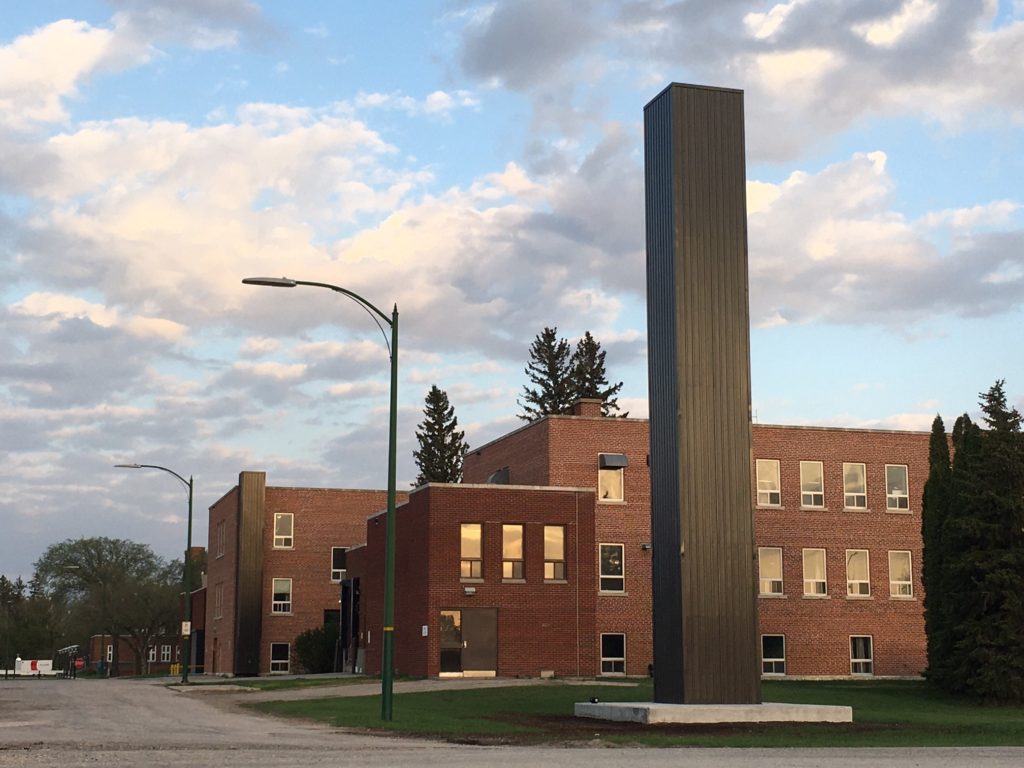
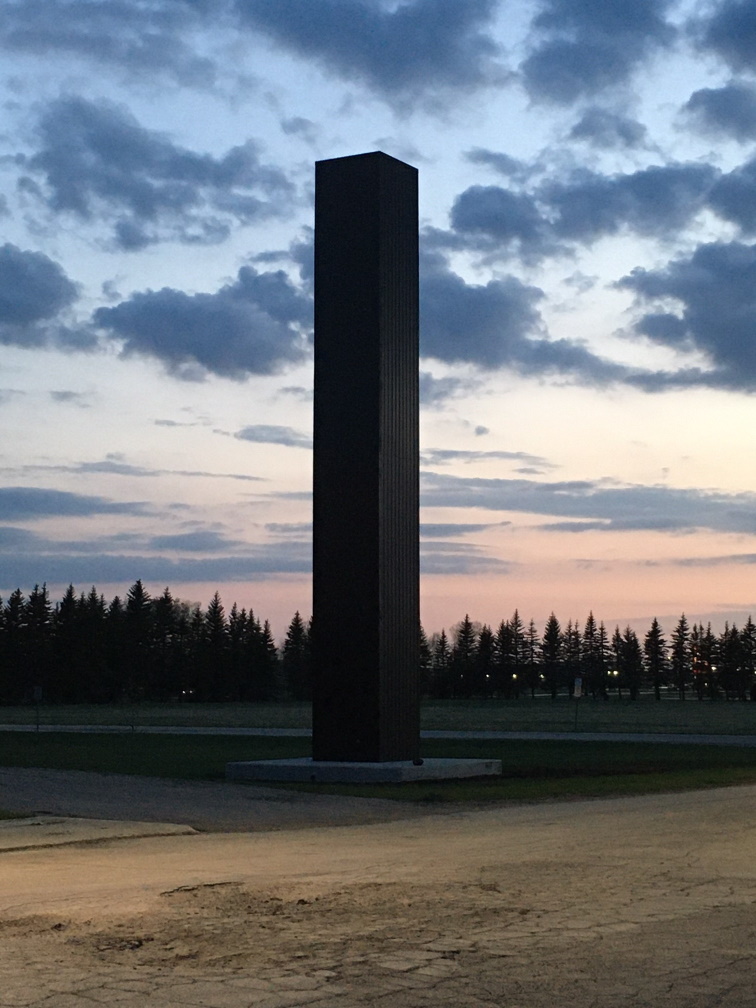
The first two structures are free-standing towers, based on the prototype now standing at Assiniboine Park Zoo. The first of these can be seen from Manitoba Avenue in Selkirk, being located on the grass adjacent to the Red River College building. The second is further east within the campus. Another chimney is being built on the side of the Red River building, creating a hub of sites, with there being an existing chimney on this building and the first tower adjacent. A fourth structure will be a free-standing tower. This will be constructed on the cement pad remaining from the now demolished Powerhouse chimney.
Chimney Swifts are returning to Manitoba following their long migration from their winter home in South America. Provincial biologists are working with the Manitoba Chimney Swift Initiative and the Selkirk Birdwatchers Club to monitor these new towers. The great news is that Gerald Machnee from the Selkirk Birdwatchers Club has documented a swift entering the eastern tower on two separate occasions, the last time on May 24th. Thus far, we are still awaiting first confirmed use in the other two completed structures. We will continue to monitor all three towers, plus the other brick chimneys on this site, and hope that it will not be long until we record swifts using all the available habitat!
Tomorrow is our big day for Chimney Swift monitoring in Manitoba! May 26th is the start night for monitoring under NRMP as well as our MCSI monitoring nights. If you have already decided on a chimney to monitor we are happy to have you on board! If you are still looking for a chimney to monitor, please send me an email at mbchimneyswift.com and we can find you one!
Reminder that specific chimneys (with four or more Swifts) will be following the NRMP monitoring dates.
Selkirk Mental Health Centre, Selkirk
Merchants Hotel, Selkirk
367 Main Street, Selkirk
Providence College, Otterburne
Paroisse Catholique St Jean Baptiste, St Jean Baptiste
213 Main St. N, Dauphin
St Joachim Church, La Broquerie
St Paul’s United Church, Souris
Carmen Memorial Hall, Carmen
5000 Crescent Road West (Rufus Prince Building), Portage la Prairie
Ecole Assiniboine School, Winnipeg
2187 Portage Ave (Moorgate Apartments), Winnipeg
For all other chimneys we are following the MCSI monitoring nights. We will watch these chimneys each Wednesday night (rain date Thursday nights) from May 26th to June 23rd.
Both the NRMP and MCSI monitoring nights follow the same monitoring protocol and use the same datasheets which can be found on the Resources and Links page on our website (https://www.mbchimneyswift.com/resources-and-links/).
For those of you wondering what Chimney Swifts have been up to in Manitoba so far this year – keep reading for our current reports!
On May 15th Ken Wainright saw the first Swift in Dauphin (the main roost site #600). Ken writes “Saw tree swallows in our back yard today which in the past has been a sign for me to check for swifts so when we found ourselves out fishing and catching nothing it was easy to convince ourselves to go and sit by a chimney. We arrived at approximately 9:10 with sunset at 9:25 knowing that traditionally our swifts push the darkness by coming in later. Well, less than 2 minutes later we saw the first swift of the season for the Dauphin roost #600 and it circled twice and went down. We waited another 20 minutes and saw nothing further but there here!!”
Nearby to Dauphin in Riding Mountain National Park Staff Colleen and Hannah were watching the visitor centre chimney on May 6, May 11 and May 16 with no sightings yet. We will keep our fingers crossed that they get some avian visitors to their visitor centre!
We have had Tim, Gerald, Nia, Ray and Sybil watching for Swifts in the Selkirk area. Several of the chimneys at the Selkirk Mental Health Centre have had to come down and have been replaced by artificial towers. These artificial towers are the same plan as our successful Chimney Swift tower at Assiniboine Park Zoo. We will have more information on this change in an upcoming blog post by Tim Poole.
Tim and our Selkirk volunteers have been working hard monitoring these towers to see if they are in use by the Swifts, as well as playing Swift calls (over a speaker) following a strict protocol to try and show the Chimney Swifts that these new structures are useable roosting and nesting chimneys.
On May 13th Gerald and Winona were out at the Selkirk Mental Health Centre watching the two new towers, as well as the yellow brick chimney. Gerald had this to say “At 8:30 3 Swifts appeared, then left for a bit. At about 8:40 they flew near the west chimney then went east close to the other one. They flew around it for a while as well as the yellow brick. By 9:05 there were 4 Swifts. As it got darker it was more difficult to see them. Three disappeared, then out of the corner of my eye I saw one go into the Yellow Brick.” So no success on the first monitoring night at the new towers… Gerald was back on May 16 and saw a maximum of five Swifts in the air and had three enter the yellow brick chimney at 9:25 with one exiting at 9:27 before the monitoring period ended.
On May 18th Gerald, Winona, Ray and Sibil were out in Selkirk watching for the birds again. Ray and Sibil was watching the Apartment on Main St and had three Chimney Swifts enter at 9:25. Gerald had one enter the chimney he was watching at 9:32 (our first for the new artificial chimney towers!) and four others flyby at 9:34. Winona had three enter her chimney at 9:34 (likely some of the four that Gerald saw in flyby). This meant a total of 10 Swifts in Selkirk that night. Very exciting that we had our first tower entry.
We also heard from some homeowners who host Chimney Swifts that their Swifts are back as well. Dave in Dominion City had Chimney Swifts back in his chimney by May 17th and thinks that some are likely using his neighbour’s chimney as well, as he saw between 6-8 Swifts in the air at one time.
This year the Assiniboine Park Zoo was able to put trail cameras in their artificial chimney again and saw their first Swift on May 11th!
Christie lives in the Tuxedo neighbourhood near Assiniboine park School and has had Swifts nesting in her chimney for a number of years. The week before last she emailed me with the news that they are back again this year!
A good start to the season and I hope to have many more Chimney Swift stories to relay to you all after our first monitoring night on May 26th!!
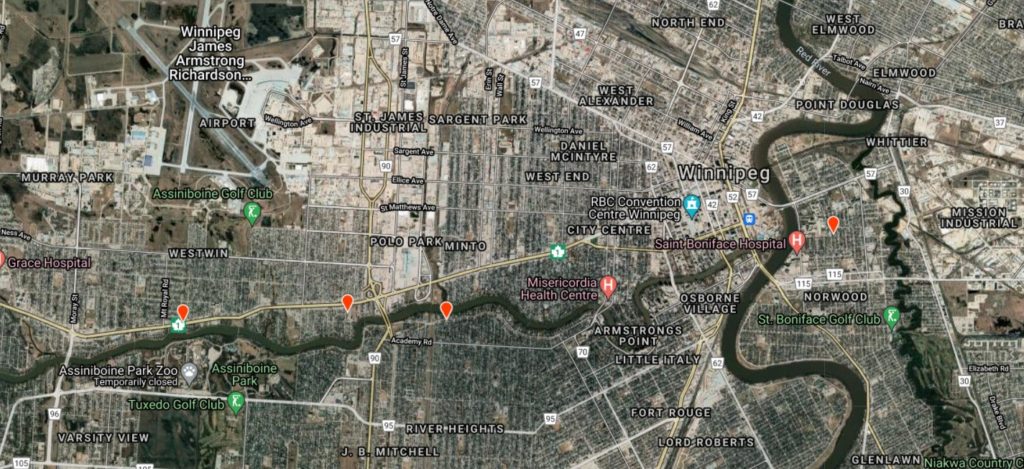
There were several Chimney Swift sightings in Winnipeg over the past weekend according to eBird! There were two separate sightings in St James (total of four swifts), a sighting on Wellington Crescent in River Heights (four swifts) and a sighting in Old St Boniface (six swifts). See the map below.
eBird.org sightings of Chimney Swifts are illustrated by the red point markers. A total of 14 swifts were seen from May 6-9th 2021.
Just a reminder that our monitoring season officially starts May 26th, however if you would like to watch a chimney earlier or report swift sightings to us, we are always happy to hear from you! The 2021 monitoring protocol and data sheets are now up on our website. If you would like more information or are looking for a chimney to watch please contact myself at mbchimneyswift@gmail.com.
An Update on the Chimney Swifts and 2021 Monitoring
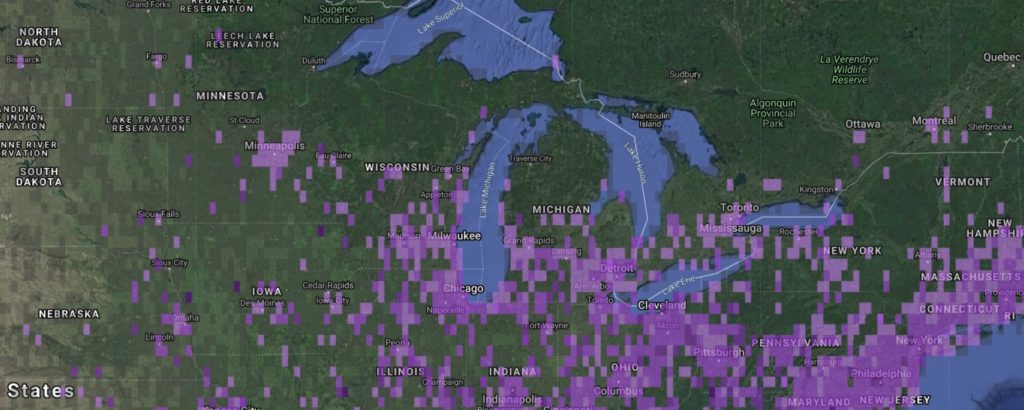
Spring is slowly but surely making its way into Manitoba, and the Chimney Swifts are also on their way. We are on the lookout for our first swift sightings in Manitoba, so when you see your first, please let us know! As the swifts are starting to show up in North Dakota and Minnesota, we have finalized our plans for Chimney Swift Monitoring in 2021.
Chimney Swift sightings in April and May 2021 from eBird.org. Each purple rectangle is at least one Chimney Swift.
For most sites, Chimney Swift monitoring will continue to follow the MCSI night protocol with the same format as last year. Monitoring will start on Wednesday, May 26th and continue each Wednesday until June 23rd (rain dates are Thursday each week). By the end of June, we should be able to determine if the Swifts have decided to make a nesting attempt in each monitored chimney.
For several of the larger roost chimneys, we will also be conducting the National Roost Monitoring Protocol (NRMP). This protocol is followed throughout Canada, where the Canadian Wildlife Service collects data on roosting chimneys that host four or more Chimney Swifts. This monitoring happens every four days for a two-week period (rather than once a week).
Both the MCSI Nights and the NRMP start on Wednesday, May 26th this year. If you would like a MCSI volunteer lanyard to wear while monitoring, please contact me (email below) and I can send one out to you.
NRMP nights and the MCSI nights follow the same monitoring protocol (other than the dates the monitoring takes place) as well as the same data sheet. You can find our 2021 protocol and data sheet at the following links:
If you are looking for a chimney to watch in your neighbourhood, send an email to myself (Amanda) at manitobachimneyswift@gmail.com and I would be happy to find one for you! We always have more chimneys than monitors each year.
For the NRMP nights the following chimneys still need volunteers to monitor:
Carmen Memorial Hall, Carmen
St Paul’s United Church, Souris
5000 Crescent Road West (Rufus Prince Building), Portage la Prairie
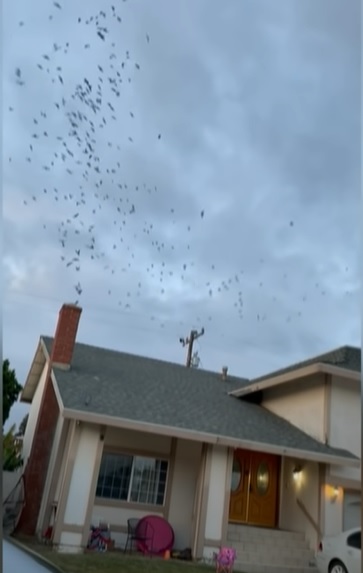
One of the houses in California with Vaux’s Swifts.
While this is certainly an eye-catching phenomenon and something you would likely never forget – it is unfortunate that the story has largely been circulating with negative connotations towards Swifts in general. Both the Vaux’s and Chimney Swifts are aerial insectivores, a group of birds whose populations are undergoing steep declines, and both are protected in Canada by federal and provincial legislation. In addition to their innate value as part of our world’s biodiversity, they also provide tangible benefits to people by eating a huge number of insects we often think of as pests.
If you are worried about birds, such as swifts, entering your house, it is as easy as closing your fireplace damper. This leaves the chimney open for swifts to use as roosting and nesting habitat, while keeping the inside of your house bird free. In fact, we strongly encourage closing your dampers, as Swifts can get confused by the extra light source (associating light with the chimney exit).
To learn more about Chimney Swifts and separate fact from fiction, check out our factsheets about hosting Swifts and how you can be a Chimney Swift champion!